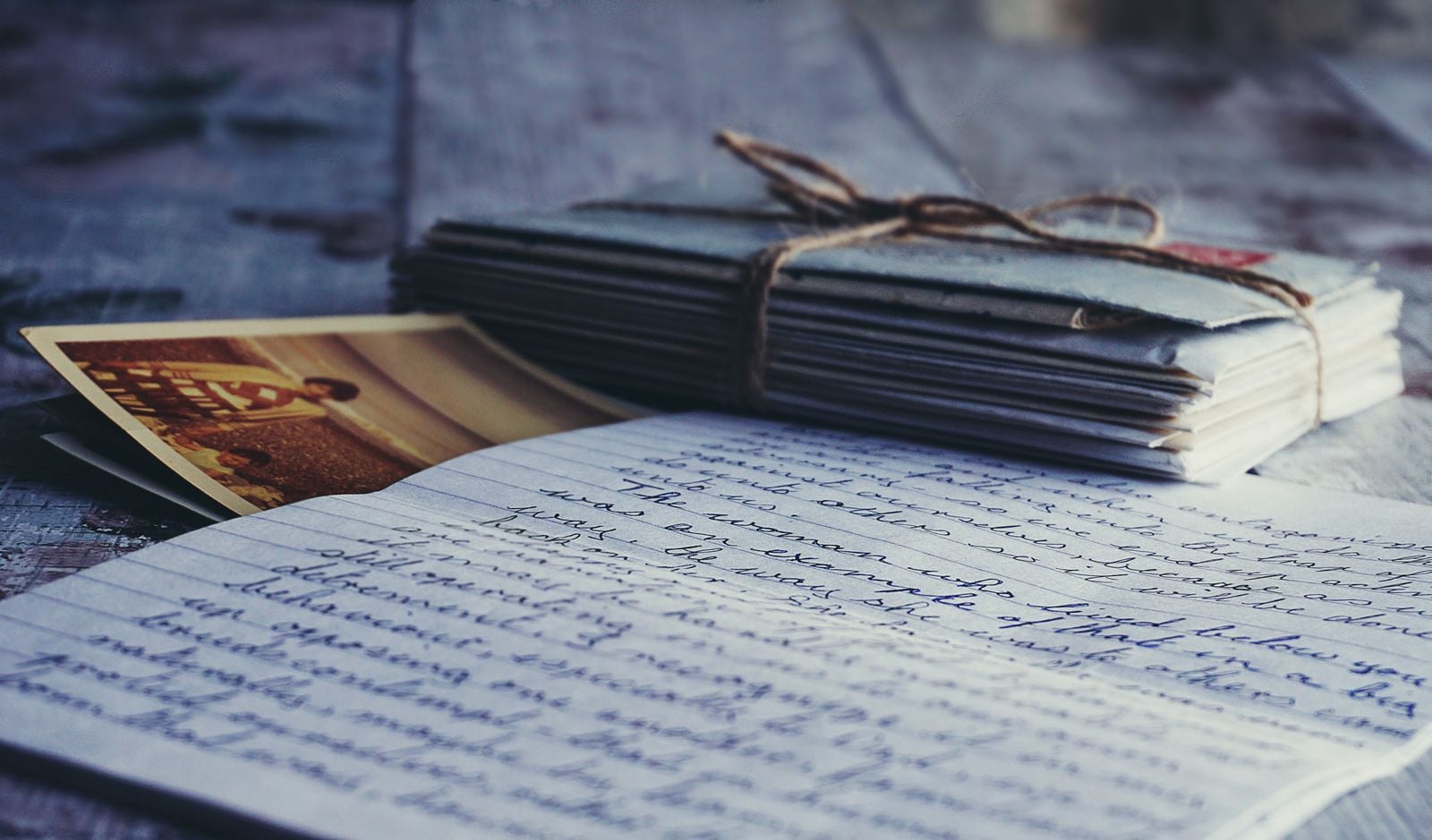
The shoebox at the top of the closet is not necessarily clutter. It can be a working archive of a communication system that has almost disappeared, kept by people who once measured relationships in stamps, postmarks, and the distance between replies.
Adults who still have letters, birthday cards, and handwritten notes from the 1980s are easy to dismiss as excessively sentimental. Yet keeping a bounded collection of meaningful correspondence does not, by itself, reveal anything about how someone manages the rest of their home.
What the box preserves is more specific. It records what communication felt like when attention took time, silence was normal, and a reply might not arrive for weeks.
The Artful Age
A weekly letter on aging well, family across generations, and the creative life after the kids leave home.
The waiting was part of the message
A letter sent across the country or overseas could leave its sender waiting days or weeks for an answer. Once writing time, postal transit, and the recipient’s own life were taken into account, a single exchange could stretch across much of a month.
During that interval, there was no read receipt and no typing indicator. The sender had to live without knowing exactly when the envelope arrived, how the words landed, or whether an answer was already on its way.
That uncertainty could be frustrating, but it also made anticipation part of the relationship. People checked the mailbox, recognized familiar handwriting, and sometimes read the same page several times because it was the only new contact they were going to receive that week.
What handwriting asks of the brain
Research does support a meaningful difference between handwriting and typing, although the finding is narrower than saying handwritten letters are automatically remembered forever.
In a 2024 high-density EEG study summarized by Frontiers, 36 university students either wrote words in cursive with a digital pen or typed them using a keyboard. Brain connectivity patterns were more elaborate during handwriting, particularly across regions and frequencies associated in earlier research with learning and information encoding.
NPR’s reporting on handwriting and learning explains that forming letters requires finer coordination between motor and visual systems than pressing keys. The same report also notes that digital tools remain more practical for many tasks and that meaningful processing can still happen while typing.
A 2026 India Today summary of the research similarly describes stronger and more widespread communication between brain regions during handwriting. These findings help explain why handwriting can be useful for learning, but they do not prove that a letter written in 1986 is remembered more completely than a text sent in 2026.
The more defensible point is simpler. Writing by hand demands a distinctive combination of movement, attention, and visual control, making the act itself different from typing.
Why the boxes get kept
For many people, a birthday card is not interchangeable with another card carrying the same printed message. The handwriting, crossed-out word, unusual ink, and hurried signature connect it to a particular person and day.
A handwritten note is also a one-off physical object. It was touched by the sender, carried through the postal system, opened by the recipient, and kept through moves and changes in circumstance.
That history gives the object meaning beyond the words on its surface. The letter is not merely a record of what someone said. It is evidence that the person stopped, chose paper, found an address, and made time to send something that could not arrive instantly.
The generation that learned to wait
People who maintained long-distance friendships during the 1980s had fewer ways to fill a silence. If a friend moved away, a letter might be the most affordable and personal way to remain part of each other’s lives.
Waiting did not automatically make those relationships deeper or healthier. It did, however, make gaps in communication ordinary. A friendship could continue even when neither person had heard from the other for several weeks.
That experience is harder to reproduce in an environment of instant delivery and visible online activity. The people who remember checking the mailbox after school belong to one of the last large generations for whom waiting was built into everyday communication.
Cursive as a fading shared skill
Many letters from the period are written in cursive, a skill that no longer occupies the same place in every classroom. That does not mean cursive is extinct.
A July 2026 Psychology Today essay about cursive instruction says approximately half of U.S. states require it. The essay also notes that California and Texas have reintroduced instruction, although the amount of classroom time devoted to it can vary.
The result is a patchwork rather than a complete disappearance. Some younger adults can read and write cursive comfortably, while others received little practice and may struggle with unfamiliar styles.
That makes old correspondence culturally interesting as well as personally meaningful. The pages preserve the habits of a time when connected handwriting was an ordinary communication tool rather than an optional or unevenly taught skill.
The archive as identity
A box of correspondence can also document versions of a person that photographs do not fully capture. It might contain a teenager’s letters from a pen pal, cards received during a difficult year, or notes sent to a new parent finding their way through an unfamiliar life.
The words reveal what mattered at the time. They preserve forgotten addresses, old jokes, changing signatures, and relationships that later took unexpected directions.
Digital communication can provide a similar record, but it is often vulnerable to deleted accounts, forgotten passwords, replaced phones, and incomplete transfers. Paper has risks of its own, yet a box that survives several moves can remain readable without a subscription, charger, or compatible device.
What absence looks like on paper
Opening the box decades later can be joyful, but it can also expose loss. Some senders may have died. Other relationships may have ended quietly, leaving no final argument or explanation.
The archive may reveal bursts of closeness followed by long gaps. It may contain one person’s frequent letters and another person’s occasional replies, although the surviving collection cannot always explain why that imbalance occurred.
That uncertainty matters. A box of letters records what remains, not the complete truth about every relationship represented inside it.
Handwriting as slower thinking
Writing by hand usually takes longer than typing. That slower pace can create more opportunities to reconsider a sentence before placing it on the page.
It does not guarantee greater honesty. A carefully written letter can still avoid the truth, while a hurried digital message can express something deeply sincere.
What handwriting changes is the rhythm. Filling a page requires sustained physical attention, and correcting a sentence is more awkward than tapping a delete key. The medium encourages deliberation, even when the writer does not always use that opportunity well.
What children may notice
A child who watches a parent write a letter at the kitchen table may absorb a simple lesson: some relationships require effort that receives no immediate response.
The child sees an adult search for an address, choose what to say, and trust that the message will eventually reach someone elsewhere. None of that proves a particular developmental outcome, but it offers a visible model of care conducted without instant feedback.
The shoebox can later extend that lesson. It shows that communication was once something people made, mailed, waited for, and sometimes valued enough to keep for the rest of their lives.
Why ordinary decluttering rules can fall short
Some decluttering frameworks ask people to judge an object primarily by its present usefulness or the feeling it produces. That approach can be helpful for replaceable possessions, but correspondence belongs to a different category.
A letter is tied to a specific person, moment, and act of attention. Throwing it away does not simply reduce the number of objects in a room. It removes an original record that cannot be purchased or recreated later.
That does not mean every piece of paper must be kept. It means the decision deserves to account for historical and relational value, not only storage space.
What science cannot say about holding the paper
The handwriting research cited above examined what happened while participants formed words. It did not test whether reading an old letter produces richer memories than reading an old text, and it did not study people opening correspondence in later life.
The physical experience can still be powerful without being presented as a proven neurological effect. Paper has weight and texture. Ink fades, folds remain visible, and handwriting can become immediately recognizable to someone who knew the writer well.
Those details provide sensory cues that a standardized digital font does not. Whether they make a particular memory stronger will vary, but they help explain why a physical letter can feel inseparable from the person who sent it.
Reframing the shoebox
Adults who kept letters, cards, and handwritten notes from the 1980s are not necessarily failing at minimalism. They may simply be maintaining a personal archive from a communication era that cannot be reconstructed once its original objects are gone.
They remember the effort required to send a letter and the anticipation that surrounded its arrival. They remember recognizing a person before reading a word, simply from the shape of a name on an envelope.
The box in the closet is a record of that slower way of staying in touch. Keeping it can be less about refusing to let go than understanding that some forms of attention are worth saving precisely because they will never be produced in quite the same way again.