
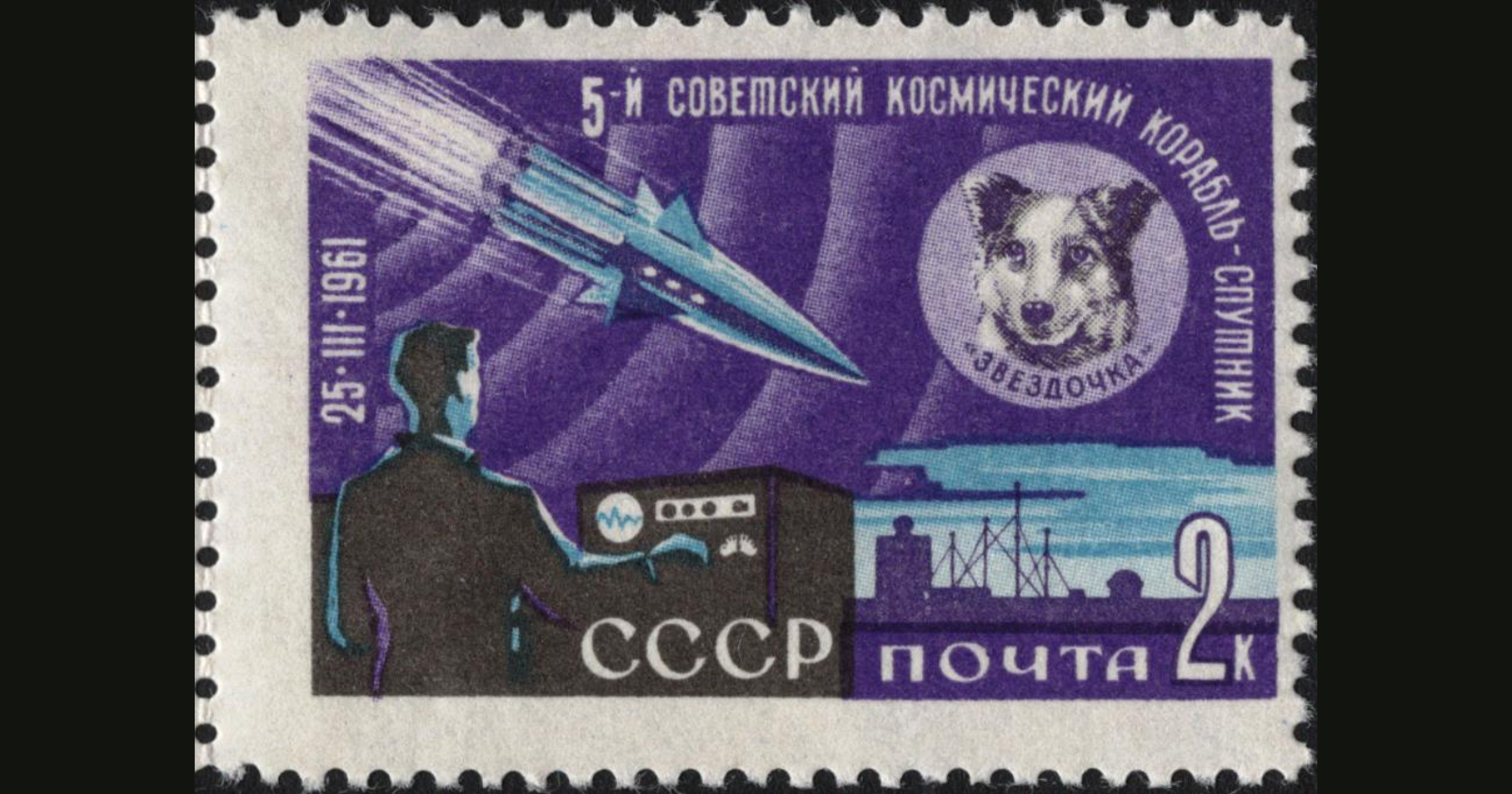
Eighteen days before Yuri Gagarin became the first human in orbit, a small mongrel dog named Zvezdochka — Russian for “Little Star” — rode a Vostok capsule around the Earth and came home alive. Her flight on 25 March 1961 was the last fail-safe test before the first crewed flight, and it worked. On 12 April 1961, Gagarin lifted off in a capsule that was not a prototype but an exact twin of hers.
She shared the cabin with a life-sized mannequin the engineers had nicknamed Ivan Ivanovich, dressed in a full pressure suit and strapped into the ejection seat.
The Soviets needed to know one thing above all: would the capsule come back down in one piece, with something alive inside it?
The Artful Age
A weekly letter on aging well, family across generations, and the creative life after the kids leave home.
The test flight that cleared Gagarin for launch
The Vostok programme by early 1961 had already lost dogs. Some had died in launch failures. Others had orbited successfully but not returned. Zvezdochka’s mission — sometimes called Korabl-Sputnik 5 in Soviet documents — was the last full-system rehearsal before a human being climbed into the same seat.
The plan was one orbit. Ivan Ivanovich would be ejected from the descending capsule at altitude, parachute separately, and be recovered on the ground. Zvezdochka would stay inside the sphere and ride it down through re-entry, testing whether the heat shield, the retro-rockets, and the recovery system would hold a live passenger.
All of it worked. The single-orbit flight lasted about a hundred minutes. The capsule came down in deep snow near Izhevsk, in a gully so awkward to reach that the recovery team needed a ski plane and, in the end, a villager’s horse-drawn sleigh. Zvezdochka was recovered unharmed. Once the flight was reviewed, the vessel was deemed fit to carry a human.
Who named her
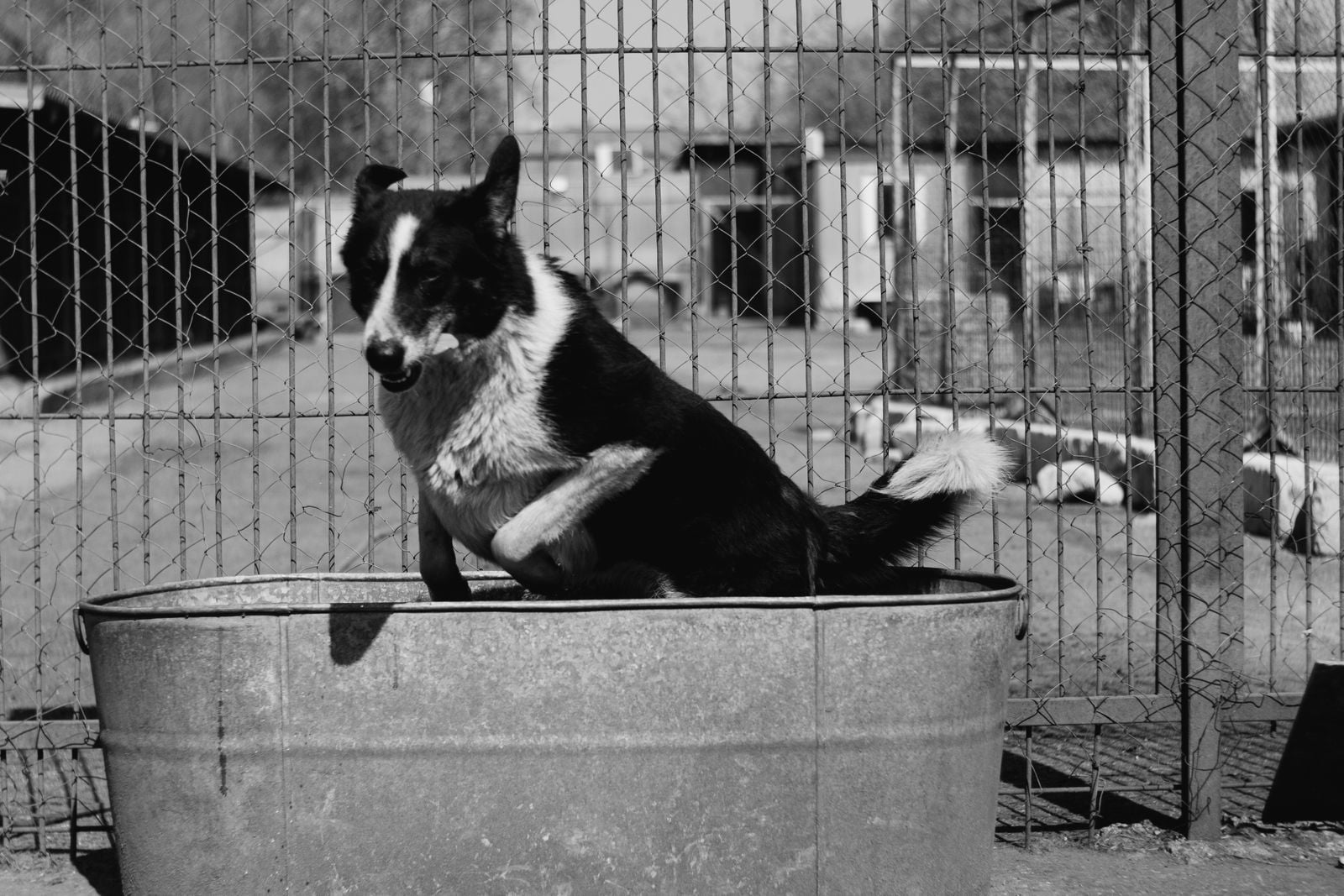
The name Zvezdochka is often attributed to Gagarin himself, in the days before his own launch. According to accounts that circulated for decades, Gagarin visited the training facility, met the dog scheduled to fly the rehearsal mission, and gave her the diminutive name meaning Little Star.
Whether the moment happened exactly as retold is one of those details polished by decades of repetition. What is documented is that she flew under that name, and that name is what appeared on the recovery reports and later in the museum plaques.
She was, by every account, small, calm, and unremarkable-looking. That was the point. Soviet space-dog selection had, from the very start of the programme, favoured stray mongrels from the streets of Moscow — dogs that had already survived cold, hunger, and stress, and were assumed to have the constitution for what came next.
The programme she was born into
Zvezdochka arrived at the tail end of a long, quiet, mostly hidden campaign. The Soviet space-dog programme had been running since 1951, when two dogs named Tsygan and Dezik rode a suborbital rocket and came back alive. Dozens of dogs followed. Many survived. Some did not.
The most famous of them, Laika, had been launched on Sputnik 2 in 1957 as the first living creature to orbit the Earth. Her mission had no return plan. She died within hours of launch from overheating in a hastily built capsule, a fact the Soviet government concealed for decades.
Zvezdochka was, in a sense, the answer to Laika. A dog sent up not to die for a propaganda anniversary, but to come back — to prove the machinery of return actually worked.
By March 1961, the Vostok engineers had a capsule they trusted, a heat shield they trusted, and an ejection system they trusted. They needed one clean flight to confirm it. She gave them that flight.
Eighteen days later
Gagarin’s launch on 12 April 1961 lasted 108 minutes. He orbited the Earth once, ejected from the capsule at altitude as planned, and parachuted down into a field near the Volga River. The flight is now marked internationally each April as the beginning of human spaceflight.
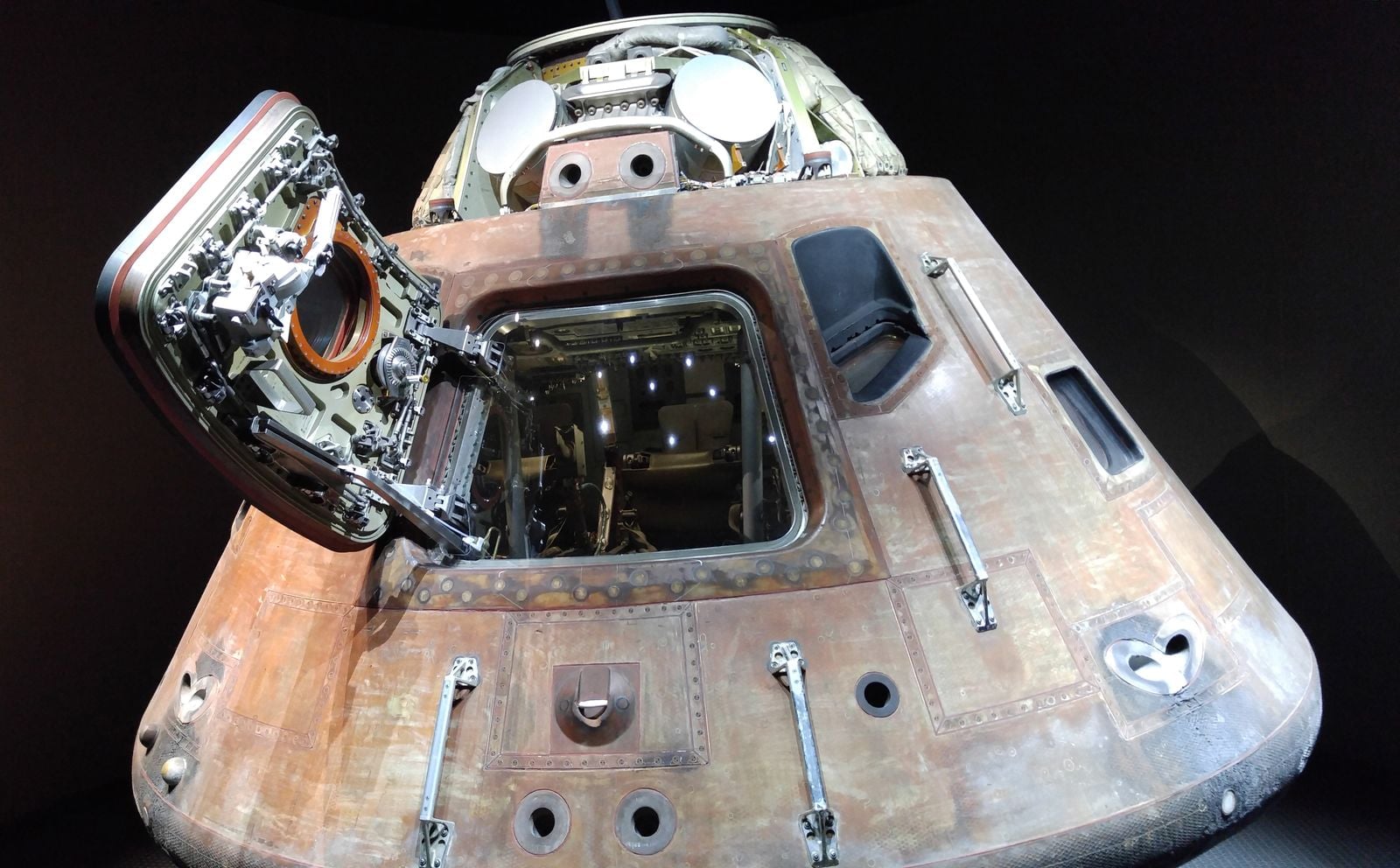
The capsule design he rode in was the one Zvezdochka had certified. The ejection sequence, the retro-fire timing, the parachute deployment — all had been tested with her inside the sphere and Ivan Ivanovich in the seat.
Gagarin flew Vostok 3KA-3, later renamed Vostok 1, an exact twin of the spacecraft that had carried her one orbit around the planet less than three weeks earlier.
She was, in the technical sense that engineers use the word, the last variable.
Why the image of her stuck
Photographs taken around the flight show her held by technicians in heavy coats, cradled against a chest, wrapped up. In some frames she is being fed. In others she looks straight at the camera, ears slightly back, plainly a small dog who has had a strange morning.
These images were widely reproduced across Soviet media through the 1960s and 1970s, in children’s science magazines, on postcards, in classroom posters about the achievements of the space programme. Zvezdochka’s story was easier to tell to a seven-year-old than Laika’s. She came home. The scientists were happy. The dog was fine.
Whether specific photographs of her being cradled by technicians hung above children’s beds is the kind of memory that families keep and archives don’t always confirm. What is clear is that Soviet space iconography for children leaned heavily on the surviving dogs — Belka and Strelka, who had orbited in 1960 and returned safely, and Zvezdochka after them — rather than on Laika, whose fate remained officially blurred until the 1990s.
The dogs who came home were the ones who ended up on the lunchboxes.
The rushed, secret, uneven scientific record
The Soviet space dog programme was never a clean story. It ran on strays picked up from Moscow streets, on cages that got progressively smaller during training, on injections and sensors and long hours strapped into simulators. Some dogs became beloved by the scientists who trained them. One of them, Vladimir Yazdovsky, took Laika home to play with his children in the days before her one-way launch, saying he wanted to do something kind for her because she had so little time left.
Zvezdochka’s flight sits inside that same messy human context. She was not a mascot. She was a system check. The engineers needed telemetry, heart rate, respiration, body temperature, and the confirmation that a mammal could be sealed inside the descent module, spun through orbital insertion, carried once around the planet, and delivered back to the surface intact.
She delivered all of that. Her heart rate data, her respiratory data, and the post-flight veterinary examination went into the file that certified the Vostok capsule for Gagarin.
What became of her
Zvezdochka survived her flight. Unlike Laika, she was not sacrificed to the mission. Unlike many of the earlier dogs, she was not lost to a launch failure. By one account of the recovery, she had already left the capsule by the time the search party reached it, and was found in the house of a local man who had taken her in to feed her; she now has a statue in the city of Izhevsk. What happened to her after she was returned to Moscow is not clearly recorded.
The objects that flew with her have travelled further than she did. The mannequin was auctioned at Sotheby’s in 1993 to a foundation belonging to the American businessman Ross Perot, and spent two decades on loan to the National Air and Space Museum in Washington before going back into Perot’s private collection in 2017. The capsule went under the hammer in New York on the fiftieth anniversary of Gagarin’s flight: Sotheby’s sold it in April 2011 to the Russian businessman Evgeny Yurchenko for $2,882,500, and he said he intended to bring it home. Neither sits beside a preserved Zvezdochka in Moscow. The taxidermied dogs on display at the Memorial Museum of Cosmonautics are Belka and Strelka.
The 65th anniversary of Gagarin’s flight was marked around the world in April 2026, and the surrounding coverage — the museums, the Yuri’s Night events, the fresh interviews with space historians — usually mentions the dogs in a paragraph or a sentence. Zvezdochka is often the sentence.
A generational image, if not a pinned-up one
Children who grew up in the Soviet Union in the 1960s and 1970s absorbed the space race through a particular set of pictures: Gagarin’s helmet, the CCCP lettering, the curve of Sputnik, and the dogs. The friendly dogs. The dogs held by smiling women in white coats.
That imagery did real work. It softened a programme that was, in its actual laboratories, industrial and often brutal, into something a child could love. A dog named Little Star, wrapped up and held in someone’s arms after coming back from space, is the version of the space race that fits above a bed.
Certain childhood objects hold onto a specific moment — as in an earlier piece on the objects families can’t donate. Photographs work the same way. A Zvezdochka postcard tucked into a Soviet-era school textbook is, for the person who kept it, a fixed point.
The animals before the astronaut
Zvezdochka was not the first animal in space. That distinction belongs to a group of fruit flies launched by American scientists in a V-2 rocket in February 1947. She was not the first dog in orbit — Laika was. She was not the first dog to survive orbit and return — Belka and Strelka were.
What she was, precisely, was the last living creature to fly the Vostok capsule before a human being did. The rehearsal. The green light.
Gagarin himself, in a line often quoted afterwards, is said to have wondered aloud whether he was the first man in space or the last dog. The remark — recorded in accounts of the space-dog era — is usually taken as gallows humour from a pilot who understood exactly what had been tested on his behalf, and by whom.
Seven years later, on 27 March 1968, Gagarin died in a jet training crash outside Moscow at the age of 34. The real cause of his death was classified for decades.
The capsule and the mannequin both went to auction and ended up in separate private hands, a continent apart. And somewhere in a folder of Soviet-era postcards, in a drawer in a flat in Kyiv or Vilnius or Novosibirsk, a small dog in a technician’s arms is still looking straight at the camera.