
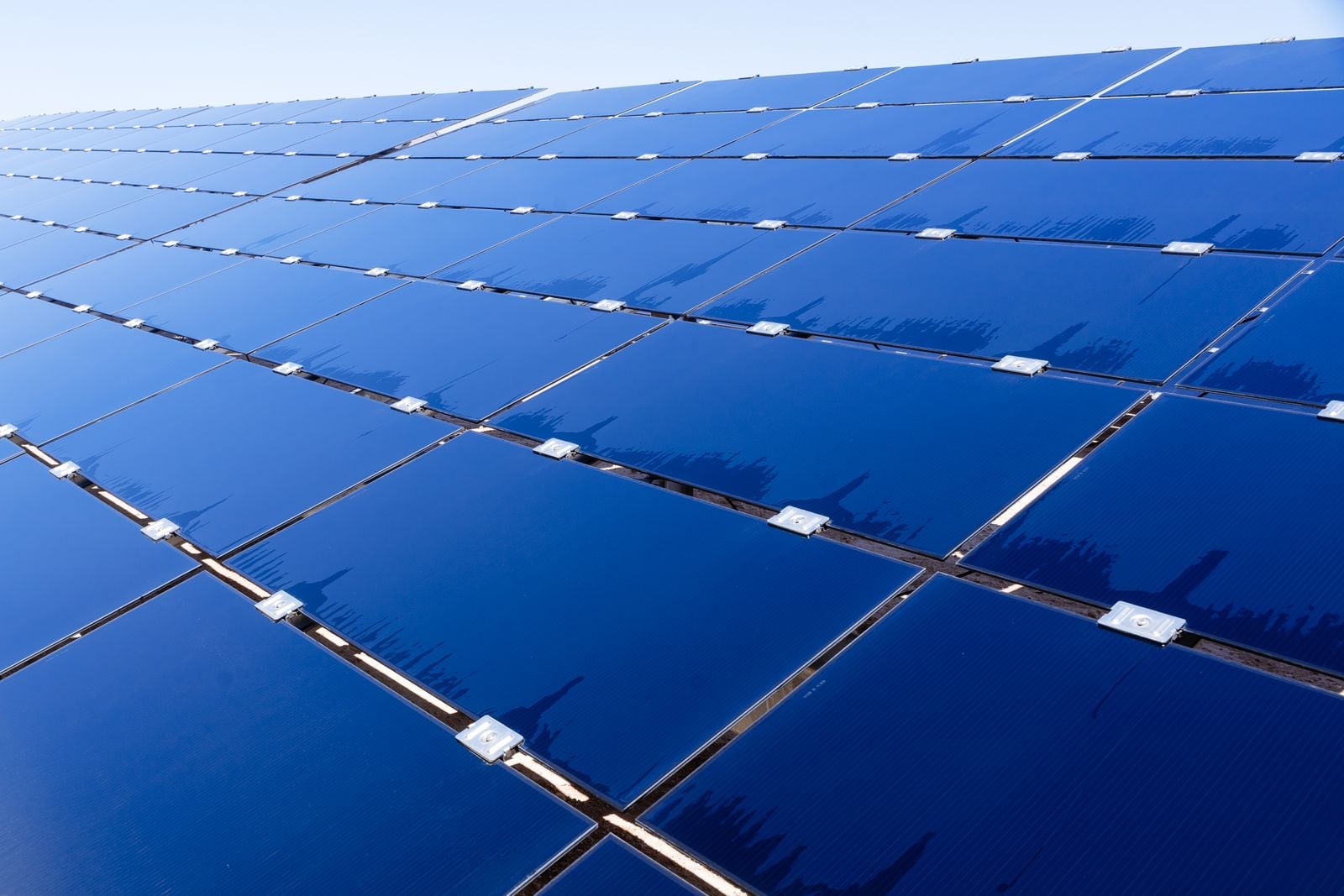
On a rooftop in Freiburg, a matchbook-sized array of ridged glass lenses tracked the sun across thirteen summer days and pulled off something no laboratory had managed under a real sky: it turned 31.3 percent of the direct sunlight hitting it into hydrogen fuel. Not electricity that could later make hydrogen. Hydrogen itself, bubbling out of water in the same compact box the light entered. The device, built at the Fraunhofer Institute for Solar Energy Systems (ISE), holds the current world record for solar-to-hydrogen efficiency measured outdoors.
The lens area is about ten square inches. Roughly the size of a paperback cover.
The result was published in 2026 and reported by PV Magazine on May 15, 2026, confirmed in outdoor field trials totalling more than 107 operating hours. During one representative hour of testing, efficiency stayed above 31 percent even as the sunlight shifted overhead.
The Artful Age
A weekly letter on aging well, family across generations, and the creative life after the kids leave home.
What 31.3 percent actually means
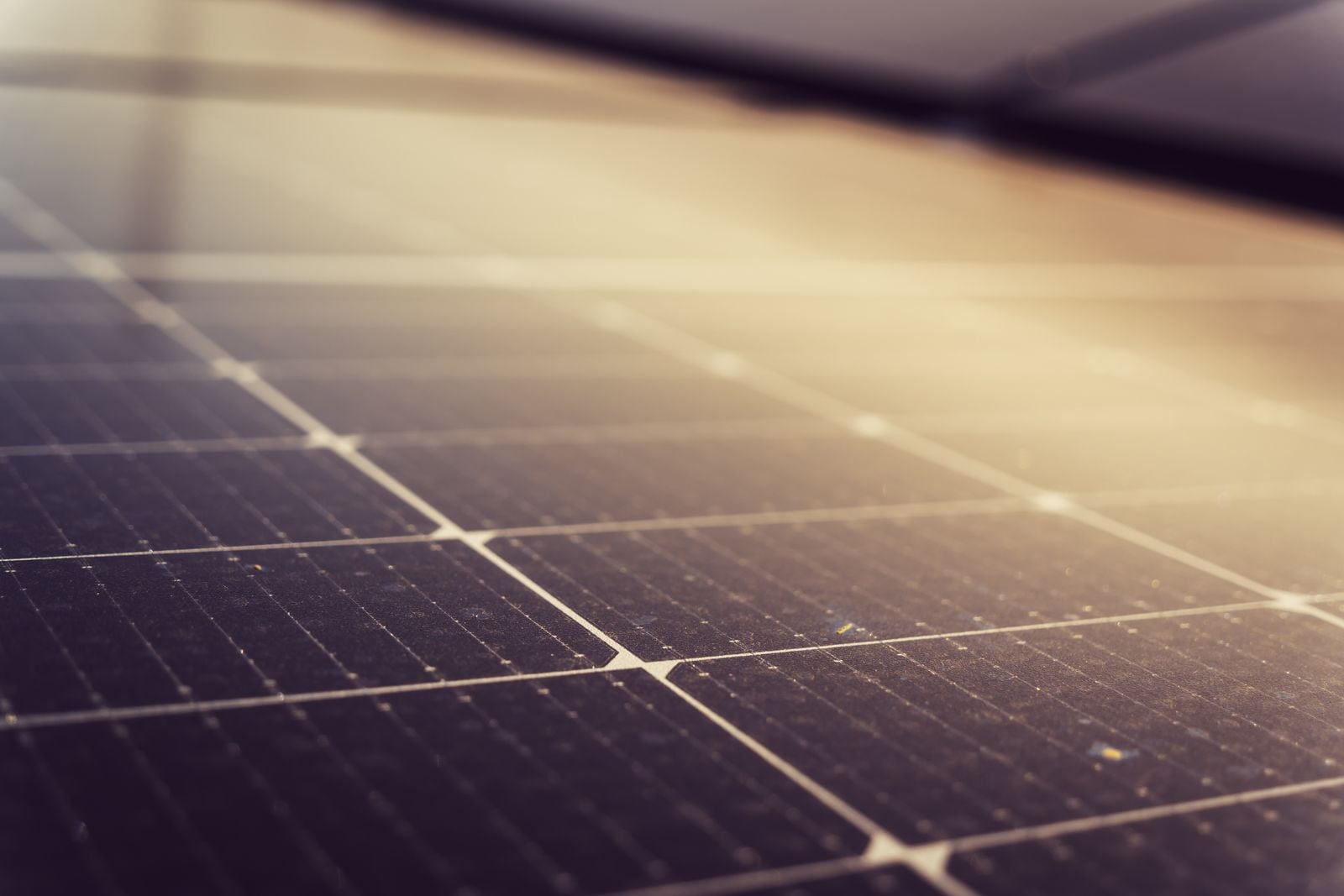
Sunlight carries energy. A solar panel captures some of it as electricity. An electrolyzer takes that electricity and uses it to split water into hydrogen and oxygen. Every handoff between those steps leaks a little energy as heat or resistance.
For decades, the round-trip number — sunlight in, hydrogen out — has sat stubbornly in the teens for outdoor systems. The Freiburg module cleared 31 percent. That is close to one-third of the incoming photons ending their journey as chemical bonds inside a hydrogen molecule.
The calculation used hydrogen’s higher heating value, which counts the full chemical energy released when the fuel later reacts with oxygen and the resulting water cools. It is the honest number, not a shortcut.
Why the shortcut inside the box matters
Most solar hydrogen setups look like two separate machines wired together: a solar array on one side, an electrolyzer on the other, and a rack of power electronics in between to reshape the current into something the electrolyzer can use. Each reshaping costs energy.
The Fraunhofer team removed the middleman. As Interesting Engineering reported, the researchers wired the concentrator solar cells directly to the cathode and anode of two proton exchange membrane (PEM) electrolyzer cells arranged in series.
Four solar cells feed two electrolyzer cells. The voltages match. The currents match. Nothing needs to be converted, inverted, stepped up or stepped down.
The direct connection between solar cells and PEM electrolyzer cells achieves a perfect match between the two electrical characteristics, eliminating the need for power conversion.
The lens does the heavy lifting
The device uses a Fresnel lens array — the same ridged, flattened lens design used in lighthouses and overhead projectors. Each lenslet in the grid concentrates direct sunlight down to a tiny bright point.
That point lands on a four-junction III-V solar cell. III-V cells are stacked from semiconductor layers like gallium arsenide and indium phosphide, each layer tuned to a different slice of the solar spectrum. They are the same class of cell used on spacecraft, where efficiency matters more than cost.
Under concentrated light, these cells produce an open-circuit voltage of more than four volts. That is enough to drive two PEM electrolyzer cells in series without a boost converter.
At peak performance, the integrated system achieved its record 31.3 percent solar-to-hydrogen efficiency.
Who built it
The study was led by researchers at Fraunhofer ISE’s III-V Photovoltaics and Concentrator Technology Department, working in collaboration with the institute’s membrane electrolysis team.
Fraunhofer ISE, based in Freiburg in southwest Germany, is among the largest solar research institutes in the world. PV Magazine’s coverage of the announcement notes that the record was set with a proof-of-concept demonstrator with a lens area of roughly 64 square centimetres — about the footprint of a coffee coaster.
The breakthrough demonstrates that hydrogen can be produced very efficiently directly from sunlight.
Thirteen summer days on a sun tracker
The prototype sat on a two-axis tracker that followed the sun across the sky. Trackers are common in concentrator photovoltaic installations because Fresnel lenses only focus properly when they are pointed almost exactly at the sun. A few degrees off and the bright spot drifts off the cell.
Over 107 operating hours across 13 days, the researchers watched the numbers hold. As Earth.com described the trial, efficiency stayed above 31 percent through changing light during a representative hour, and no degradation was detected across the short run.
Water temperature mattered too. PEM electrolyzers run better warm. The prototype used preheated water during the high-efficiency runs to optimize performance.
A future version would reuse the waste heat coming off the solar cells themselves, which get very hot under concentrated sunlight. That step was not demonstrated in this prototype.
Why this is not a hydrogen plant yet
A ten-square-inch collector on a rooftop in Freiburg is not a hydrogen plant. It is proof that the physics works when you strip out the middle stages.
The engineering leap between here and a container-sized module involves lowering the cost of III-V cells, which are still priced for spacecraft, not for warehouse roofs. It involves proving that Fresnel lenses, trackers, membranes and catalysts can survive years of dust, hail, thermal cycling and cloudy afternoons. And it involves scaling manufacturing from one hand-built demonstrator to something that rolls off a production line.
Development is still in its early stages, and the timeline to achieve competitive commercial systems remains uncertain.
Where hydrogen actually helps
Hydrogen is not a replacement for the electricity that lights a house. Electricity is already very good at doing that. Hydrogen matters where electrons cannot easily go: steelmaking, ammonia and chemical production, shipping fuels, long-haul aviation, and long-duration storage of surplus renewable energy.
Low-emissions hydrogen production remains a small fraction of global hydrogen output, with most industrial hydrogen today still made from natural gas through steam methane reforming, a process that releases carbon dioxide.
Efficiency is one lever that could change that balance. Cheaper solar hydrogen at 31 percent efficiency is a very different economic proposition than solar hydrogen at 15 percent. Aviation is watching closely — the H2Sky hydrogen aviation project, completed earlier in 2026, is one of several efforts trying to build downstream demand for green hydrogen fuel.
Cost still rules everything. Renewable hydrogen generally costs more per kilogram than hydrogen made from fossil fuels. Better efficiency chips away at that gap but does not close it alone. Every point of efficiency recovered is money.
The geography problem
Concentrating photovoltaics only works well in strong, direct sunshine. Flat panels can extract useful power from the diffuse light of a cloudy day. A Fresnel lens cannot — if the sun is behind cloud, the bright spot smears out and the cell underneath sits in shade.
That geography narrows the map. Freiburg itself sits at 48 degrees north, cloudier than one might expect for a solar record, which is part of why the outdoor demonstration is striking. The commercial future for a technology like this lies in the world’s high direct-normal-irradiance zones: the American Southwest, North Africa, the Arabian Peninsula, parts of Chile and Australia.
Places where the sun is fierce and predictable. Places where hydrogen could be produced at scale and shipped elsewhere as ammonia or liquid fuel.
A record measured under a real sky
The number to hold onto is the setting, not just the size. Laboratory records for solar-to-hydrogen efficiency have crept upward for years under carefully controlled indoor light. The Freiburg result was measured with actual sunlight, on an actual tracker, across actual summer days, with a Fresnel lens array roughly the size of a paperback cover doing the concentrating.
Thirteen days. One hundred and seven hours. Thirty-one point three percent.
Two proton exchange membrane cells, four solar cells, a two-axis tracker, and a design decision to skip the power electronics that usually sit in the middle. That is what the record looks like. The bright spot under the lens is only a few millimetres across, and the hydrogen coming out the other side is odourless and invisible, but the ratio between them is the highest anyone has published from a working outdoor rig.
Somewhere in Freiburg, the tracker is still turning to follow the sun.