Start living in accordance with what truly matters is the kind of advice that everyone nods along to and almost no one knows how to act on. The sentiment is unimpeachable, but as a practical instruction it is nearly useless, because it skips the two hardest parts: figuring out what actually matters to you rather than what you assume should, and closing the gap between knowing your values and living by them day to day. Those two steps are where people get stuck, and helpfully they are also the two steps psychologists have studied most closely. Get them right and the lofty phrase turns into something you can actually begin this week.
First, clarify what matters, and do it honestly
The first move is to get clear on your values, and this turns out to be a more powerful act than it sounds. Reflecting on your core values is not fluffy; it has measurable effects on how you handle stress and pressure. Research on what psychologists call self-affirmation, reviewed by David Sherman, finds that having people write briefly about a value that matters to them broadens their perspective, buffers their stress responses, and reduces the defensiveness that otherwise narrows our thinking, with effects that can last surprisingly long.
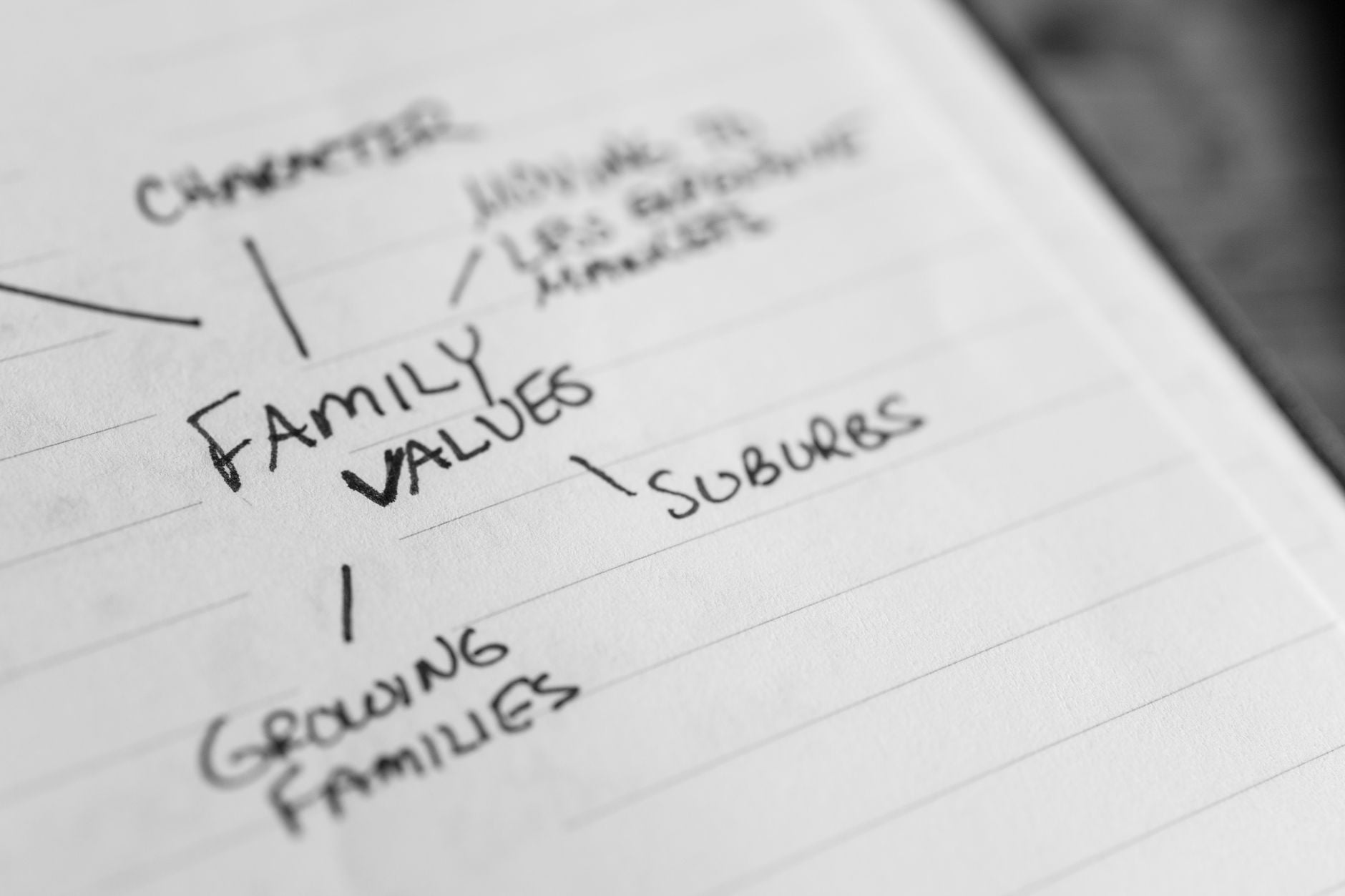
So a short, honest reflection on what you actually care about is worth doing, and it does real work. But the emphasis has to be on honest, because the trap here is naming the values you think you are supposed to hold rather than the ones that are truly yours. A useful test is to look past the tidy words like family or growth and ask concretely: what would you most regret neglecting, whose good opinion do you actually care about, what activities make you lose track of time, what do you find yourself defending. Those questions surface your real values, which are often quieter and less impressive-sounding than the ones we announce, and it is the real ones, not the aspirational ones, that you can actually live by.
The Artful Age
A weekly letter on aging well, family across generations, and the creative life after the kids leave home.
The gap between knowing and doing is the real obstacle
Here is the part almost every article on this subject misses. Knowing your values changes very little on its own. There is a large and well-documented gap between what people intend and what they actually do, and simply strengthening the intention barely narrows it. This is why so many people can tell you exactly what matters to them and still spend their days on things that do not.
The most reliable bridge across that gap is startlingly specific. The psychologist Peter Gollwitzer developed what he called implementation intentions, simple if-then plans that link a concrete situation to a specific action, and a meta-analysis of ninety-four studies found they had a medium-to-large effect on whether people followed through, far more than good intentions alone.
The practical translation is to stop resolving to live by your values in general and instead turn a value into a specific if-then plan. If connection matters, the plan is not value my friendships more but if it is Sunday morning, then I call my sister. If health matters, it is not be healthier but if I finish lunch, then I walk for ten minutes. The value supplies the direction; the if-then plan supplies the behavior, tied to a cue that will actually occur. That pairing, a clear value and a concrete trigger, is what converts a good intention into a lived one.
Values are directions, not destinations
One more shift makes the whole thing sustainable. It is tempting to imagine living by your values as a single dramatic realignment, quitting the job, overhauling the life, finally becoming the person you meant to be. But that framing sets you up to fail, because values are not destinations you arrive at; they are directions you keep steering toward. You never finish being a good friend or a curious person; you simply keep taking the next small action in that direction. This is freeing, because it means you do not need a grand life overhaul to start. A single if-then plan enacted today already counts as living by what matters, and a string of them, repeated, is what a values-driven life actually looks like from the inside.
Keeping it honest
Two cautions keep this grounded. The first is that how fully anyone can live by their values is constrained by circumstance. Obligations, money, caregiving duties and plain bad luck limit everyone’s freedom to act, and the aim is to lean your life in the direction of what matters within the space you have, not to pass or fail some purity test. Someone doing their best inside tight constraints is living by their values every bit as much as someone with more room to maneuver.
The second is that this should not curdle into a new perfectionism, nor into using my values as a cover for simple selfishness. Living by what matters includes values like kindness and responsibility to others, not just personal preference, and it is meant to steady you, not to become one more standard you berate yourself for missing. So take the two real steps and hold them lightly: reflect honestly on what you genuinely care about, then translate one value at a time into a specific if-then action tied to a moment that will actually arrive. Do that, and living in accordance with what truly matters stops being a beautiful abstraction and becomes, quietly, what you are already doing.