The phrase brain foods promises something the body does not really deliver: eat this berry, this handful of nuts, this oily fish, and your memory sharpens and your focus snaps into place. It is an appealing idea and a stubborn one, and there is a real signal underneath it, but the honest version is more sober and more useful than the superfood headlines suggest. The evidence that what you eat affects your brain is genuine, yet it works at the level of long-term dietary patterns rather than single miracle ingredients, the effects are modest, and, as a major recent experiment showed, even the best-studied brain diet is harder to prove than the enthusiasm implies. Knowing where the real signal is, and where it is not, is what makes the topic worth anything.
The real evidence is about patterns, not single foods
The strongest research in this area does not study individual foods in isolation but whole eating patterns. Researchers at Rush University, led by the nutritional epidemiologist Martha Clare Morris, developed the MIND diet, a blend of the Mediterranean and DASH diets, and in observational studies published in 2015 found that people who followed it closely had a substantially lower risk of Alzheimer’s disease and slower cognitive decline than those who did not, even when they followed it only moderately well.
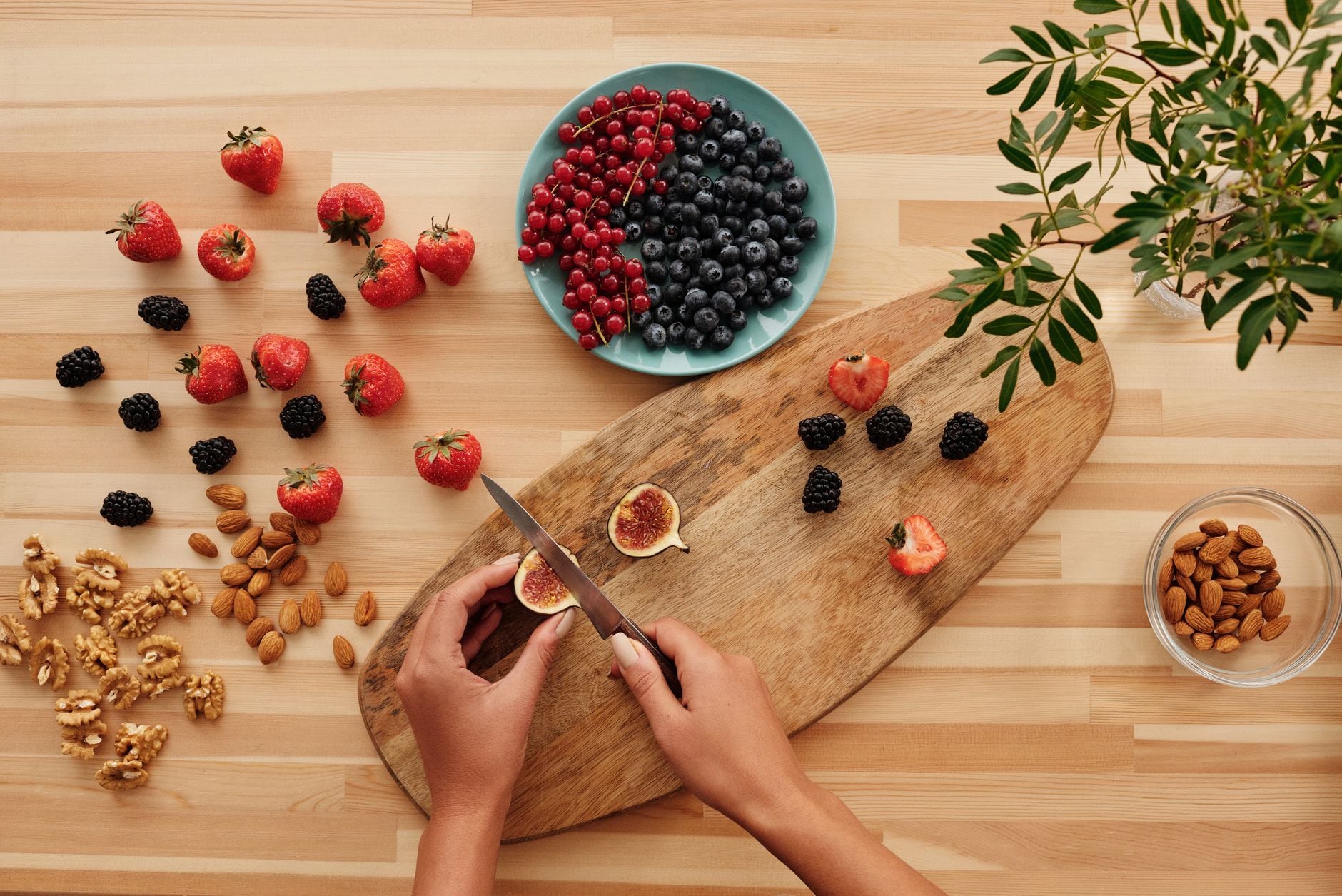
The foods that make up that pattern are the ones that keep appearing on brain-food lists for a reason: green leafy vegetables, berries, nuts, fish, whole grains, beans, and olive oil, alongside less of the red meat, butter, sweets, and fried food that pull in the other direction. The important shift in thinking is that these work, to the extent they work, as a package eaten consistently over years, not as individual sharpeners you can deploy before a big meeting. No single serving of blueberries is going to clear the fog on a given afternoon. What the research actually points to is a durable way of eating, sustained across a long stretch of life, gently associated with a brain that ages better. That is a real finding, but it is a very different promise from the one the phrase brain foods usually makes.
The Artful Age
A weekly letter on aging well, family across generations, and the creative life after the kids leave home.
Why even the good evidence deserves caution
It would be easy to stop there and simply crown the MIND diet, but honesty requires the next part, because the picture is less settled than the observational studies alone suggest. When the same diet was finally put to a rigorous test, a three-year randomized trial of more than 600 older adults, the MIND group improved slightly more in cognition than a control group, but the difference was not statistically significant, and notably both groups lost a similar amount of weight, raising the possibility that any benefit came from the weight loss rather than the specific foods.
This matters a great deal for how confidently anyone should talk about brain foods. Observational studies can show that people who eat a certain way tend to have healthier brains, but they cannot fully separate the diet from everything else that health-conscious eaters tend to do, and when researchers ran the harder experiment that can establish cause, the clear win did not appear. That does not mean the MIND diet is useless; it means the effect, if it exists, is smaller and slower and more entangled with general healthy living than the marketing suggests. And if a whole, carefully designed brain diet struggles to prove itself in a controlled trial, claims about individual superfoods that instantly boost memory or focus rest on far thinner ground still. Most of those claims come from short-term or laboratory studies that do not translate into a sharper mind in real life.
The sensible way to eat for your brain
The useful conclusion is not to give up on food but to right-size the expectation. Eat the pattern the research keeps circling, plenty of vegetables and greens, berries, fish, nuts, beans, whole grains, and olive oil, with less processed and fried food, because whatever its precise effect on memory, it is unambiguously good for your heart, blood vessels, and metabolism, and vascular health is tightly bound up with brain health over time. You lose nothing by eating this way and plausibly gain a slow, modest protection, which is a perfectly good reason to do it even without a guarantee.
What to drop is the fantasy of the single sharpening food and the same-day focus boost. No berry rescues a sleepless afternoon, and the levers that most reliably improve focus and memory in the short term are not on a plate at all: adequate sleep, regular physical activity, and avoiding the blood-sugar spikes and crashes that heavy, sugary food produces. Treat brain foods as one quiet, long-term contributor to an aging brain rather than a cognitive shortcut, keep a healthy skepticism toward any food sold as a memory miracle, and you will be holding the evidence roughly the way the scientists who produced it do.