The question carries a mechanism inside it, and the mechanism is so intuitive that it rarely gets stated. Dull clothes, dull effect. Wear grey and beige for long enough and something in you presumably goes grey and beige too.
There is an entire research field devoted to whether clothing acts on the person wearing it. Its current state is more interesting than either the confident version of this idea or the debunking one, and it answers the question in a way that reframes it.
A field auditing itself in public
In 2012, Adam and Galinsky published a paper called Enclothed cognition. It has since been cited more than 600 times and covered in more than 160 news outlets, which is roughly why the idea that clothes change you is now something people simply know.
The Artful Age
A weekly letter on aging well, family across generations, and the creative life after the kids leave home.
Last year, two of those same authors, working with Horton, published a meta-analysis of their own field. It pooled 105 effects from 40 studies across 24 articles, with 3,789 participants, and ran a z-curve analysis to test whether the accumulated findings had evidential value.
The result comes in two halves, and reporting either one alone would misrepresent it.
The first half: a recent high-powered replication failed to replicate one of the original effects, and their analyses “raise concerns about the replicability of early enclothed cognition studies.”
The second half, in the same sentence: the analyses “affirm the evidential value for effects published after 2015.” Their conclusion is that these later studies “support the core principle of enclothed cognition, what we wear influences how we think, feel, and act.”
It is worth pausing on how unusual that document is. The people who named a field went back through it, found the early work wanting, said so in print, and then made the case that the newer work stands. That is what the process is supposed to look like and it very rarely gets written up this plainly.
What survived, and what it is actually about
Which leaves the more useful question: if clothes do act on the wearer, through what?
Gruber Baitz and Rogaten published an overview this year describing the mechanism as twofold: the symbolic meaning of a garment, and the physical experience of wearing it. Their examples of what the research has found include formal attire promoting abstract thinking, uniforms amplifying empathy or bias, and revealing garments impairing performance by heightening self-objectification.
Those are examples rather than a complete inventory. But read the list again with the original question in mind. Formality. Uniform. How much skin a garment shows.
Not one of them is about how bright a color is.
The quiet substitution
The premise treats vibrancy as the active ingredient, as though saturation were a dose. The evidence points at something else entirely: the active ingredient is what the garment means to the person putting it on.
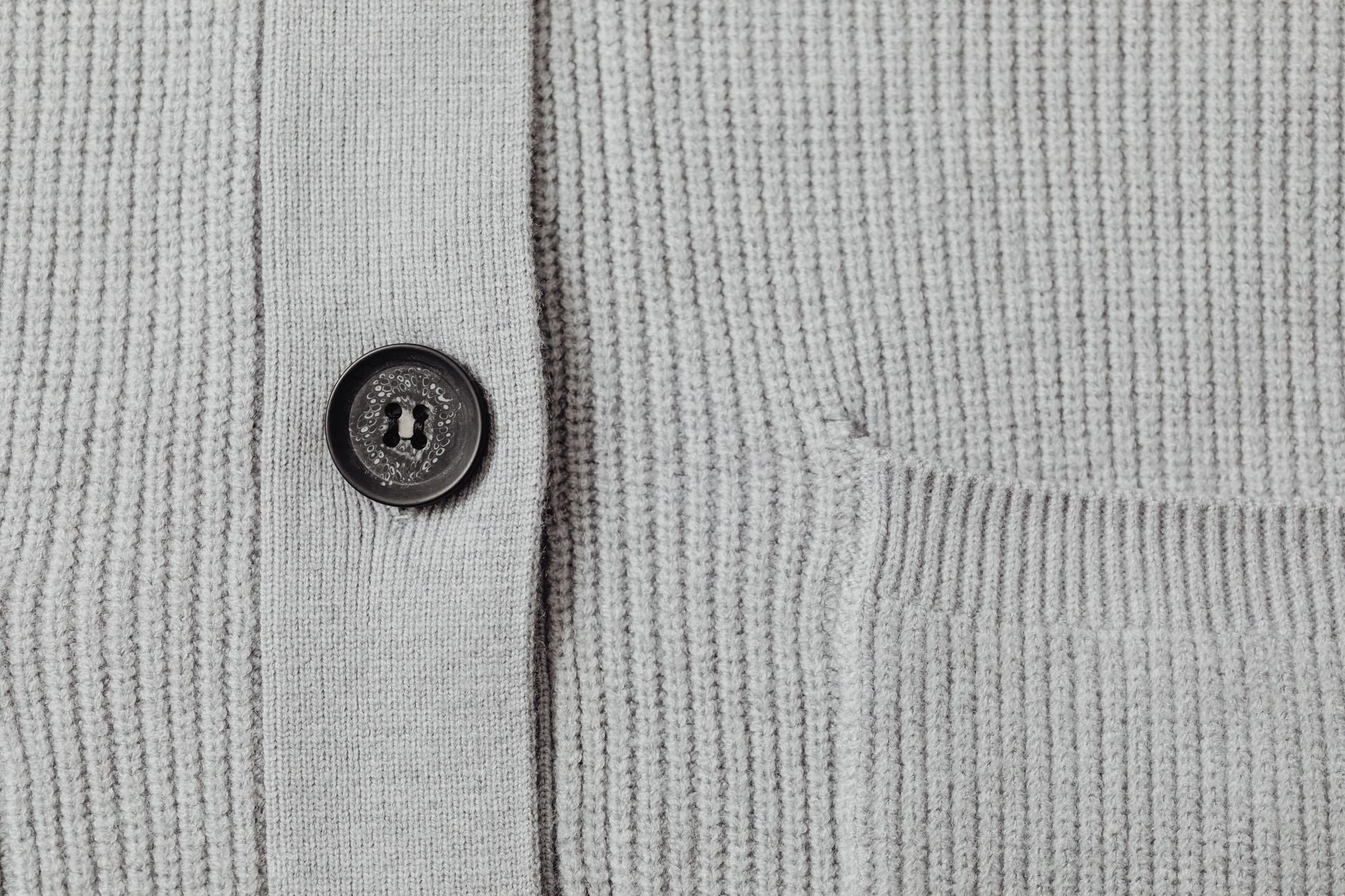
That distinction is not a technicality, because it changes what the question can even ask. A grey cardigan worn because it is soft, warm and unmistakably yours is not the same object as a grey uniform worn because somebody else requires it. Identical saturation, opposite meanings, and on this evidence it is the meaning that travels.
The same logic runs the other way. A brightly colored jacket bought under mild duress because a magazine or a well-meaning relative said it would lift you is a garment that means “I am being managed.” Its wavelength is irrelevant to that.
Being clear about what has and has not been read
Both sources here were read as abstracts rather than in full, and neither full text was accessible. The failed replication that both of them refer to was not accessed either, and it is described here only as the meta-analysis describes it, which is as much as can honestly be said about it from this distance.
This is also deliberately not a piece about color and mood. Whether particular colors track with how people feel is a separate literature with its own studies, and it does not answer a question about what wearing something does to the wearer.
What is left of the question
Clothes do appear to act on the people inside them. That is not folklore, and the strongest evidence for it is recent rather than famous. The founders of the claim have audited it in public and concluded that the newer work holds up.
But nothing in that body of research says a muted wardrobe is quietly doing something to you. What it keeps finding instead is that a garment’s meaning is the thing that carries, and meaning is not a property of the dye. It comes from what the clothing says about the role you are in, who chose it, and whether wearing it feels like being yourself or being processed.
Which suggests a better question than the one in the title. Not whether your clothes are bright enough, but whether they are yours. A person in head-to-toe charcoal who chose every piece of it is not in the same psychological situation as a person in the same charcoal because nothing else still fits, or because it is what you wear when you have stopped expecting to be looked at. The color is identical. The two situations are not, and only one of them is a wardrobe problem.