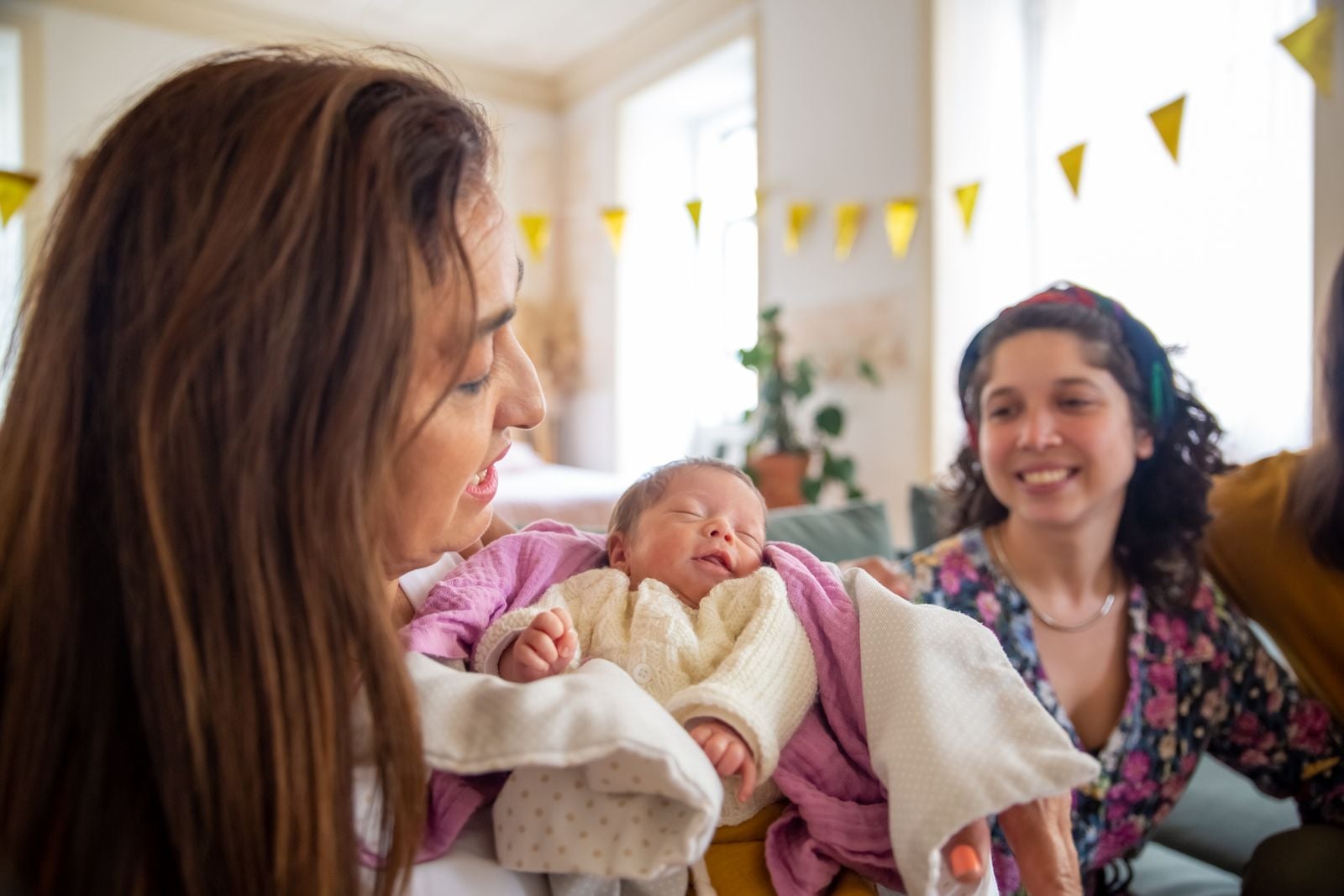
A six-month-old lying on a mat in a Tokyo apartment, a six-month-old in a Nairobi courtyard, and a six-month-old in an Oslo living room are, phonetically speaking, closer to each other than any of them will ever be again. They babble in the same rough acoustic pool — clicks, trills, plosives, vowels that don’t belong to any single language yet. By the time each turns one, that pool has been drained down to the shape of whatever tongue is spoken over the crib. Linguists call this narrowing perceptual reorganisation, and it is one of the most consequential things a human brain does in its first year.
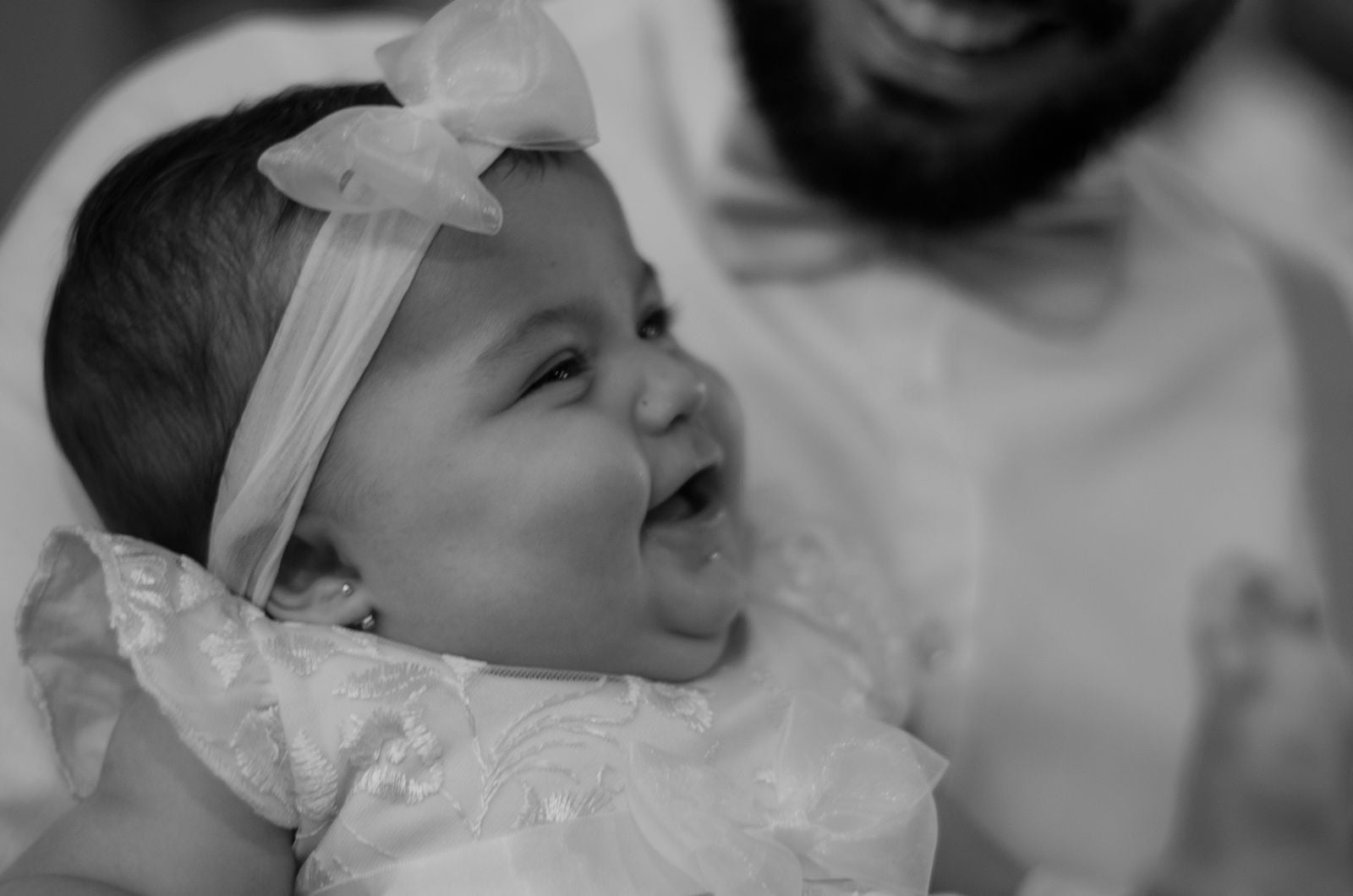
The pruning is not neutral. It is what makes a Japanese adult struggle to hear the difference between English r and l, and what makes an English-speaking adult unable to reliably produce the click consonants of isiXhosa. The window in which every baby can hear every sound closes quietly, without ceremony, sometime around the first birthday.
What babies actually do with their mouths at six months
At around five to seven months, most infants enter the canonical babbling stage — reduplicated syllables like bababa, dadada, mamama. The sounds are produced with a vocal tract that is still reorganising itself. The larynx is descending. The tongue is learning where the roof of the mouth is. The lips are practising closure.
The Artful Age
A weekly letter on aging well, family across generations, and the creative life after the kids leave home.
What comes out, in those early months, is a wide inventory. Early babbling contains sounds that do not appear in the ambient language — a French baby producing something like an English final consonant, an English baby producing something like a French elongated vowel. The University of Liverpool has documented how quickly this begins to shift toward the caregiver’s phonology, sometimes visibly enough that a toddler’s babble carries a regional accent before it carries a single real word.
The narrowing
Between roughly six and twelve months, two things happen at once. Babies get better at hearing the sounds around them, and they get worse at hearing sounds that aren’t around them. This is not a metaphor. Six-month-olds reliably discriminate phonetic contrasts from languages they have never been exposed to. Twelve-month-olds, tested on the same contrasts, often cannot.
The brain is treating unused sound categories the way it treats unused neural pathways in general — as candidates for pruning. Neural pruning is part of typical brain development in early childhood. Perceptual reorganisation is that same editing logic applied to sound. Keep what you hear. Let the rest fade.
Why the caregiver matters more than the vocabulary
The pruning is driven by exposure, but not passive exposure. What babies need is response — someone talking back, quickly, when they vocalise. Research from Michael Goldstein’s Behavioral Analysis of Beginning Years Lab at Cornell has spent years pulling apart what makes an adult reply useful to an infant, and the finding keeps coming back to timing.
In a 2024 study, Goldstein’s team placed babies aged seven and eight months in a playroom with a remote-controlled car that produced vowel sounds in response to their babbling. Within ten minutes, the babies had formed strong expectations that the car would answer them. When the car went silent, they babbled harder, grabbed it, moved it. The reaction was stronger than what they showed toward unfamiliar humans in the same setup. The Cornell team concluded that what is built into the baby is not face recognition or language-specific knowledge but attention to contingency — the fact that something out there reacts to me, close in time to what I just did.
According to research from Cornell, babies appear to be innately programmed to notice timing and contingency in responses, which drives their language learning. The research suggests that babies learn rapidly when adults respond appropriately and in a timely manner to their vocalizations.
The simplification loop
Something else happens in these exchanges that most adults never notice they are doing. When a baby babbles, and a caregiver responds within about three seconds, the caregiver’s speech shortens. Fewer words per utterance. More single-word replies. Simpler grammar. The same adult, talking to the same baby about something the baby did not just vocalise about, uses longer and more complex sentences.
Goldstein and Steven Elmlinger, now at Princeton, analysed more than 1,500 transcripts of parent-child interaction across thirteen languages — French, Spanish, Swedish, Estonian, Korean, Japanese, and others — and found the same pattern everywhere. Their Current Biology paper called it the simplification effect. Babies, by babbling, extract from adults exactly the kind of speech that is easiest to learn from.
The effect held even among Tseltal Mayan families in southern Mexico, subsistence farmers who do not engage children in the singsong, face-to-face style common in American nurseries. Some developmental psychologists had pointed to that cultural variation as evidence that language must be innate, or picked up by overhearing rather than by interaction. The transcripts said otherwise. Tseltal caregivers were also simplifying their contingent replies — just in their own idiom.
What the accent tells you
A video of a 19-month-old from Liverpool named Orla went viral on social media. Orla was refusing a nap, and her refusal came out in fluent babble with an unmistakable scouse lilt. She could not yet form most real words. She had, however, already absorbed the specific rhythm and vowel colouring of the English spoken around her.
This is what perceptual reorganisation looks like from the outside. English-learning babies tend to produce more syllables ending in consonants — ack, et, ug. French-learning babies stretch the final syllable of a babbled phrase, holding the vowel. By the time a toddler is Orla’s age, the babble has already been shaped by months of listening. As linguist Andrew Jessop explained, the babble carries the phonology of the ambient language long before the vocabulary does.
The gap between hearing and speaking
Toddlers understand far more than they can say. By nine months, most infants recognise common words like milk and nose, though they cannot produce them. Between one and two years old, receptive vocabulary explodes — hundreds of words understood — while productive vocabulary lags behind, sometimes by half. This gap between comprehension and production is a characteristic feature of early language development.
It is why Orla could answer a question with a firm no and then explain her refusal in babble. The understanding was there. The motor coordination to form the specific consonants and vowels of English words was still catching up. A 2023 paper in Frontiers in Psychology traced how early recognition of familiar word-forms tracks with, but runs ahead of, production skills across the first two years.
Why baby talk is not silly
The high pitch, the slowed tempo, the exaggerated vowels — the register English speakers sometimes call motherese or parentese — turn out to be doing real acoustic work. Smithsonian Magazine’s review of the research laid out how the vowel-heavy vocabulary and elevated pitch of infant-directed speech make phonetic contrasts easier for a developing auditory system to pick apart. The exaggeration is a teaching signal. Babies prefer to listen to it. They learn faster from it.
This is not a Western invention. Variants of infant-directed speech have been observed across cultures, tuned to local phonology.
What happens when the window closes
Adults can learn new languages. What adults cannot easily do is hear phonetic contrasts their infant brain decided, twenty or forty or sixty years ago, not to keep. The Japanese speaker learning English at 35 is not lazy about r and l. Those two sounds were collapsed into a single perceptual category around her first birthday, and unlearning that categorisation takes hundreds of hours of targeted training, often without full success.
Some plasticity survives. Bilingual households, where two phonologies compete for the pruning algorithm’s attention, produce children who keep both sound inventories. Adopted children moved between language environments in the first year retain more of the destination language’s sound categories than those moved later.
The practical upshot
The old advice — talk to your baby — is not wrong, but the Cornell research keeps sharpening it. What matters is not word count in the abstract. It is responsive word count. When a five-month-old vocalises, and someone answers within a few seconds, the baby learns two things at once: that the sound they made had an effect, and that a simplified version of the ambient language is now being offered to them in reply.
The lower-income vocabulary gap that education researchers have tracked for decades is real, but Goldstein and Elmlinger argue the intervention target is not the total volume of speech directed at children. It is the timing and quality of the reply to whatever the baby just did. The researchers emphasize that timely parental responses to baby vocalizations facilitate rapid, in-the-moment learning.
The finding aligns with what shows up in a decade of related work summarised in The Atlantic: caregivers who treat babble as if it means something — who reply as though a conversation is in progress — produce children whose language develops faster. The pretence is not a pretence to the baby. It is the loop that closes the learning circuit.
Where the fact lands
Somewhere between six and twelve months, in nurseries in every time zone, a quiet act of specialisation is finishing. The baby who could hear everything becomes the baby who hears one thing well. The clicks that were available to the Nairobi baby fade in the Oslo baby. The pitch contours that would have made the Tokyo baby a native Mandarin listener are gently retired. Each child is being tuned to the exact instrument their family plays.
The tuning is done by the first birthday. What survives is a phonological fingerprint that will shape how that person hears every language, every accent, every stranger’s voice for the rest of their life. It is the earliest thing a human being commits to, and it happens before they can walk.