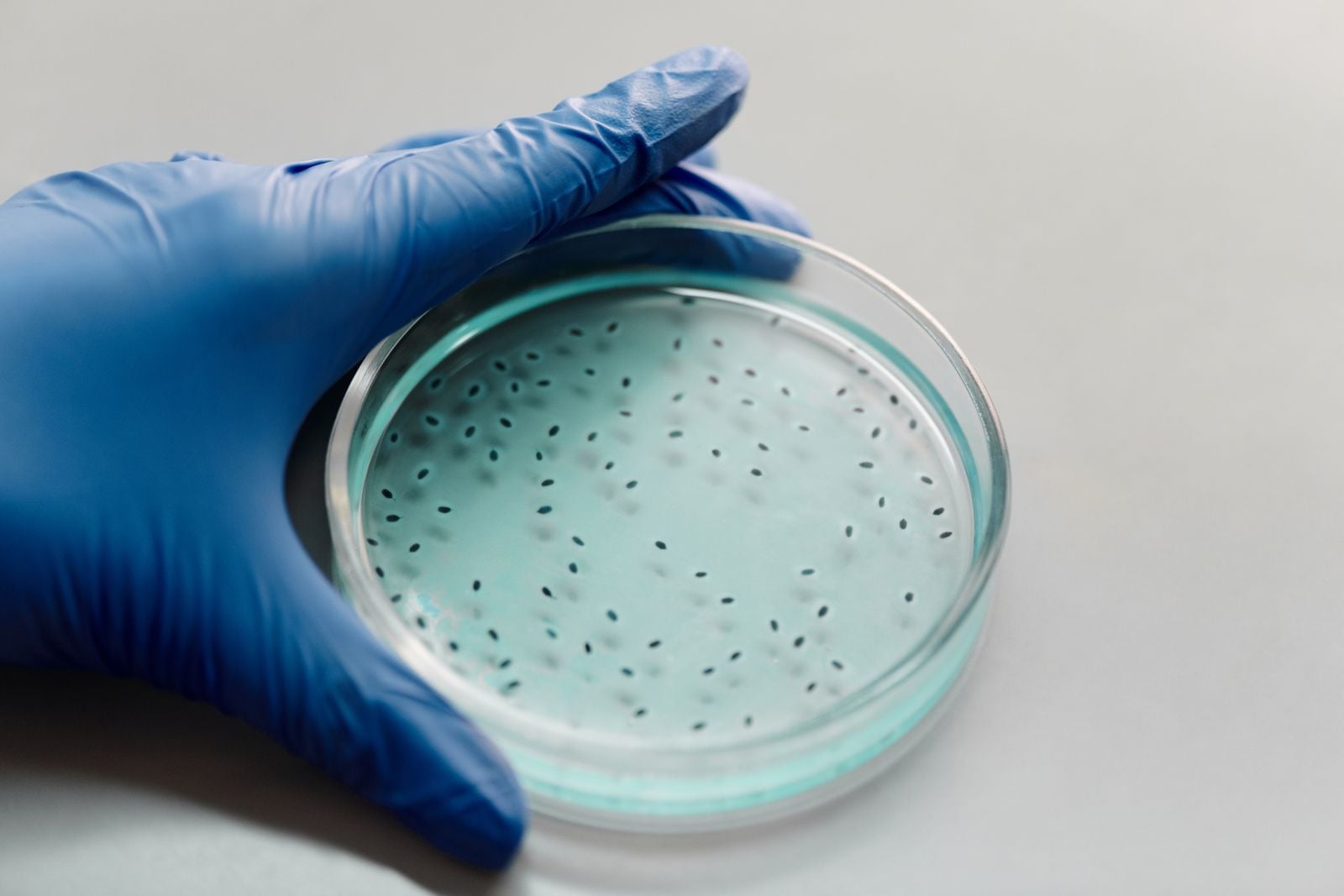
The familiar classroom version of penicillin begins with one lucky accident: Alexander Fleming returns from holiday, finds mould on a forgotten dish and immediately understands that medicine has changed forever. The documented history is more interesting because it is less tidy. The contamination was accidental, but Fleming’s ability to recognise that the strange clear area mattered came after years spent studying bacteria, antiseptics and the body’s own defences.
In September 1928, Fleming examined a culture of Staphylococcus at St Mary’s Hospital in London and saw that bacterial growth had been disrupted around a contaminating mould. He did not yet have a purified drug, a tested treatment or a method for manufacturing it. What he had was an unusual laboratory result and enough experience to investigate it.
The war that changed his research
Fleming was already a medical bacteriologist before the First World War. During the conflict, he served in the Royal Army Medical Corps and worked in a wound-research laboratory in Boulogne under Almroth Wright. As the Science History Institute records, Fleming’s experiments showed that commonly used chemical antiseptics could damage white blood cells even at concentrations that failed to eliminate bacteria inside complicated wounds.
The Artful Age
A weekly letter on aging well, family across generations, and the creative life after the kids leave home.
That finding challenged the reassuring idea that a strong antiseptic necessarily made a deep wound safer. Bacteria could remain protected inside damaged tissue while the chemicals weakened part of the patient’s natural defence. Fleming continued investigating leukocytes and antisepsis after returning to St Mary’s.
The 1918 influenza pandemic provided a wider demonstration of how infection could overwhelm military medicine. One account preserved by Hakai Magazine describes coffins being lowered from the troopship Leviathan while the vessel continued through waters threatened by German submarines. More than 9,000 troops had boarded the ship, and thousands became ill during the voyage.
Influenza was not the only biological danger. A 2008 review in The Journal of Infectious Diseases examined tissue samples and thousands of historical autopsy reports. Its authors concluded that secondary bacterial pneumonia caused by ordinary upper-respiratory bacteria was implicated in most deaths during the 1918–1919 pandemic.
The work that came before penicillin
Fleming’s first major postwar discovery concerned a substance already produced by the body. In 1921, he identified an antibacterial substance in nasal mucus and later found it in tears, saliva, blood serum and other fluids. He called it lysozyme.
Lysozyme could break down certain bacteria, but it was much more effective against relatively harmless airborne organisms than against the pathogens responsible for many serious infections. Attempts to concentrate it into something more powerful also failed. It remained an important biological discovery without becoming the broad treatment physicians needed.
This part of the chronology matters because it corrects the idea that Fleming spent the entire decade consciously hunting the drug he would eventually call penicillin. His research remained centred on bacteria, white blood cells, antisepsis and natural antibacterial substances. However, the Science History Institute’s account notes that he was not specifically looking for a systemic curative agent when the contaminated plate appeared.
The plate and the uncertain details around it
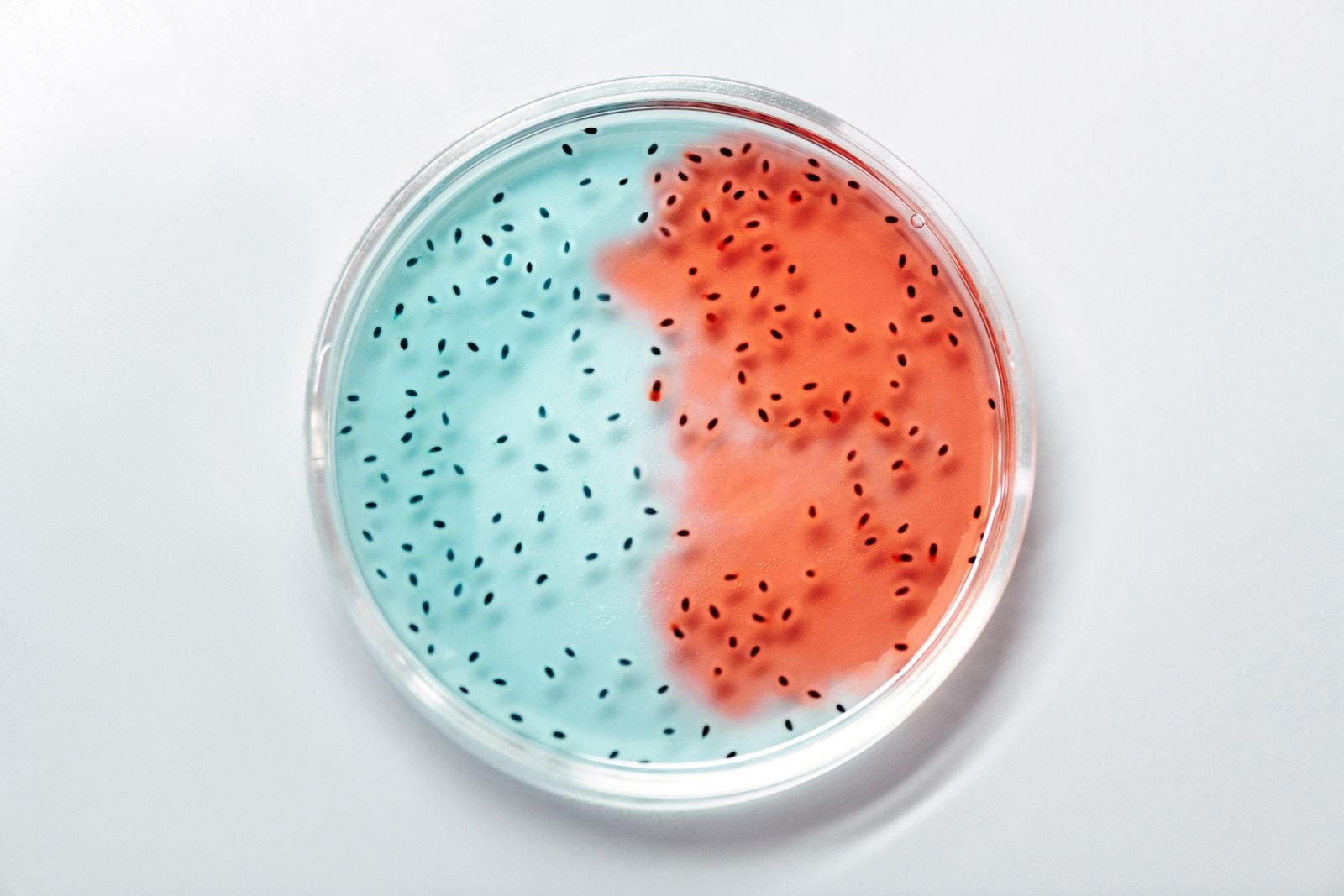
What can be stated securely is that Fleming returned from a holiday in September 1928 and examined plates containing colonies of Staphylococcus. As the Science Museum explains, mould was growing on one plate and appeared to prevent the surrounding bacteria from growing normally. The altered or clear area around the mould indicated that something produced by it was diffusing through the culture medium.
The famous open-window story is less certain. Fleming’s surviving laboratory notes are incomplete, and his later accounts were not always consistent. Researchers have proposed that a spore may have entered through a window or travelled from a laboratory elsewhere in the building, but the exact route cannot be recovered confidently from contemporary evidence.
The mould’s name also requires care. It was described under different species names over the decades, including Penicillium notatum and Penicillium chrysogenum. A 2011 taxonomic study published in IMA Fungus identified Fleming’s preserved penicillin-producing strain as Penicillium rubens.
Fleming photographed the phenomenon and continued experimenting with the mould. The British Library catalogue also records a 1928 bacteriological culture plate and accompanying model among the Fleming papers. The catalogue establishes that the preserved objects are held there, although it should not be used to prove every detail of the later discovery story.
What Fleming established
Fleming cultured the mould in liquid, filtered the material and named its antibacterial component penicillin. Tests showed activity against several medically important bacteria, including staphylococci and streptococci, while other organisms were largely unaffected. The selectivity was scientifically valuable, but it also meant penicillin was never a universal bacteria killer.
Fleming and his assistants Stuart Craddock and Frederick Ridley tried to isolate the active substance. It was unstable, difficult to concentrate and available only as crude material. Fleming’s June 1929 paper gave limited attention to possible therapeutic use and placed considerable emphasis on penicillin as a laboratory aid for separating susceptible bacteria from resistant ones in mixed cultures.
He had therefore made a real discovery, but not a finished medicine. He had not established a reliable dose, demonstrated that it could cure a systemic infection or solved the problems of purification and production. Those achievements belonged to a larger team working more than a decade later.
How Oxford turned an observation into treatment
Howard Florey, Ernst Chain and their colleagues at Oxford began sustained work on penicillin before the Second World War. Norman Heatley developed crucial assay and extraction methods, while Edward Abraham contributed to purification. By 1940, the group had shown that penicillin could protect experimentally infected mice.
The first adult treated by the Oxford team in 1941 was Albert Alexander, a 43-year-old police constable with a severe infection. His condition improved after penicillin was administered, but the team’s supply ran out before treatment could be completed. The infection returned, and Alexander died.
The episode showed both the drug’s promise and the scale of the production problem. Growing mould in laboratory vessels could provide enough material for experiments, but not enough for routine treatment. Florey and Heatley travelled to the United States in 1941, where researchers at the Department of Agriculture’s Northern Regional Research Laboratory in Peoria worked with pharmaceutical companies to improve cultures, fermentation and extraction.
The American Chemical Society’s historical account describes the United States as playing the major role in large-scale wartime production. Deep-tank fermentation, improved growth media and higher-yield mould strains helped turn scarce laboratory material into a drug available to Allied forces by the time of the Normandy landings in 1944.
Fleming, Florey and Chain shared the 1945 Nobel Prize in Physiology or Medicine. The award recognised Fleming’s discovery and the Oxford team’s demonstration of penicillin’s therapeutic effects, but the complete story also includes Heatley, Abraham, laboratory technicians, government researchers, engineers and pharmaceutical workers.
Why the halo still matters
The clear area on Fleming’s plate did not announce everything that penicillin would become. It provided evidence that a mould produced something capable of inhibiting susceptible bacteria. Observation had to be followed by testing, publication, purification, animal experiments, clinical use and industrial production.
For parents and educators sharing this history with children, that longer version offers a better picture of how science works. Luck can place an unexpected result on a laboratory bench, but luck does not interpret the result or turn it into medicine. Fleming recognised an anomaly because of the work that came before him, and later teams transformed his observation through chemistry, engineering and collaboration.
The plate’s pale halo remains compelling precisely because it looked so modest. Many people might have discarded the contaminated culture without another thought. Fleming stopped, looked again and began the investigation, but it took an international network of researchers and manufacturers to carry that moment from a London bench into hospitals around the world.