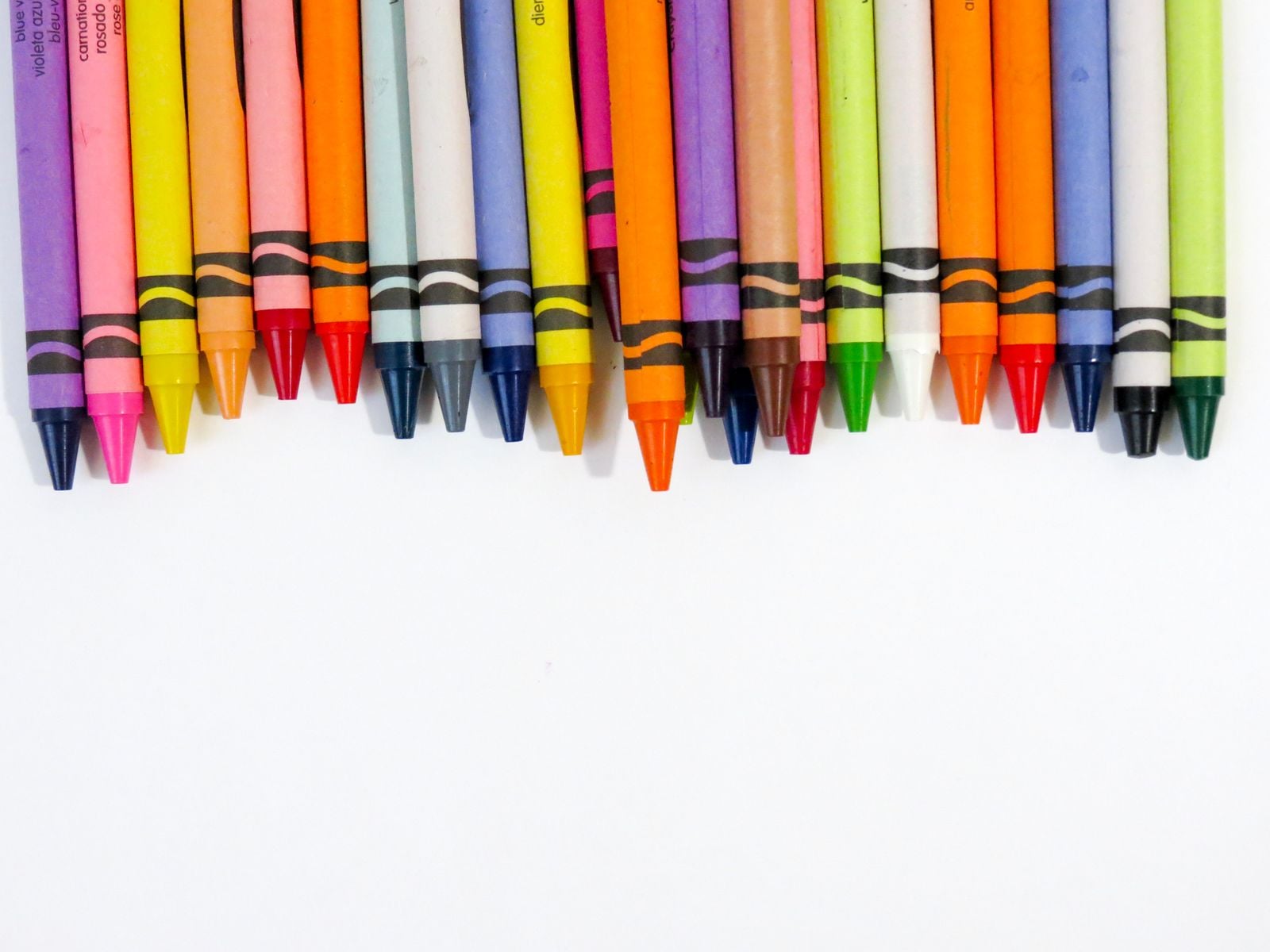
Open a fresh box of Crayola crayons and the familiar waxy scent arrives before the colours do. The names and packaging have multiplied since 1903, but the material inside remains remarkably close to the original idea: pigment suspended in paraffin wax, moulded into a paper-wrapped stick.
Crayola’s company history identifies Edwin Binney and C. Harold Smith as cousins who took over Edwin’s father’s pigment business in 1885. In June 1903, their company introduced an affordable, non-toxic box of eight Crayola crayons for five cents.
The original colours were black, brown, blue, red, violet, orange, yellow, and green. That small box became the ancestor of every larger assortment now found in classrooms and family craft cupboards.
The Artful Age
A weekly letter on aging well, family across generations, and the creative life after the kids leave home.
An industrial marking crayon came first
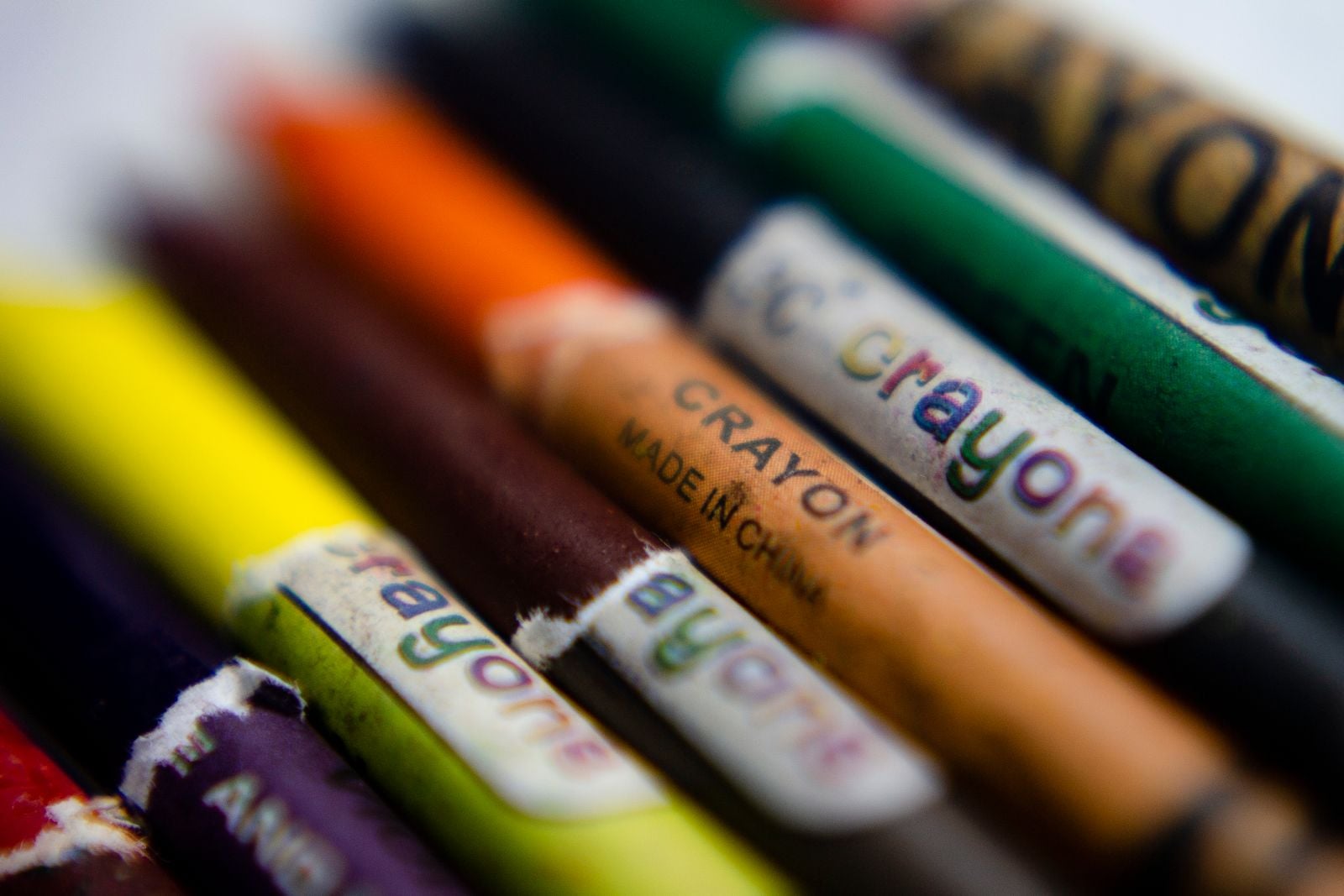
Binney & Smith did not begin with children’s art supplies. Its early products included red oxide pigment for barn paint, carbon black for printing ink and car tyres, chalk, and slate pencils.
The company also produced Staonal, a black wax marker intended for crates and barrels. According to the American Oil & Gas Historical Society’s account of the product, its concentrated carbon-black content made it unsuitable for children.
That distinction matters. The industrial marker was not the non-toxic eight-colour Crayola box. Experience combining wax with pigment helped Binney & Smith develop a separate, affordable range using pigments suitable for schoolchildren.
The schoolteacher who named Crayola
Alice Stead Binney, Edwin’s wife and a former schoolteacher, coined the name. She combined craie, the French word for chalk, with ola, from “oleaginous,” meaning oily.
The name described the product’s basic character. It was a coloured drawing material built around petroleum-derived wax, packaged in a form children could hold and use without the water, brushes, or preparation required by paint.
Why the basic recipe endured
Many products introduced in 1903 have disappeared or been reformulated beyond recognition. Crayons are an unusual exception. An Associated Press report marking Crayola’s centenary still described the product as a combination of paraffin wax and pigment.
Crayola’s current manufacturing explanation says its crayons are made primarily from paraffin wax and colour pigment. The wax is melted, blended with measured pigments, poured into moulding machines, and allowed to solidify for four to seven minutes.
Specific formulas vary, particularly for glitter, metallic, and other special-effect crayons. The broad structure, however, remains the same: wax carries the colour, the mould creates the stick, and the paper wrapper keeps it manageable in the hand.
From eight colours to more than a hundred
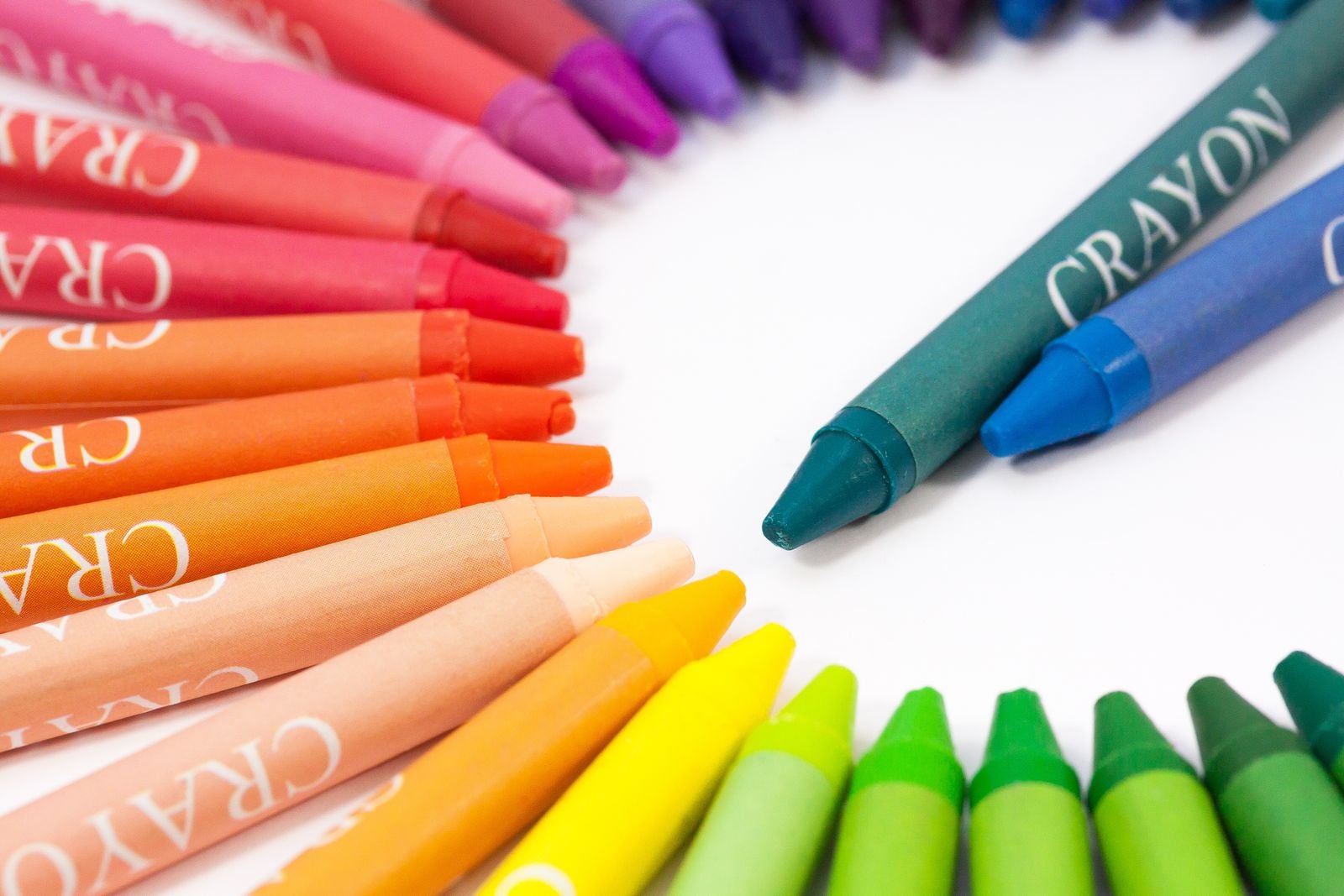
The palette grew in stages rather than all at once. A Business Insider chronology of Crayola colours begins with the original eight and traces the expansion through later product launches.
Current assortments range far beyond that first nickel box. Crayola’s Ultimate Crayon Collection contains 152 crayons, including standard, metallic, and glitter colours.
Colours have also been renamed and retired. In February 2025, Crayola announced the return of eight retired colours, including Dandelion, Blizzard Blue, Magic Mint, Mulberry, Orange Red, Violet Blue, Lemon Yellow, and Raw Umber. The eight-count format was a deliberate nod to the original 1903 box.
The familiar smell
The scent of a Crayola crayon is not merely familiar in an anecdotal sense. Crayola’s summary of a Yale University aroma-identification study places crayons eighteenth among the twenty most recognisable smells tested.
The company does not publish every detail of its proprietary formulas, so attributing that scent to one ingredient goes beyond the available evidence. It is more accurate to describe it as the smell of the finished crayon, created by its combination of wax, pigment, and other formulation ingredients.
For many adults, that smell is inseparable from classrooms, colouring books, and kitchen-table drawings. The emotional response may differ from person to person, but the scent’s recognisability is well documented.
Easton remains central to the story
Binney & Smith opened a mill near Easton, Pennsylvania, in 1900 and moved its headquarters there when the business incorporated in 1902. Crayola’s world headquarters and major manufacturing facilities remain in Pennsylvania’s Lehigh Valley.
Downtown Easton is also home to the Crayola Experience. Its Crayon Factory Show demonstrates how crayons are made, giving visitors a simplified view of the same sequence of melting, blending, moulding, cooling, and wrapping used in production.
Why the crayon remains practical
A crayon needs no cap, water cup, charging cable, or drying time. It can make a light mark or a dense block of colour depending on pressure, and a broken crayon remains usable.
Those qualities make crayons forgiving for young children who are still experimenting with grip, pressure, and movement. The resistance of wax against paper also gives immediate physical feedback that a smooth glass screen cannot reproduce.
The usefulness is not limited to children. In a report on adult colouring, Dexter Senior Center Executive Director Anna Pekrul said its colouring group remained consistently attended even as the centre introduced more specialised art classes. She also described the social connection around the table as an important part of the activity.
Twelve million crayons a day
Crayola says it produces nearly three billion crayons annually, averaging twelve million a day. The company estimates that the yearly output would be enough to circle the globe six times.
Modern collections include names such as Razzle Dazzle Rose, Neon Carrot, and Screamin’ Green. Yet the familiar black, brown, blue, red, violet or purple, orange, yellow, and green remain close at hand. The palette changed, the factories accelerated, and the boxes grew, but the essential act is still the same: wax and pigment meeting paper under the pressure of a hand.