
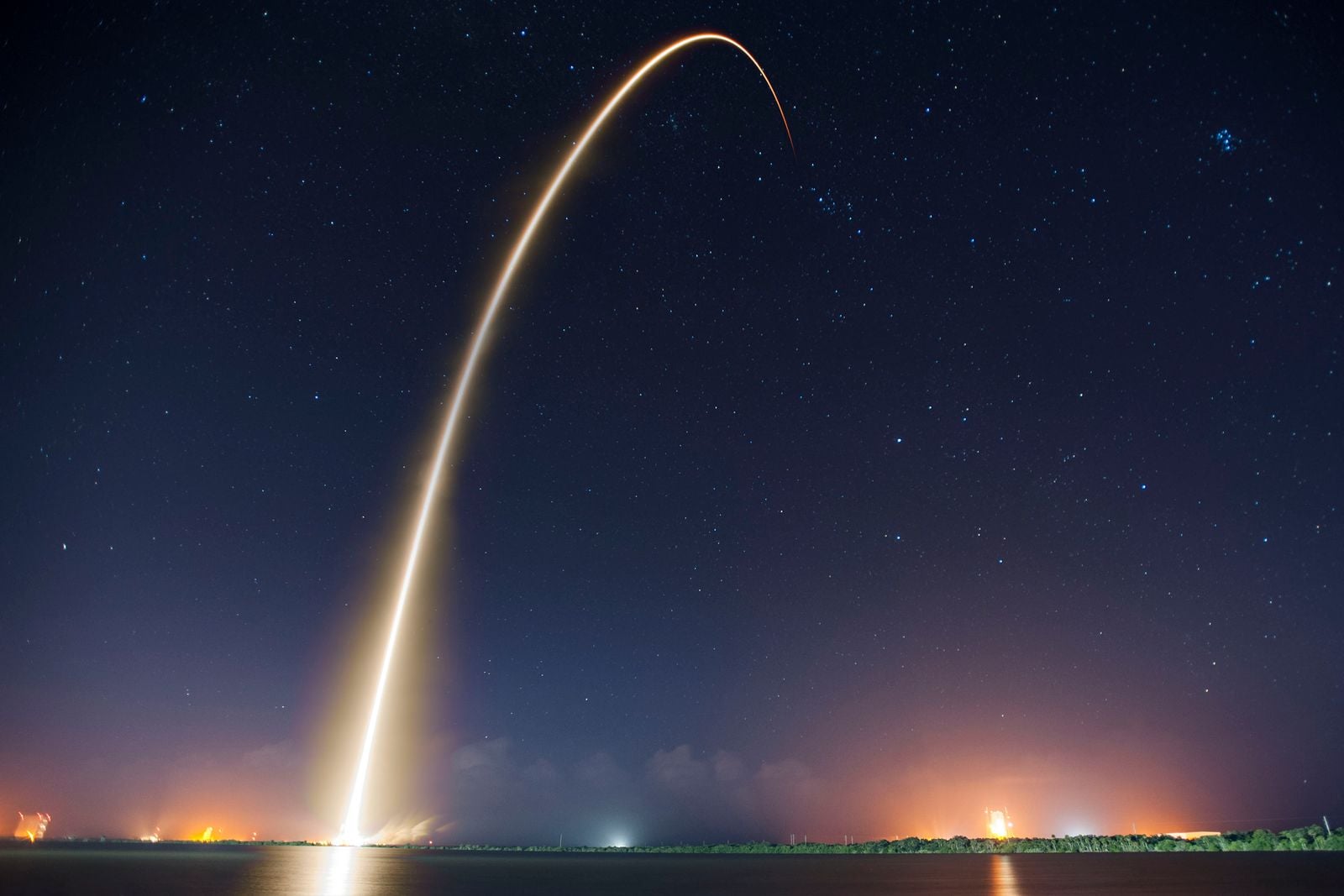
Mariner 1 lifted off from Cape Canaveral at 5:21am on 22 July 1962 carrying no camera. The payload was a set of radiometers, a cosmic dust detector and a plasma spectrometer, because the goal was to measure Venus, not to photograph her. Two hundred and ninety-three seconds later, a range safety officer sent the destruct command and the Atlas-Agena rocket broke apart over the Atlantic. The probe never left the sky above Florida.
The mission was a scientific instrument suite, not a portrait studio. That distinction matters, because the popular retelling of Mariner 1 has flattened into a story about a typo and a fireball. The truth is stranger, more specific, and more revealing about what early planetary science looked like when the whole enterprise fit on a single Atlas booster.
What Mariner 1 was actually built to do
Venus in 1962 was a closed book. Ground telescopes could see the top of a cloud deck and nothing beneath it. Astronomers argued about whether the surface was a swamp, a desert, or an ocean of carbonated water. The point of the Mariner program, born in the early planning years at NASA’s Jet Propulsion Laboratory, was to fly past the planet close enough to take measurements no telescope on Earth could take.
The Artful Age
A weekly letter on aging well, family across generations, and the creative life after the kids leave home.
Mariner 1 carried a microwave radiometer to read temperatures beneath the cloud tops. It carried an infrared radiometer to map heat across the disk. A magnetometer would look for a planetary magnetic field. A charged particle detector and a plasma spectrometer would sample the solar wind on the way in. A cosmic dust detector would count grain impacts across interplanetary space.
No camera. The engineers had made a deliberate choice. Bandwidth back to Earth was measured in a handful of bits per second, and imaging hardware in 1962 was heavy, fragile and expensive on power. The team chose numbers over pictures. They wanted to know what Venus was, not what it looked like.
The launch, minute by minute
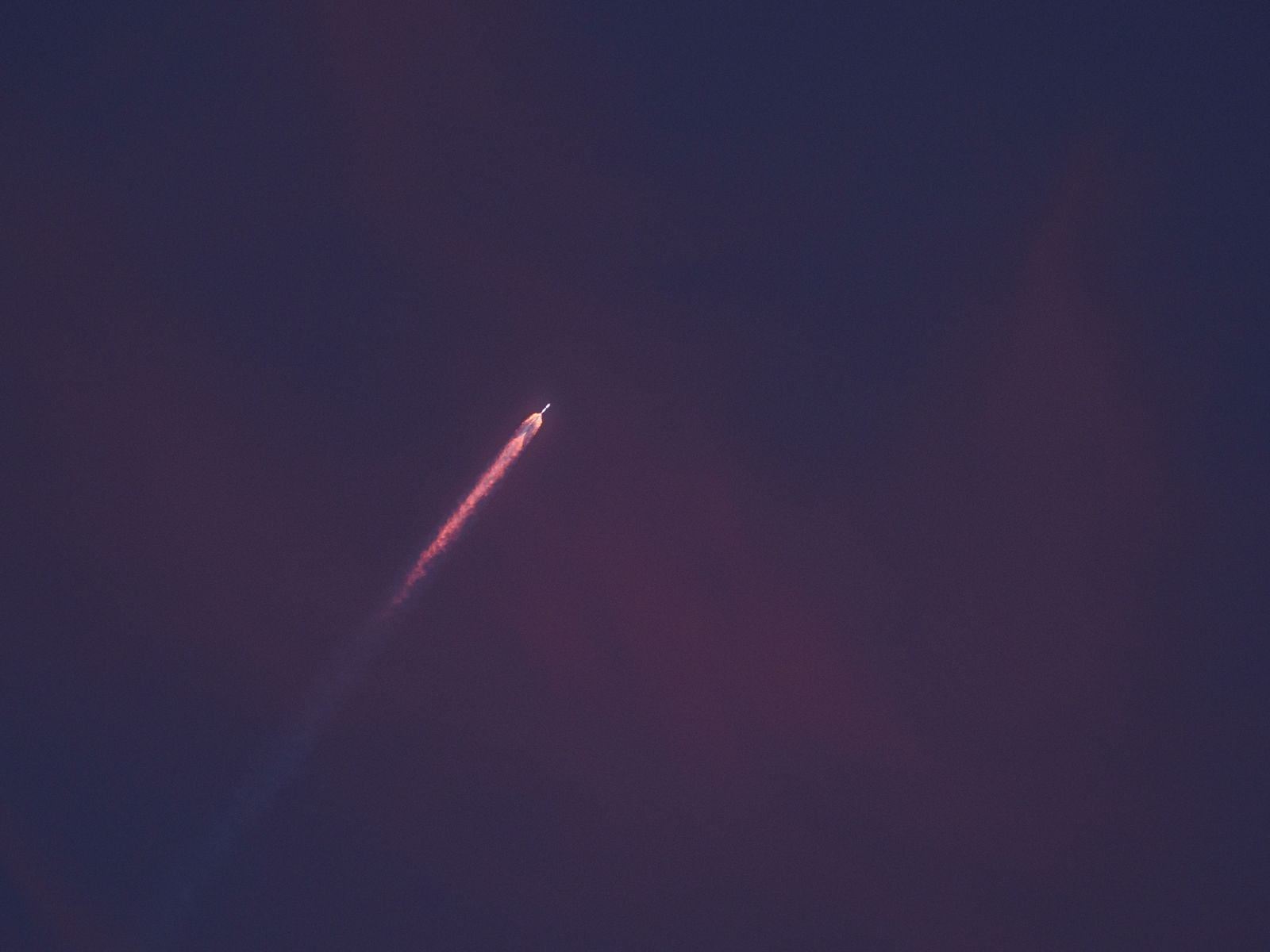
The Atlas-Agena B lifted off at 5:21am local time from Launch Complex 12 at Cape Canaveral. The Atlas provided the first push. The Agena upper stage was meant to circularise into a parking orbit, then reignite to send the 447-pound probe on a Venus-bound trajectory.
The trouble started almost immediately. The rocket’s guidance system, which was tracked from the ground rather than run onboard, began receiving corrupted velocity data. The onboard steering tried to correct for a drift that was not really happening. The Atlas started yawing north-east, toward the shipping lanes off the North Atlantic coast.
At T+293 seconds, with the vehicle heading toward populated areas and clearly beyond recovery, the range safety officer sent the destruct signal. The Atlas exploded. Debris rained into the ocean.
The hyphen that wasn’t
The story that has attached itself to Mariner 1 is the story of a missing hyphen. Arthur C. Clarke coined the line in his 1968 book The Promise of Space, calling the error “the most expensive hyphen in history.” The line has been repeated in headlines ever since — most recently in a UNILAD Tech write-up putting the cost at $80 million in 1962 dollars.
The real error was not a hyphen. It was an overbar. NASA’s own history office has confirmed as much, noting explicitly that the omission was a missing overbar, not a hyphen, despite decades of retellings. In the guidance equations transcribed by hand for the ground-based tracking computer, a bar was meant to sit above the symbol R, indicating that the value should be smoothed — averaged over several readings rather than taken raw. The transcriber left the bar off. The computer, following its instructions faithfully, treated every twitch in the raw velocity reading as a real course deviation and commanded the rocket to compensate.
A NASA post-mortem later identified the missing overbar as one of two combined faults. The other was a hardware failure in the Atlas’s rate beacon, which had already been feeding noisy data. Either fault alone would probably have been survivable. Together, they were fatal. The early space program ran on hand-transcribed code and paper documentation, a working method that made a single missed symbol capable of ending a mission.
Why the story keeps getting retold wrong
Clarke’s line about the hyphen was catchier than the truth. A missing overbar is hard to visualise. A missing hyphen fits in a sentence. The story compressed itself down to something readers could picture, and the compression stuck.
The financial claim compressed too. The $80 million figure comes from adding the launch vehicle, the spacecraft, the ground support and the mission planning. Some retellings inflate it to modern dollars without saying so. Recent coverage puts the loss squarely in the pantheon of single-character disasters, in the same breath as the Reinhart-Rogoff Excel spreadsheet error that shaped a decade of austerity economics.
The mechanism keeps getting muddled in the retelling, too. The overbar becomes a hyphen, the hyphen becomes a comma, and the story slides further from the actual JPL post-mortem.
Mariner 2 and the vindication five weeks later
The Mariner program was built as a pair. Mariner 1 and Mariner 2 were identical twins, the same practice NASA would later repeat with Spirit and Opportunity on Mars. If one failed, the other could still fly. That redundancy is the reason the Venus program did not end on 22 July.
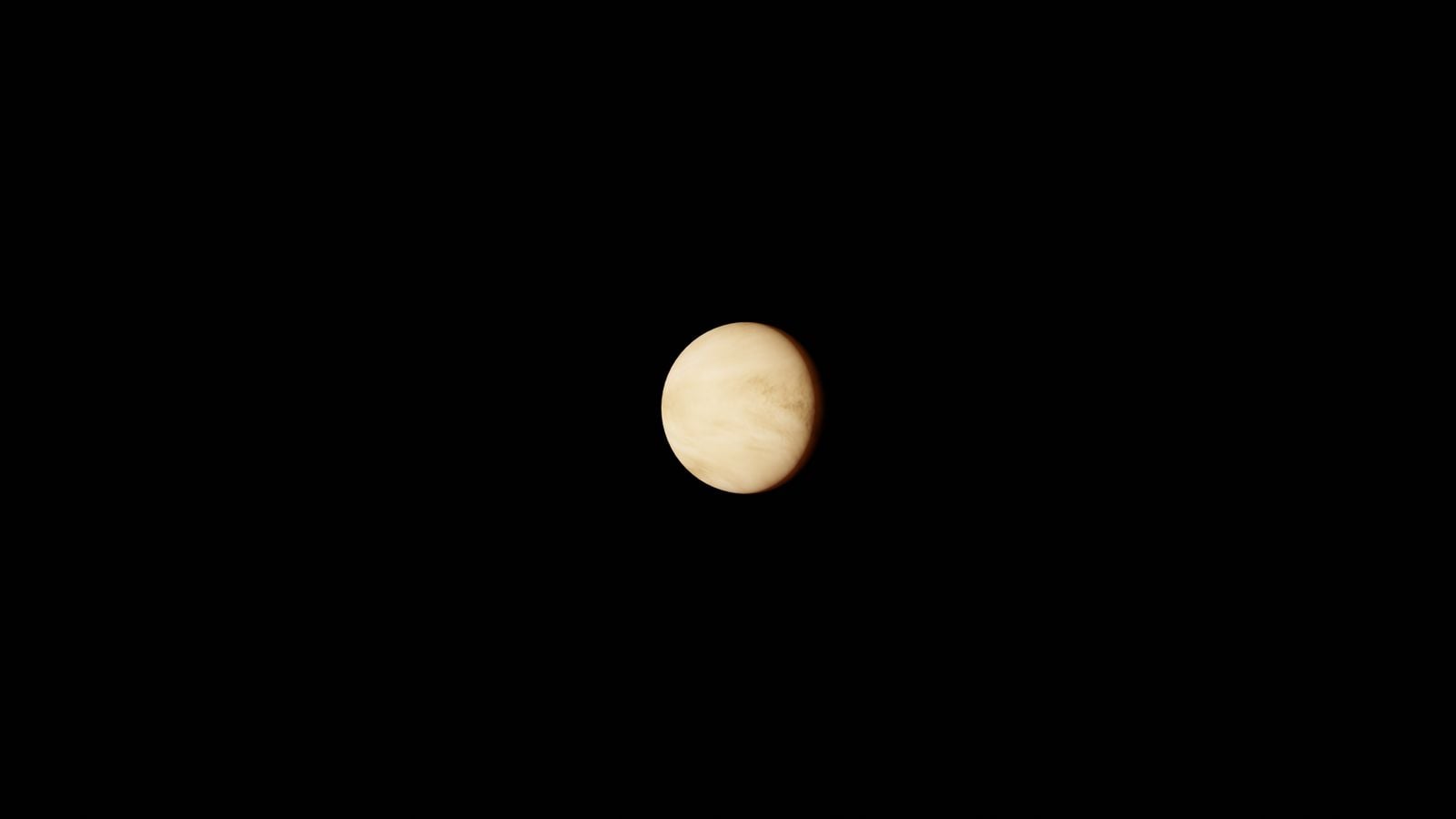
Mariner 2 launched on 27 August 1962 from the same complex at Cape Canaveral. It carried the same instruments Mariner 1 had been meant to carry. On 14 December 1962, it flew within 21,500 miles of Venus and became the first spacecraft in history to complete a successful interplanetary mission.
The measurements Mariner 2 sent back put an end to the swamp theory. Surface temperatures were around 460 degrees Celsius, hot enough to melt lead. There was no detectable magnetic field. The cloud tops were cold; the surface beneath them was hellish. Venus was not Earth’s sister planet. It was Earth’s cautionary tale.
What was on board, in detail
The Mariner 1 instrument package weighed about 40 pounds out of the probe’s total 447. The microwave radiometer used two channels, at 13.5mm and 19mm wavelengths, chosen because they could see through the Venusian cloud deck at different depths. The infrared radiometer had two channels at 8-9 microns and 10-10.8 microns to distinguish cloud-top temperature from surface heat leaking upward.
The magnetometer sat on a boom to keep it away from the spacecraft’s own magnetic signature. The plasma spectrometer scooped ions from the solar wind. The cosmic dust detector was a microphone-like plate that registered a click each time a grain hit it — a tally counter for the emptiness of interplanetary space.
Every one of these instruments flew again on Mariner 2. Every one of them returned data. The design was sound. The rocket was the problem.
The Atlas-Agena and the ground computer
The Atlas-Agena B that carried Mariner 1 was a 103-foot stack. The Atlas first stage burned kerosene and liquid oxygen. The Agena upper stage burned unsymmetrical dimethylhydrazine and inhibited red fuming nitric acid, a hypergolic pair that ignites on contact.
The guidance system was split. The onboard equipment handled attitude and engine gimballing. The trajectory was computed on the ground, at a station tracking the rocket by radar, and correction commands were beamed up. This was standard practice in 1962. Onboard computers small enough to fit in a rocket and reliable enough to trust with a Venus flight did not yet exist.
The ground computer was fed live velocity data from the Atlas’s rate beacon. When the beacon glitched, the raw data went bad. When the smoothing algorithm was missing, the computer had no way to filter the bad data out. The rocket followed instructions all the way to the destruct signal.
What Cape Canaveral looked like that morning
Launch Complex 12 was one of four Atlas pads clustered on the northern edge of the Cape. Complex 11, 12, 13 and 14. Fourteen was the one John Glenn had launched from five months earlier. Twelve was smaller, quieter, geared for unmanned science shots rather than the astronaut program.
The morning was clear. Coverage was minimal by later standards. There were no live television broadcasts of the flight. A handful of reporters watched from the press site. When the Atlas veered and the destruct command went out, the flash was visible from the beach, followed by the delayed thump of the explosion rolling in across the water.
The debris sank in a few hundred feet of water and was never recovered. There was no point. The instruments were destroyed. The data would come from the twin.
Why an overbar mattered so much
Guidance mathematics in 1962 was written by hand on long sheets of paper, then transcribed onto punch cards for the ground computer. Overbars, dots, primes and subscripts carried real meaning. A bar meant a smoothed value. A dot meant a time derivative. A prime meant a variable in a different reference frame.
Losing any of these symbols was equivalent to swapping the meaning of a word in a legal contract. The rocket would fly whatever equations it was given. There was no error-checking layer that would notice the code was asking for a raw value where a smoothed one was intended.
Modern flight software has redundancies, cross-checks, and formal verification. The Voyager probes, launched fifteen years after Mariner 1, still run assembly code from the mid-1970s, but that code has been audited and re-audited across five decades. In 1962, the audit was one engineer reading another engineer’s handwriting.
The Venus that Mariner 1 never saw
The planet Mariner 1 was aimed at is one of the most inhospitable bodies in the solar system. Atmospheric pressure at the surface is 92 times that of Earth, equivalent to the pressure a kilometre down in the ocean. The clouds are droplets of sulphuric acid. Days on Venus are longer than years — the planet rotates once every 243 Earth days and orbits the Sun every 225.
None of that was known on 22 July 1962. Mariner 2 would establish the temperature and the absence of a magnetic field. Later Soviet Venera landers would touch the surface and last about an hour each before their electronics cooked. The Magellan orbiter would eventually map the surface with radar in the early 1990s.
Everything anyone knows about the interior of that cloud deck began with the instruments that were sitting on top of Mariner 1’s Atlas that morning, and with their twins that flew five weeks later. The Venus program that eventually rewrote planetary science was born, in part, in a 293-second failure over the Atlantic.
The debris from the destruct is still down there, somewhere off the Florida coast, in a few hundred feet of salt water. Above it, six decades on, the successor missions still fly. Mariner 2 kept transmitting until January 1963, three weeks after the Venus flyby, when it went silent for good. Its data are still in the archives at JPL, catalogued and available. Its twin never made it out of the sky.