Choose hobbies that make you wake up excited is good advice, and like a lot of good advice it hides two things worth knowing. The obvious reading, pick whatever thrills you, can quietly lead you wrong, because not all excitement is the same and not all of it lasts. The research on what actually makes free time rewarding sharpens the instinct into something more useful, and it does so in two steps: it tells you what kind of excitement to look for, and it warns you about a version that feels identical but wears you down.
The excitement worth chasing has a name
The feeling of waking up eager to get to something has been studied for decades under the name flow, a term coined by the psychologist Mihaly Csikszentmihalyi. Flow is the state of complete absorption in an activity, the sense of losing track of time and of yourself, that arrives when what you are doing is challenging enough to demand your full attention but not so hard that it overwhelms you. It is, more or less, the machinery behind a hobby that pulls you out of bed.
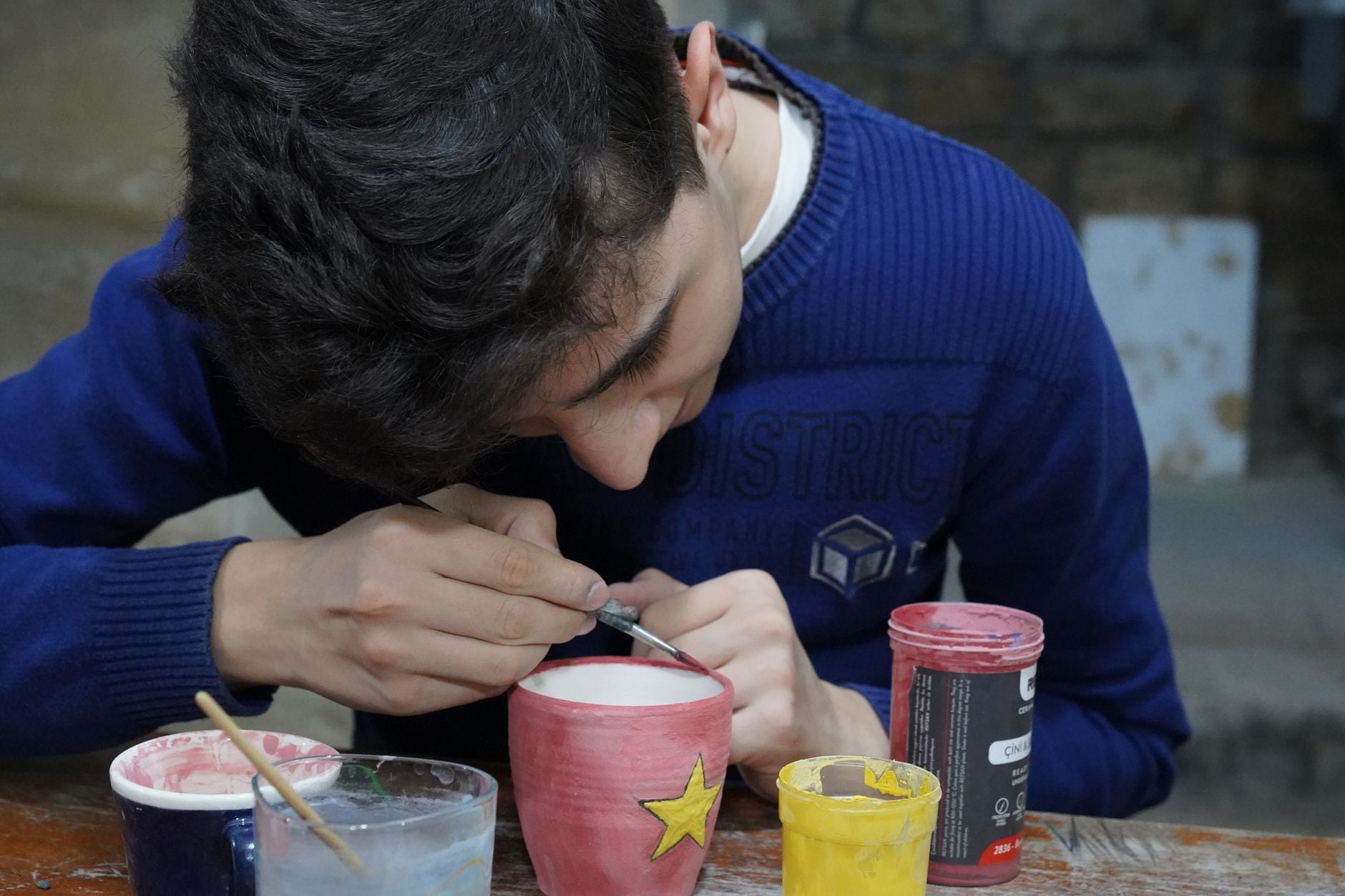
The revealing part is where flow actually comes from. Using a method in which people were paged at random through the day and asked what they were doing and how they felt, Csikszentmihalyi and colleagues found that flow shows up far more during active leisure, things like reading, making, playing an instrument, or sport, than during passive leisure like watching television. And yet, in one of the sturdier ironies in the field, people reliably choose the passive option anyway, sinking into the screen that soothes but rarely absorbs. The lesson folded into the advice is therefore partly a warning. A hobby that makes you wake up excited is almost always one that asks something of you, and the effortless, escapist default that impersonates rest is usually the thing to be suspicious of, not the thing to reach for.
The Artful Age
A weekly letter on aging well, family across generations, and the creative life after the kids leave home.
But excitement comes in two kinds
The second refinement is subtler and more important, because it concerns two forms of excitement that feel nearly the same from the inside. The psychologist Robert Vallerand and colleagues, in a 2003 paper in the Journal of Personality and Social Psychology, laid out what they call the dualistic model of passion. A passion, in their terms, is a strong inclination toward an activity you love and that becomes part of who you are. But it comes in two flavors.
Harmonious passion is the activity you have taken up freely and hold in balance with the rest of your life. You love it, you return to it eagerly, and you can also put it down. In their studies, drawing on more than 900 people, harmonious passion went with flow, positive emotion, and general well-being. Obsessive passion looks similar from a distance but runs on a different fuel: an internal pressure, a compulsion, a sense that you have to do the thing. The person with an obsessive passion often cannot stop, lets the activity crowd out other parts of life, and pays for it in negative feeling, conflict, and eventually burnout. Both can make you wake up excited. Only one of them is still good for you a year later, and the difference is not the intensity of the excitement but whether the hobby fits into your life or slowly eats it.
Putting the two together
Read through this research, the original advice becomes both truer and more precise. The hobbies worth choosing are the ones that produce flow, which means they tend to demand a little skill and full attention rather than merely filling time, and they are the ones you can hold harmoniously, with enthusiasm that coexists with the rest of what you care about rather than steamrolling it. Waking up excited is a fine compass. It just points at two different destinations, and the trick is telling them apart.
There is a version of this worth passing on to children, too. A great deal of what a young person learns about leisure they learn by watching, and the useful thing to model is not a stern productivity but the ordinary pleasure of an absorbing hobby freely chosen, the making or the playing that demands something and gives more back than the screen does. A child who sees that engagement, and sees it held in proportion rather than as a compulsion, is picking up a genuinely valuable template for how to spend a life’s worth of free afternoons.
What the evidence does and does not settle
A few honest limits belong here. Much of the flow research rests on self-report and on people describing their own states in the moment, which is informative but not airtight, and passive rest is not the enemy it can be made to sound, since real recovery matters and not every hour must be optimized. The passion research describes averages across groups, and obsessive passion, for all its costs, does sometimes drive remarkable achievement, so the picture is a trade-off rather than a simple good and bad. Individual temperament and circumstance shape all of it.
Within those limits, the guidance holds up and improves. Choose hobbies that make you wake up excited, yes, but aim that excitement deliberately: toward activities that absorb you rather than merely distract you, and toward a passion you can love and still set down. The excitement that lets you put the thing away when the day needs you elsewhere is the one worth building a life around. The excitement that will not let you is worth a second, more careful look.