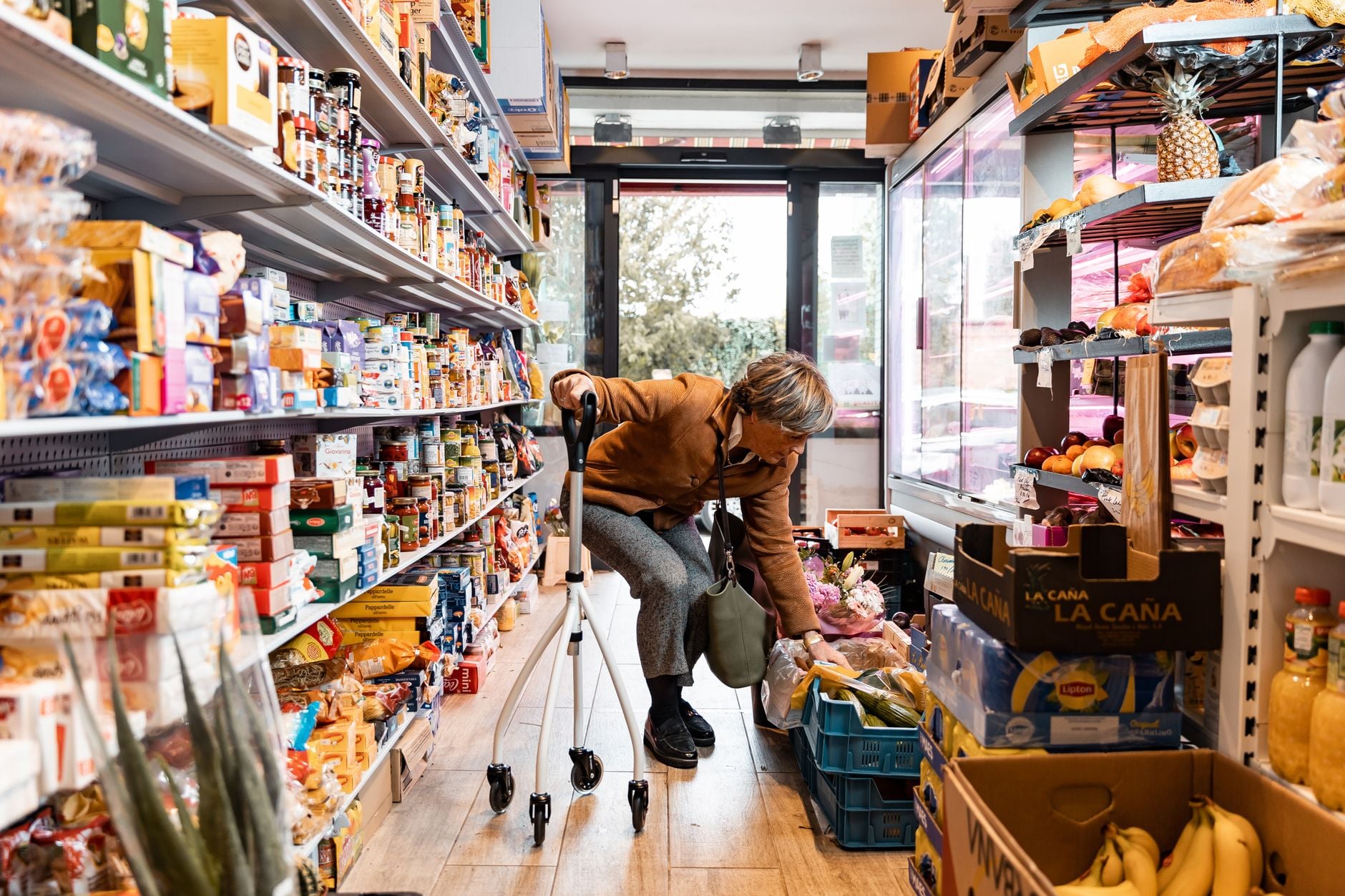
To a hurried younger shopper, older people at the supermarket can seem to do a few puzzling things. They chat at length with the cashier. They count out exact change coin by coin. They inspect the price of everything. They come at odd, quiet hours, do one careful weekly shop from a written list, and reach past the self-checkout for the staffed lane. It is easy to find all this a little odd, or even mildly irritating when you are in a rush. But nearly every one of these habits turns out to have a sensible, sometimes quietly wise reason behind it, and a couple are backed by research the rest of us would do well to learn from. Here is what is really going on, looked at with a bit of affection.
The long chat with the cashier
Start with the one people find most testing: the older shopper who treats the checkout as a conversation rather than a transaction. It looks like dithering. It is closer to medicine. The psychologists Gillian Sandstrom and Elizabeth Dunn have studied what they call weak ties, the light, passing relationships we have with people like the barista or the grocery cashier. Their research found that people who had a brief, friendly exchange with a cashier or barista, a smile, some eye contact, a few words, left feeling measurably happier and with a stronger sense of belonging than those who kept it strictly efficient.
For an older person who may live alone, that exchange is not idle chit-chat but sometimes one of the few genuine human contacts of the day. The supermarket recognizes this even when other shoppers do not. The Dutch supermarket chain Jumbo introduced dedicated slow lanes called chat checkouts, staffed by cashiers who take time to talk, specifically to combat loneliness among elderly customers, and expanded them to hundreds of stores because the need was so real. So the lingering chat is not a quirk. It is the point of the outing for a great many people, and the research suggests the brisk younger shopper is the one missing out.
The Artful Age
A weekly letter on aging well, family across generations, and the creative life after the kids leave home.
Counting exact change and checking every price
Then there is the careful handling of money: the exact coins counted into the palm, the eyes that check the price of every item. To someone who taps a card without looking, this can seem excessive. It is usually just sound sense. Many older people came up in leaner times and now live on fixed incomes, so watching prices and paying precisely is rational budgeting rather than fussiness. Handling actual cash also keeps spending tangible and under control in a way that contactless payment, designed to make us spend without feeling it, quietly does not. The person counting their change is not confused about money. They are, if anything, paying closer attention to it than the rest of us.
The quiet hours and the methodical shop
Older shoppers often appear at off-peak times, work steadily from a written list, and take their time down the aisles. Each of these, too, is reasonable. Shopping when the store is empty avoids crowds and jostling, which is easier on tired legs and a calmer way to manage a task that takes more effort than it once did. The single careful weekly shop, planned from a list, is not slowness but organization, one considered trip instead of five hurried ones. And taking time over choices is frequently not muddle but deliberation. When money is finite and a wasted purchase actually matters, deciding carefully is the intelligent thing to do. Age slows the pace a little, but it adds care and hard-won judgment, and the methodical shopper is usually compensating rather well.
Reaching past the self-checkout
Finally, the preference for a human cashier over the machine. This gets read as technophobia, but it is often a deliberate choice, and the weak-ties research explains why. Choosing the staffed lane means choosing exactly the small human interaction the self-checkout was built to remove. Given that such interactions measurably lift mood and belonging, opting for the person over the machine is not a failure to keep up with technology. It is a small, sensible vote for being treated as a person rather than a transaction, and it is good for the shopper who makes it.
A few honest words
None of this is to romanticize, and a little balance helps. Not every older shopper does any of these things, and people are individuals, not a category. It is also true that some of these behaviors, real confusion at the till, difficulty finding familiar items, genuine trouble with change, can occasionally signal that someone is struggling rather than simply going at their own pace, and in those moments a patient, kindly offer of help matters far more than a sigh from the queue behind. The aim here is not to insist every habit is wisdom, but to swap a reflex of irritation for a moment of understanding, which costs nothing and is usually deserved.
Where it leaves us
Looked at closely, the odd supermarket habits of older people are mostly sensible responses to real conditions: a fixed income, a slower and quieter set of needs, and a stage of life in which a friendly word at the till genuinely counts. A couple of them, the unhurried chat, the choice of a human over a machine, are things the rest of us would very likely be happier for copying. So the next time you find yourself behind someone taking their time and talking to the cashier, it is worth remembering that this may be the best few minutes of their day, and that you are almost certainly not in as much of a hurry as you feel.