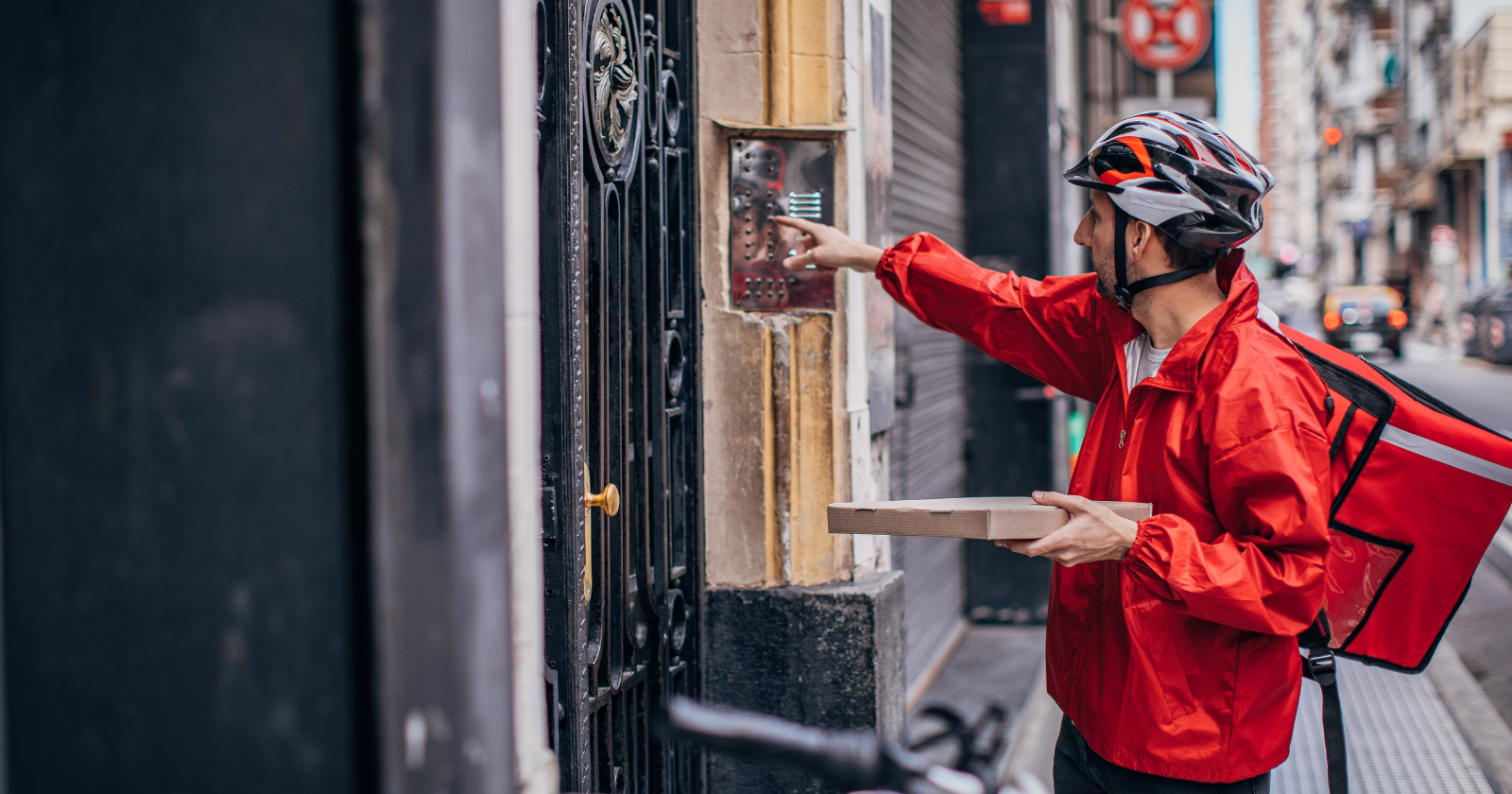
The delivery arrives an hour later than the estimate, the driver’s jacket is dark with rain through both shoulders, and the bag is dry only because it was wrapped twice in plastic before it left the restaurant. The order is correct. The food is warm enough. And the tip, when the customer goes back into the app afterward to adjust it, goes up because something about the conditions the driver was working in got registered and priced in after the fact, independent of whether the service itself was any better than usual.
It’s tempting to describe this as generosity, or as a reflexive kind of rounding up that happens whenever the mood strikes. Neither explanation fits the pattern especially well. What’s actually happening looks more specific: a customer noticing a cost that was real, that the driver absorbed, and that the platform’s flat per-delivery rate was never designed to account for.
Most tipping research finds the opposite pattern
This is worth pausing on precisely because it cuts against decades of research on why people tip the way they do. The clearest example is a set of studies by the psychologist Bruce Rind, who had a hotel server tell guests in windowless rooms what the weather was outside — sometimes truthfully, sometimes not — before delivering their room service. Guests who were told the weather was good tipped more, even though they had no way to see it for themselves. The tip increase had nothing to do with the quality of service; it came from a belief about the weather bleeding into an unrelated judgment about the server. It’s a textbook case of an incidental factor bleeding into a judgment it has no business influencing.
The Artful Age
A weekly letter on aging well, family across generations, and the creative life after the kids leave home.
Tipping a soaked delivery driver more runs in the opposite direction. The customer isn’t in a better mood because of the rain — if anything, waiting longer for a delayed, weather-disrupted delivery should put them in a worse one, which by Rind’s logic ought to shrink the tip, not grow it. What’s driving the increase instead is that the rain is doing something to the driver, specifically, and the customer has connected those two facts on purpose rather than by accident. It’s the less common and more deliberate version of exactly the phenomenon Rind’s research describes — accounting for a real condition rather than absorbing an unrelated one.
What the app was never built to price
Part of why this correction falls to the customer at all is that the platforms mediating the transaction are not designed to make weather, or any other situational hardship, visible in the price. Research by Alex Rosenblat and Luke Stark on algorithmic labor and information asymmetries describes how ride-hailing and delivery platforms exert significant indirect control over how drivers work while marketing that work as defined by freedom and flexibility — a gap between the rhetoric of independence and the reality of a company setting the terms. Their research is about the platform’s relationship to the driver, not about what customers see, but the same opacity extends outward by default: a system that doesn’t fully account for a driver’s actual working conditions when it sets their pay was never going to surface those conditions to the customer either. The rate is calculated the same whether the driver spent eight minutes on a dry, well-lit street or forty-five soaked minutes navigating flooded intersections in the dark. The app shows a delivery fee and an estimated time. It does not show hazard, and it does not show effort.
The flat rate treats a dry Tuesday and a flooded Friday night as the same job, and somebody has to be the one who notices they aren’t.
That gap is exactly what a bigger tip on a bad-weather night is filling in for. Economists Daniel Kahneman, Jack Knetsch, and Richard Thaler documented decades ago, in their influential work on fairness as a constraint on profit-seeking, that people carry firm intuitions about what counts as a fair price under changed circumstances, even when no formal rule requires them to act on those intuitions.
Their original research was about businesses raising prices during shortages, but the underlying norm travels well in the other direction, too: when the underlying conditions of a transaction get harder for one side, most people sense that the original price no longer reflects what’s actually being asked of that side, and adjust accordingly even though nothing in the transaction obligates them to.
A private correction to a public blind spot
None of this requires the customer to know anything about labor economics or platform design. It only requires noticing the driver’s soaked jacket, doing a quick and mostly unconscious estimate of what the last hour was probably like for them, and deciding that the number the app defaulted to doesn’t cover it. That’s a small act, and it’s also, in miniature, exactly the correction that platform pricing structures are built not to make on their own. The system prices distance and time. It has never priced weather, and it was never going to, because pricing weather would mean acknowledging that the person doing the delivering is exposed to conditions the person receiving it never has to think about unless they choose to.
The extra dollar or two isn’t sentimental. It’s closer to an audit — a customer independently verifying that the price matched the job, finding that it didn’t, and correcting the difference out of pocket because no one else in the transaction was going to. It happens quietly, usually inside an app, with no conversation attached to it, which is part of why it’s easy to mistake for habit rather than what it actually is: one person doing, for a few seconds, the accounting that the platform declined to.