Most of us picture retirement the same way: a long exhale, the alarm clock silenced, and finally the time to do all the things work kept crowding out. The garden. The workshop. The half-finished paintings in the garage. It is a genuinely lovely picture, and for a while it is often true.
Then, for a lot of people, something quieter sets in that nobody put on the brochure. We are writers and parents here, not clinicians, so take what follows as honest observation and a careful reading of the research, not advice. But the uncomfortable truths about retirement are worth saying plainly, because so much of the conversation around it is about money, and the harder parts usually are not.
The honeymoon ends, and that is normal
The sociologist Robert Atchley spent his career studying how people adjust to retirement, and he described it as a series of phases rather than a single happy ending. There is often a honeymoon, the euphoric stretch of doing everything you postponed. But the honeymoon tends to run out, and what can follow is a phase he called disenchantment: a flatness, a sense of emptiness, sometimes a low mood that catches people off guard because they expected to feel free.
The Artful Age
A weekly letter on aging well, family across generations, and the creative life after the kids leave home.
Atchley’s point was not that retirement makes people miserable. Most eventually reach what he called reorientation, where they build a new and satisfying routine. The uncomfortable truth is just that the dip in the middle is common and normal, and that expecting an uninterrupted holiday sets people up to feel that something has gone wrong with them personally when the ordinary pattern arrives.
It was never only the money
A job is a strange bundle. It pays you, yes, but it also hands you a reason to get up, a set of people to see, a place to be, a rhythm to the week, and a ready answer to the question of what you do. Retirement removes the work and, without anyone quite intending it, removes all of that scaffolding too.
That is the part the financial planning rarely covers. You can retire with enough money and still lose the structure, the daily contact, and the sense of being needed that the work quietly supplied. For people whose identity was heavily tied to their job, the missing piece is not income. It is the answer to who they are now.
None of this is an argument against retiring. It is an argument for taking the non-financial half seriously, ideally before the last day rather than after it.
The workshop does not save you by itself
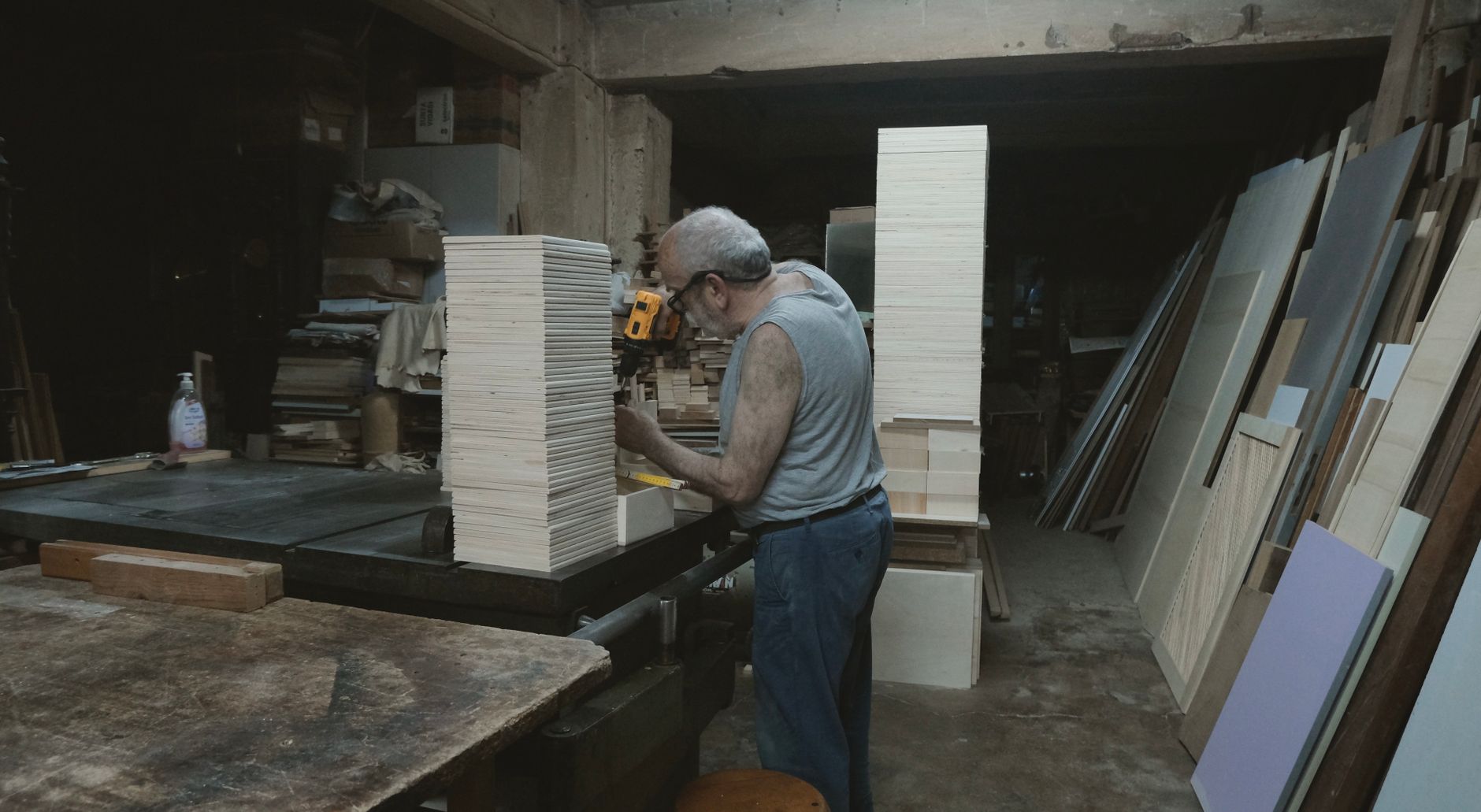
Here is the truth closest to our own patch. A great many people carry a specific fantasy into retirement: that with enough free time, the making will finally happen. The studio, the novel, the restored furniture, the instrument picked back up.
Sometimes it does happen, and it is wonderful when it does. But time on its own turns out to be a weak engine. What gets a person to the workbench on a gray Tuesday is usually not spare hours; it is a reason, a deadline, a person expecting the thing, a class that meets whether you feel like it or not. Work supplied those pressures for decades, and their absence is why the garage paintings can stay half-finished with more free time than ever.
The making that sticks in later life tends to come with some structure around it. A group, a regular market stall, a grandchild who turns up on Thursdays to build something, a course with other people in the room. The activity matters, but the scaffolding around it matters just as much, and that is easy to forget when you are imagining all that lovely open time.
The claim about the mind, handled carefully
You may have seen the alarming version of this: that retiring early makes your memory worse. It comes largely from one influential paper, “Mental Retirement,” by the economists Susann Rohwedder and Robert Willis, published in the Journal of Economic Perspectives in 2010. Comparing survey data across the United States, England, and other European countries, they reported that earlier retirement was associated with lower scores on memory tests, and they argued the effect was causal, driven partly by a less mentally stimulating daily environment.
It is a serious piece of work, but it is one analysis, not settled fact, and the causal claim has been debated by other researchers ever since. The honest takeaway is narrow and reasonable: a daily life with less to engage the mind is probably not good for it, at any age. That is a case for staying mentally and socially active after work, not a reason to dread stopping.
What seems to help
Across the research and plain observation, the same themes keep surfacing, and they are unglamorous. Structure. Regular contact with other people. Something that feels like a purpose, even a small one. Something to make, tend, or learn, ideally alongside others rather than alone at a bench.
People who plan the shape of their days, and not only the size of their savings, tend to move through the disenchantment phase more gently. The ones who struggle most are often the ones who arrived with a single word, relax, and no picture of what Tuesday actually looks like.
The comfortable truth hiding inside the uncomfortable ones is that none of this requires money or talent. It requires a reason to show up, and reasons can be built. A standing coffee, a shared project, a small regular commitment to make something and hand it to someone. The work used to arrange all of that for us. In retirement, arranging it becomes the work, and it turns out to be worth doing well.