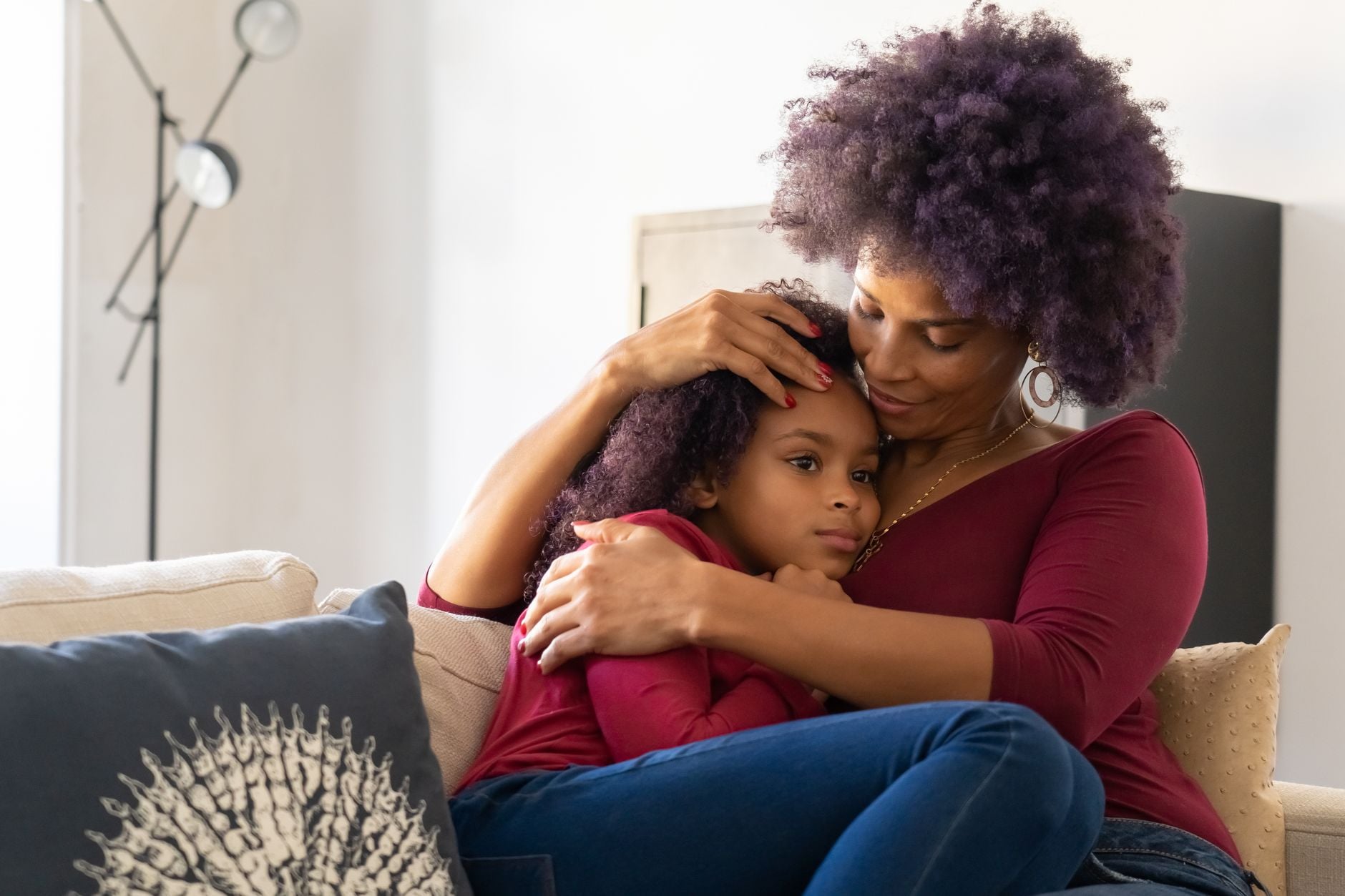
When people talk about keeping a child safe, they usually mean the physical version: locks on cupboards, a hand held near the road, a helmet before the bike. Feeling safe is a quieter thing, and it works in a way that tends to surprise parents. It is not what keeps a child small and cautious. It is, more often, what lets them be brave.
The clearest way to see this is to watch what a child does when they feel secure.
Safety is the thing adventure stands on
In the classic research on attachment, much of it built on the observations of Mary Ainsworth, a child who feels securely attached to a caregiver uses that person as a base. They venture out to explore a room or a playground, then glance back, then go a little further, checking in now and then like a climber testing a rope. The security is not a brake on their curiosity. It is what makes the exploring possible.
The Artful Age
A weekly letter on aging well, family across generations, and the creative life after the kids leave home.
This flips the usual worry on its head. The child who clings and will not leave your side is often the one who is least sure of the rope, while the child who wanders off to investigate the far corner is usually the one who trusts, without having to think about it, that you will still be there when they turn around. Feeling safe does not produce timid children. It produces ones brave enough to leave.
What that safety is actually made of
So where does the feeling come from? A famous experiment gives an unusually direct look.
In the still-face procedure, first described by Edward Tronick and colleagues in 1978, a parent and baby play together as normal, and then the parent is asked to hold a blank, unresponsive expression for about two minutes. Even very young infants notice almost immediately. As reviews of the still-face paradigm describe, the baby works to win the parent back with smiles and gestures, and when nothing comes, grows distressed, looks away, tries to soothe itself, and eventually withdraws. It is a vivid demonstration that babies expect the people they love to respond, and feel the loss when they do not.
But the part worth holding onto is what happens next. When the parent resumes normal interaction, the baby recovers. Not always instantly, and often with a little lingering wariness, but it comes back. The safety was not destroyed by two minutes of a blank face. It was restored by reconnection.
The reassuring part, which is also the true part
This is the finding that should take pressure off rather than add it. Feeling safe is not built by a parent who is perfectly attuned, endlessly available, and never distracted or short-tempered, because no such parent exists. It is built by the pattern underneath: you miss, you notice, you come back.
Researchers who study this sometimes call it rupture and repair, and the repair is not the apology for the process failing. It is the process. A child who experiences that cycle many times, the small disconnections followed reliably by reconnection, is learning something durable, which is that when they reach for someone, someone reaches back. That lesson, repeated across thousands of ordinary moments, is most of what feeling safe actually is.
What feeling safe is not
It is worth saying plainly what this does not mean, because the idea is easy to distort into something anxious.
Feeling safe is not the absence of challenge, discomfort, or hard feelings. A securely attached child still gets frustrated, still gets scared of the dark, still hears no and does not like it. Safety is not a frictionless life; it is the presence of a reliable person to return to when life has friction, which it always will. And a difficult afternoon, a distracted week, or a stretch where you were not at your best is not damage. The still-face is a two-minute laboratory exercise, not a verdict, and children are built for repair precisely because ordinary life is full of small ruptures.
A couple of honest limits belong here. These are foundational findings, but they describe how development tends to work, not a formula that guarantees an outcome, and children differ widely in temperament and need. The good news buried in all of it is that the thing children require is not extraordinary. It is ordinary, responsive care of the kind most families are already giving, most of the time.
Which is, in the end, a gentler picture than the phrase feeling safe suggests. It is not a fortress you have to build without a single gap. It is the slow accumulation of evidence, gathered a thousand small moments at a time, that the people a child counts on will keep turning back toward them. That evidence is what they carry out into the world, and it is what lets them go.