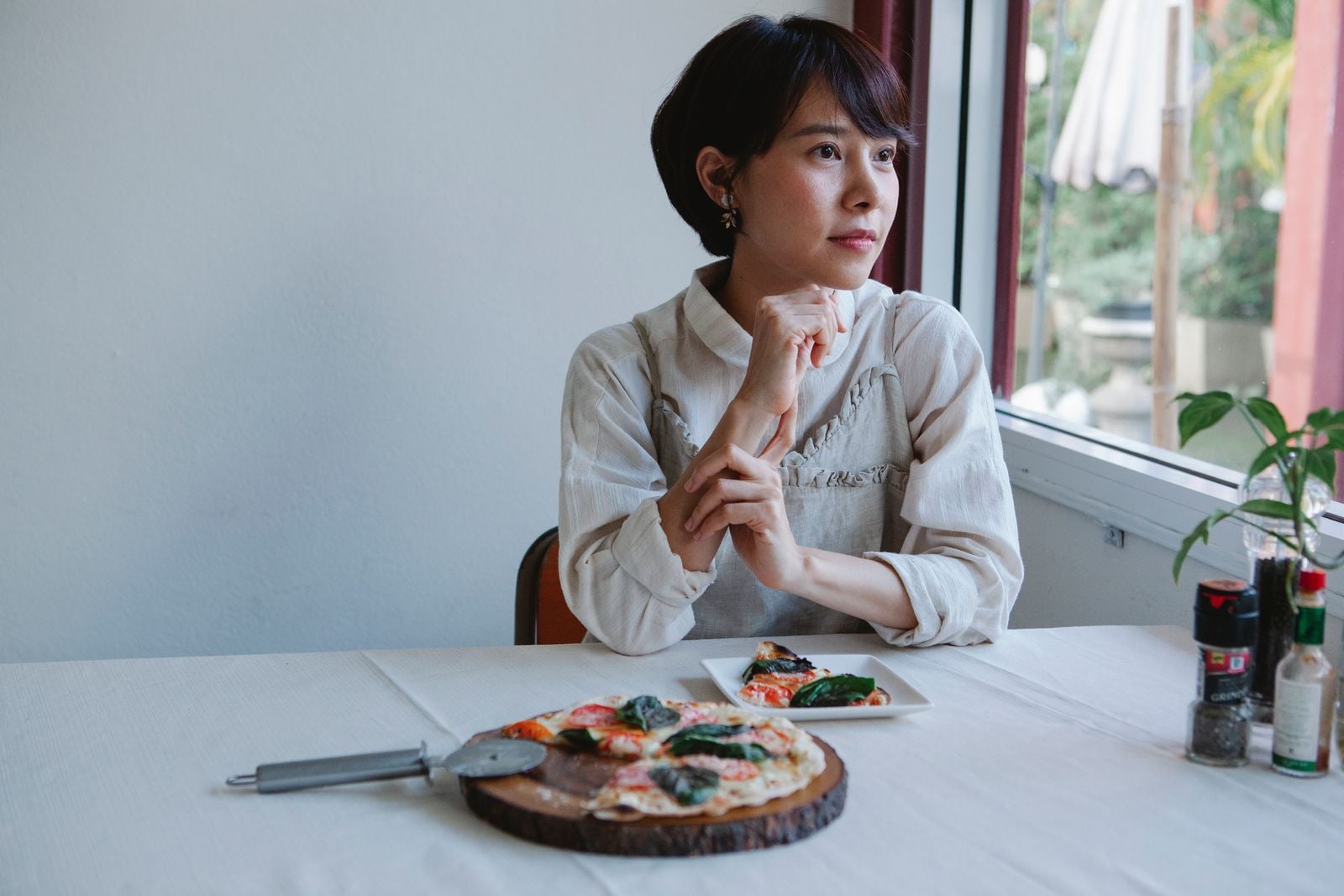
The first solo restaurant meal after a long marriage ends is almost never remembered as sad. It is remembered as strange. People describe sitting down, opening the menu, and feeling something they have not felt in decades: the quiet, disorienting weight of a preference that belongs entirely to them.
The tears, when they come, tend to surprise the person crying. They are not grieving the empty chair. They are grieving something harder to name.
They are meeting a self who has been waiting a very long time to order the fish.
The Artful Age
A weekly letter on aging well, family across generations, and the creative life after the kids leave home.
The menu as a mirror
It is a pattern that shows up again and again in the months after a long marriage ends, whether by divorce or loss: the crying rarely happens over the wedding photos or the empty side of the bed. It happens somewhere between the appetiser column and the entrees.
The person stares at a menu and realises they do not know what they like anymore. Or worse — they know exactly what they like, and it is not what they have been ordering for thirty years.
This is not loneliness. This is autonomy arriving late, and arriving loud.
What decades of joint decisions actually do
Long partnerships create a kind of shared decision architecture. Two people, over years, quietly merge their preferences into a single operating system. One person orders the wine. The other picks the restaurant. One always gets the pasta so the other can taste it. One drinks decaf so the other does not feel odd ordering it alone.
None of this is pathological. Most of it is affection expressed as coordination. But it means that by year twenty, neither person is entirely sure which preferences are theirs and which were negotiated so long ago the negotiation is invisible.
Over the course of a long partnership, individual preference and joint preference can stop being distinguishable, even to the two people living it.
Then one person is gone, and the menu asks a question the survivor has not answered alone since they were twenty-four.
The specific psychology of the first solo meal
A restaurant is a uniquely exposing environment for someone rediscovering their own tastes. Unlike the grocery store, where choices are private and reversible, the restaurant demands a public, spoken commitment: I want this.
Say it to a waiter, and there is no one across the table to raise an eyebrow, to say are you sure?, to gently suggest the chicken instead. There is only the person, the menu, and a preference that has to be named out loud.
For someone who has spent decades filtering their appetites through another person’s, this is not a small moment. It is the first unmediated act of self-report in a very long time.
Why the tears surprise them
The crying is often described as coming from nowhere. It is not sobbing. It is a quiet leaking that starts around the moment the order is placed.
What is being felt is not sadness for the absent partner. It is something closer to recognition — a sudden, unbidden awareness that a self existed underneath all those years of coordination, and that self has opinions.
The self wanted the scallops. The self never actually liked red meat. The self is, it turns out, still in there.
The cost of long coordination
Autonomy is not just the right to make choices, but the practiced capacity to make them, and like any capacity, it can atrophy without use.
Someone who has not chosen a restaurant, a meal, or a Saturday activity solo in three decades is not incapable of doing so. But the muscle is weak. The first time they use it, it aches.
The ache is often mistaken for grief, because grief is the emotion the person came in expecting to feel.
When autonomy was never really available
The picture darkens considerably in relationships where the coordination was not mutual. A 2026 Human Rights Watch report on economic autonomy and gender-based violence in Cameroon documents how, in some marriages, one partner spends decades unable to make basic choices about work, movement, or money. One woman described spending nearly three decades confined to a family compound, forbidden from starting a small business she wanted to run.
For someone leaving that kind of marriage, the first solo restaurant meal is not just about rediscovered preferences. It is the first time in adult life that a preference has been permitted to exist at all.
The tears in that case are not confusion. They are something older and heavier: the taste of a self that was never given room to develop, arriving suddenly at a table with a menu in its hand.
The three questions that surface
People who describe the experience tend to report three specific questions surfacing during that first meal, usually in this order.
What do I actually want? Not what is reasonable, not what is healthy, not what the absent partner would approve of. What does the body sitting at the table want to eat right now.
How long have I not been asking this? This is the question that produces most of the tears. The realisation that the answer is measured in decades tends to arrive around the time the food does.
Who else have I been not-asking about? The menu becomes a metaphor. If food preferences went unexamined for thirty years, what about friendships, hobbies, opinions, weekend plans, political views, the colour of the walls?
The fluency problem
Some people navigate long partnerships by developing what might be called relational fluency — the ability to move seamlessly between what they want and what the other person wants, until the seam disappears. It is a form of intelligence, and it is often rewarded.
But there is a version of exhaustion that belongs to people fluent in multiple selves, and a version of grief that belongs to people who realise, sitting alone at a restaurant, that they no longer know which self is the original.
The tears are the shock of trying to answer that question with a waiter standing over you.
Why restaurants and not kitchens
The same person can eat alone in their own kitchen for months without this reaction. The kitchen is private. The kitchen allows for hedging: cereal for dinner, standing up, half a sandwich, whatever is in the fridge.
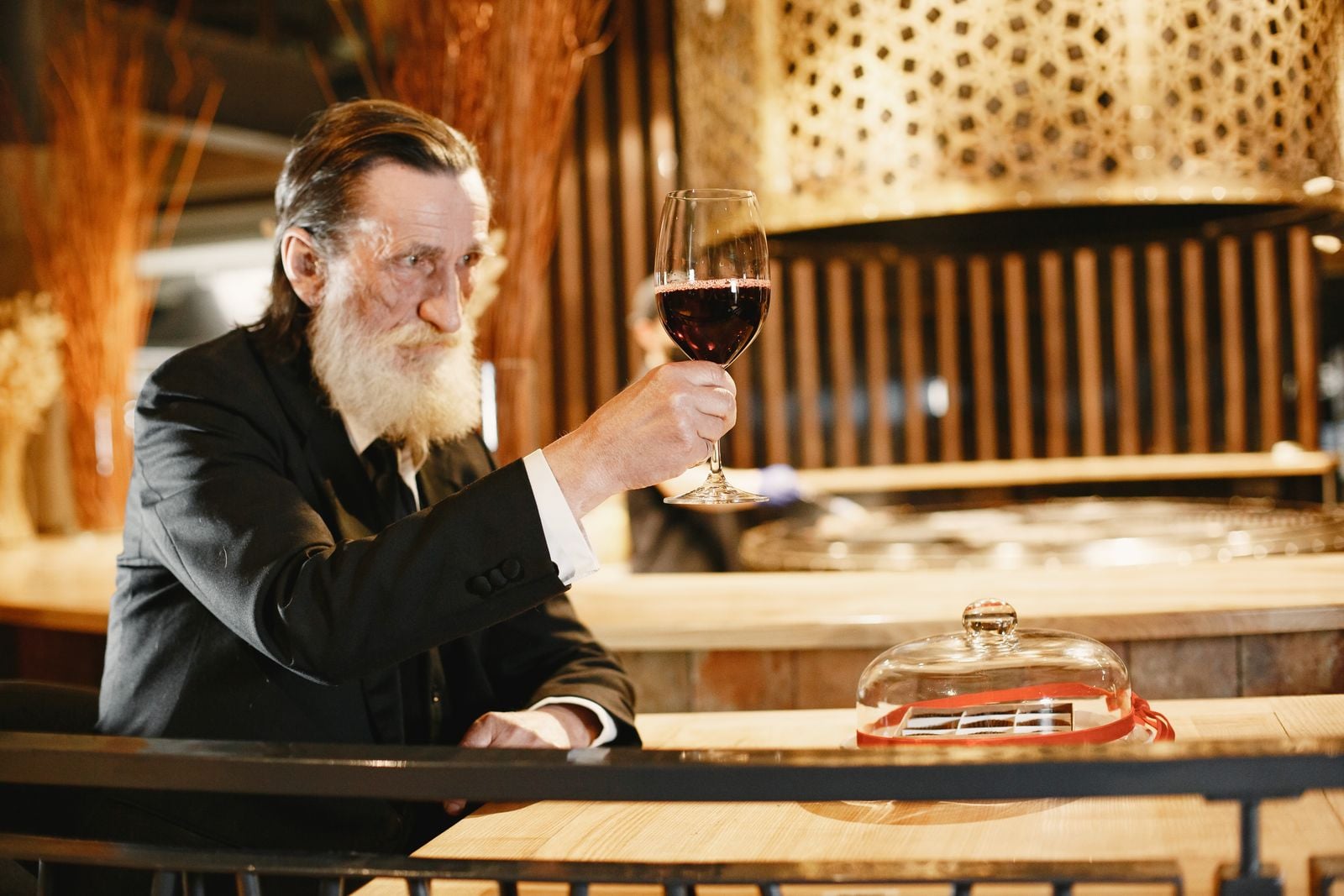
The restaurant does not allow hedging. It demands an act of self-declaration, witnessed by a stranger, priced and delivered.
This is why so many recently single people avoid restaurants for months and then find themselves unexpectedly wrecked the first time they finally go. It is not the setting that broke them. It was the requirement to speak a preference aloud.
The people who cannot do it at all
A meaningful subset of people never manage the first solo meal. They order takeaway indefinitely. They eat at the counter of familiar cafes where the staff already know what they want. They accept every dinner invitation.
This is often read as loneliness avoidance. Sometimes it is. But sometimes it is preference avoidance — a quiet, unspoken understanding that sitting down at a restaurant alone will force a reckoning they are not ready to have.
The reckoning is not I miss them. The reckoning is I am not sure who I am when they are not here to react to me.
The role of being needed versus being known
Long partnerships create dense networks of mutual need. Someone remembers your medication schedule. Someone knows how you take your coffee. Someone reads your mood from across the room.
This is intimacy, and losing it is real loss. But being deeply needed by someone is not the same as being deeply known by them, and the two are easy to confuse. There is a specific loneliness that belongs to people who confused being needed with being known, and it often surfaces most acutely in the aftermath of the relationship that produced it.
Sitting alone at a restaurant, ordering the meal you always secretly wanted, is a small, sharp confirmation that the person across the table for thirty years may have known your routines without ever quite knowing your appetites.
What actually helps
A few things tend to help.
The first solo restaurant meal should not be a milestone the person tries to force. It works better as an accident — a Tuesday, a walk that ends near a cafe, an unexpected hour with nothing else to do.
The meal does not need to be beautiful. The point is not to prove independence. The point is to answer, in a low-stakes way, the question of what the person actually wants for lunch.
The tears, if they come, are worth letting come. They are not a sign the person is not ready. They are usually a sign that something long-buried has finally reached the surface.
The wider pattern
Partners in long relationships often develop deeply co-regulated preference systems, built up over years of small negotiations most couples never consciously notice. When those systems are disrupted, the psychological fallout can look nothing like textbook grief.
A common thread in how people describe rebuilding a sense of self after profound loss is that the hardest work of grief is rarely missing the person. It is figuring out who you are without the version of yourself that existed in relation to them.
The restaurant menu is a small, laminated version of that question.
What the fish means
When people talk about the first meal, they often remember what they ordered with surprising specificity. The grilled fish. The risotto. The steak they always wanted but never got because their partner was vegetarian.
The specificity matters. It is the person greeting a preference they had filed away so long ago they had forgotten it was theirs. The meal is the delivery mechanism, but the meal is not the point.
The point is that somewhere, under thirty years of accommodating another person’s tastes, a self was waiting. The tears at the restaurant are not for what was lost. They are for what has been found, sitting on a plate, exactly the way the person wanted it.
Most people, once they have cried through that first meal, go back. They order the fish again. And then, slowly, they start asking the same question about everything else.