In the spring of 1953, in a kitchen in Pittsburgh, a father boiled glass syringes on the stove, filled them with an experimental vaccine he had made in his own laboratory, and injected his three sons. The oldest, Peter, was nine. Darrell was six. Jonathan was not quite three. The vaccine was against polio, the disease that emptied swimming pools every summer and filled hospital wards with iron lungs. The father was Jonas Salk, and the shot he was giving his children had not yet been tested at scale on anyone.
Peter Salk has been telling this story for decades. He tells it plainly. The boys hated the needles. The kitchen smelled of boiling metal. Sunlight came through the window.
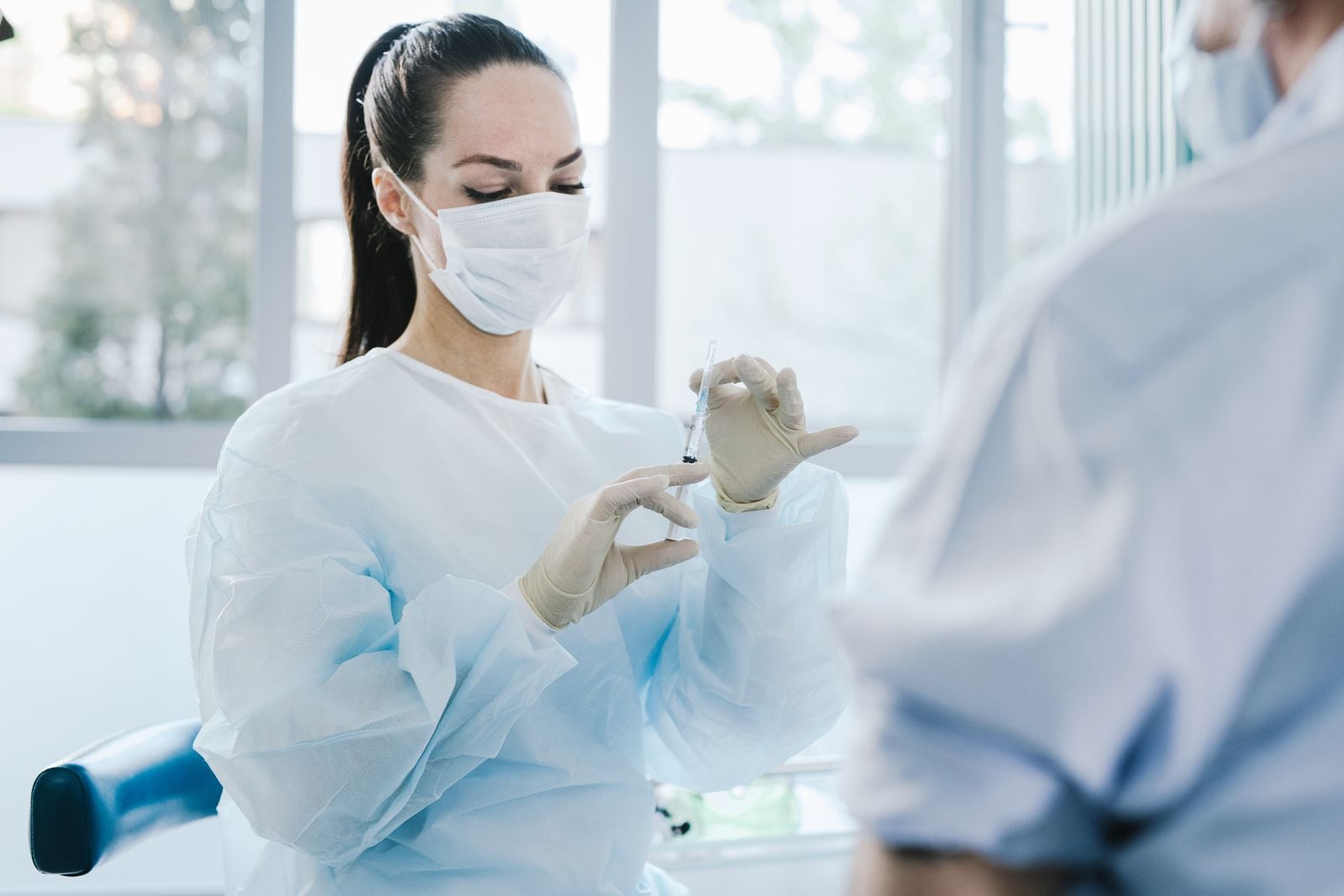
A vaccine tested first on the family, then on 7,500 Pittsburgh children
Before the Salk vaccine went national in 1954, it moved outward in careful rings. First the Salk laboratory team. Then children already paralyzed by polio at the D.T. Watson Home for Crippled Children in Sewickley, whose parents agreed to let them be injected with a killed-virus preparation. Then the Salk boys at the kitchen table. Then, over the following months, roughly 7,500 schoolchildren across the Pittsburgh area.
The Artful Age
A weekly letter on aging well, family across generations, and the creative life after the kids leave home.
Only after that did the trial go national — nearly two million children in 1954, one of the largest medical field trials in American history.
The order matters. Salk was working against a scientific dogma that said you could not protect against a virus with a killed version of it. His own former professor at NYU had taught him exactly that. Two earlier attempts at polio vaccines in the 1930s had failed, and one of them had actually given children polio. Every parent in America knew those stories.
What polio looked like in 1952
To understand why parents lined up their children for an experimental injection, you have to picture the disease.
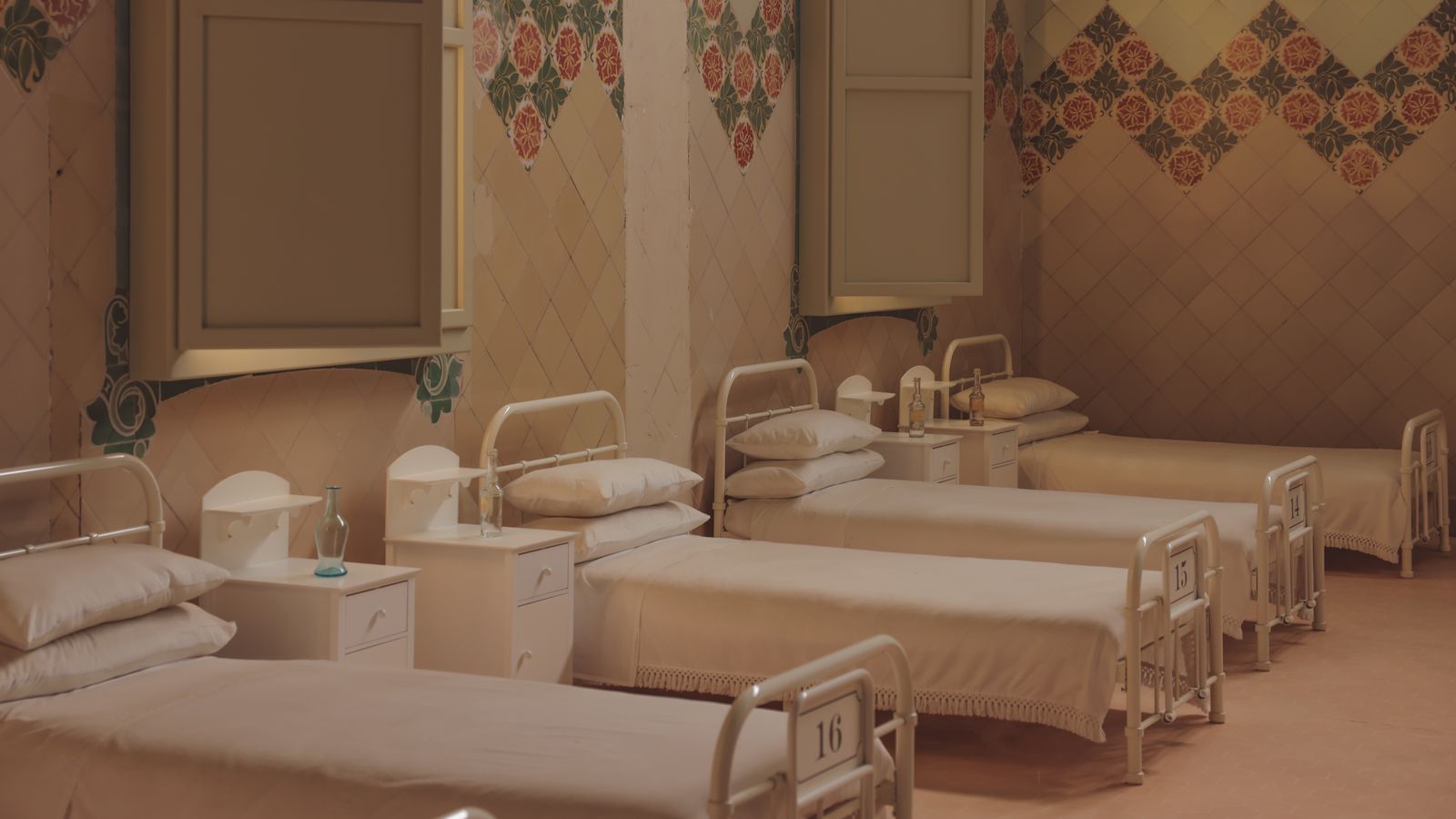
In 1952, roughly 58,000 American children contracted polio. More than 21,000 were paralyzed. Three thousand died. The illness often started like a summer cold. Then, within a day, a child might lose the ability to move a leg, or swallow, or breathe. Children who lost the muscles of respiration were sealed into iron lungs — cylindrical steel tanks that pulled air in and out of their chests by cycling the pressure around their bodies.
Parents kept children out of pools, off buses, away from movie theatres. They cancelled birthday parties. They watched calendars. Polio was seasonal, arriving with the heat, and by August families in some cities were counting the days until school started and the epidemic curve tipped down again.
The historian David Oshinsky has written extensively about the polio epidemic. As historian David Oshinsky told NPR, parents at the time had a much greater awareness of the risks their children faced from polio compared to the potential risks of vaccination, because they were watching their neighbors’ children get sick every summer. A vaccine was not an abstract precaution. It was a rescue.
The kitchen-stove immunisations
Peter Salk has written and spoken about the kitchen scene many times, most recently in a first-person essay for Smithsonian. His father brought vaccine home from the University of Pittsburgh laboratory, sterilised the needles and syringes by boiling them in a pot on the stove, and lined the boys up. Peter was nine, Darrell six, Jonathan almost three.
Peter Salk later recalled that, like any children, he and his brothers disliked getting injections at the time. What he remembers most sharply is that this particular injection did not hurt. He was standing in the kitchen. The sun was coming through the window. His father slid the needle in, and Peter felt nothing, and understood, in the way children understand things without words, that the thing he had been dreading had already passed.
In an interview with a Pittsburgh news station, Peter said more bluntly that his father gave them injections despite their childhood aversion to needles. The vaccine, at that point, had been given to a very small number of institutionalised children. The Salk sons were among the first healthy children in America to receive it.
How the vaccine actually worked
The Salk vaccine was a killed-virus preparation. His team grew live polioviruses in cultures of monkey kidney cells. Then the Pittsburgh team worked out the precise combinations of heat and formaldehyde needed to kill the virus without destroying the surface proteins the immune system had to recognise.
The lab team developed a colour-change test using a pH indicator dye. Healthy cells in culture turned the medium yellow as they metabolised. If poliovirus in a test sample was still alive, it killed the cells and the medium stayed red. A glance at a rack of tubes told the team whether a batch of vaccine was safe.
This was the technical breakthrough behind the whole project. It was slow, obsessive laboratory work, and it turned a theoretical possibility into a manufacturable dose.
7,500 children in Pittsburgh schools
The Pittsburgh trial expanded in stages through 1953 and into early 1954. Tingle Barnes, who was part of it, remembers going to the Watson Institute in Sewickley on Saturday mornings. Her brother later caught a mild polio infection but recovered fully; when their doctor sent him to Salk, Salk realised the boy’s earlier vaccinations had protected him from the worst of the disease. Pittsburgh families volunteered their children in numbers that would be almost unimaginable today.
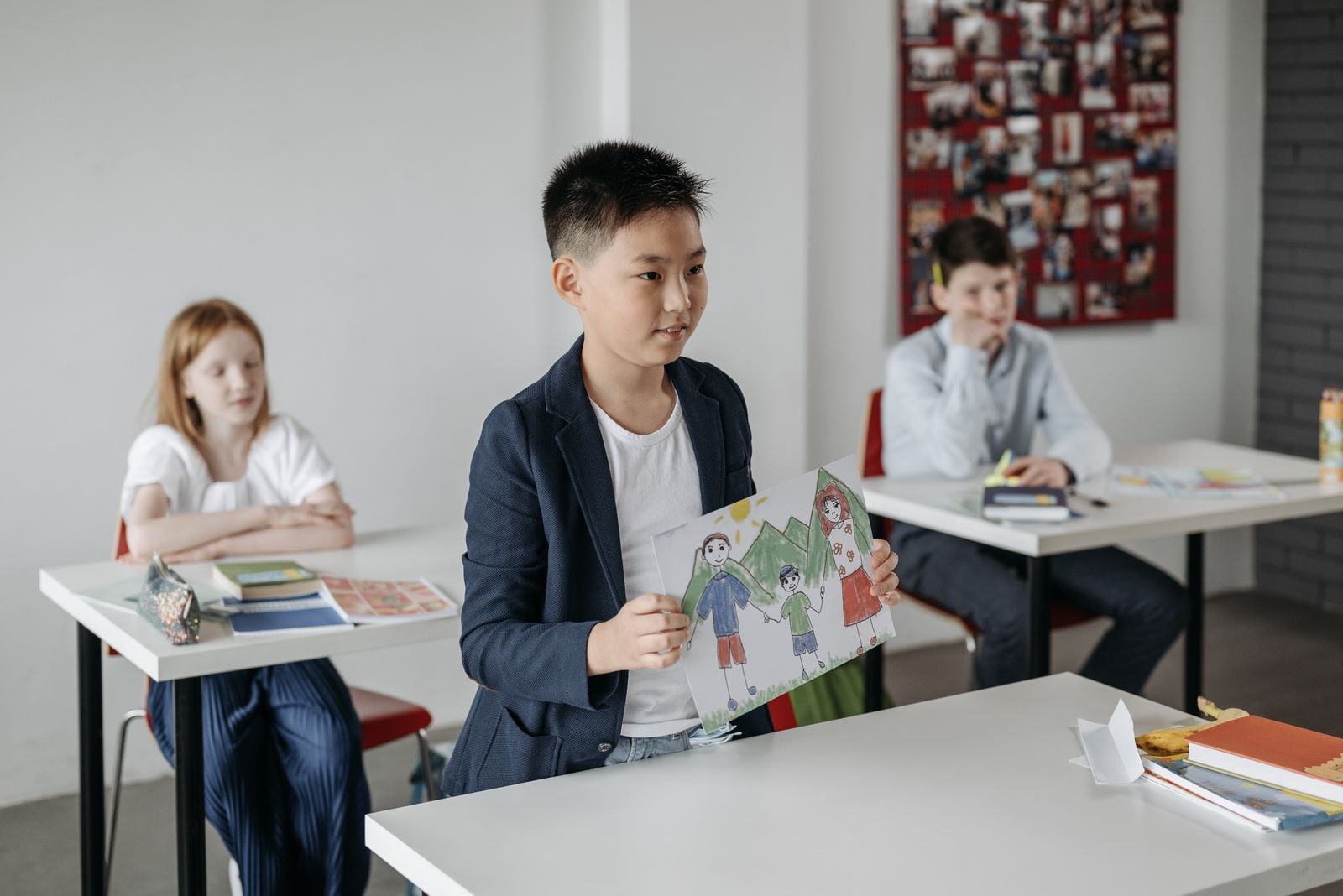
Schools were the delivery mechanism. Nurses set up in gymnasiums and libraries. Consent forms were single pages. Parents signed. Children lined up.
By April 1954, the operation scaled up dramatically. Nearly two million American children took part in the field trial run by the National Foundation for Infantile Paralysis. Schools were the backbone of the trial infrastructure, which is why the children became known as the Polio Pioneers.
April 12, 1955: church bells
The trial data went to Thomas Francis Jr. at the University of Michigan — the man who had taught Salk how to inactivate flu viruses a decade earlier. Francis spent months analysing the results. On April 12, 1955, he announced that the vaccine was safe and effective.
Church bells rang. Factories paused their assembly lines. Department stores stopped business over their loudspeakers. Parents wept in kitchens. Within years, the incidence of polio in the United States had dropped dramatically.
That evening, in a television interview, Salk was asked who owned the patent. Salk gave the answer that has followed him ever since: “Well, the people, I would say. There is no patent. Could you patent the sun?”
A trial that could not be repeated
Oshinsky, in his NPR interview, was asked whether a field trial of two million children could happen today. He said no. Regulatory frameworks, informed-consent standards, and the anti-vaccine movement have all changed the calculus. Vaccines are, in a way, victims of their own success — when nobody remembers seeing a child in a leg brace, the reward side of the ledger goes quiet.
The 1954 trial had features that a modern institutional review board would flag immediately. Parental consent was a single signature. In one branch of the study, second-graders received the vaccine while first- and third-graders at the same schools were used as “observed controls” — meaning they got nothing, and researchers simply watched to see who got sick. In the double-blind branch, half the children received a placebo.
The pediatrician Stephen Landay, whose own family history included polio, has written that the trial worked because parents in 1954 had lived through polio summers and were prepared to accept risk they could see against a disease they could also see.
The scientists who came before
Salk’s willingness to inject his own children was not unprecedented in medicine. It sat inside a long tradition of researchers testing on themselves and their families — a tradition that has produced both breakthroughs and disasters. Medical progress has often depended on somebody willing to be their own first data point.
Salk was willing. But the more remarkable fact is that so were nearly two million American families.
The price Salk paid
Salk became, overnight, one of the most famous scientists in the world. He was on the cover of Time. Presidents called him. Streets and schools were named for him. But inside the virology community, he paid for that fame. Many researchers believed his killed-virus approach was inferior to the live-attenuated vaccine Albert Sabin was developing. Salk was, remarkably, never inducted into the National Academy of Sciences.
He was the people’s scientist. That was both his reward and his punishment.
The Sabin oral vaccine eventually replaced the Salk injection in most of the world in the 1960s, because it was cheaper, easier to administer on a sugar cube, and could interrupt community transmission. But the Salk-style inactivated vaccine has returned to primary use in the United States and much of the developed world, because the rare cases of vaccine-derived polio associated with the live oral version are no longer an acceptable trade-off in countries where wild polio has been eliminated. The vaccine Peter Salk got at his kitchen table in 1953 is, in essence, the vaccine American babies still get today.
What the children remember
Peter Salk is now in his eighties. He is an adjunct professor of infectious diseases and microbiology at the University of Pittsburgh School of Public Health — the same institution where his father did the work. He runs the Jonas Salk Legacy Foundation. He has helped curate an exhibit on his father’s life at Pitt’s public health school, drawing on items the family donated.
The memory he keeps returning to is the kitchen. The sunlight. The stove. The needle that did not hurt. The realisation, at nine years old, that the thing he had been afraid of had already happened, and had been survivable, and had been given to him by his father, who had made it himself, in a laboratory a few miles away, because he was trying to make sure that no child anywhere would have to be afraid of polio again.
In 1952, 58,000 American children got polio. In 2024, the number of wild poliovirus cases reported worldwide was in the double digits, confined to two countries. The distance between those two numbers began, in one very literal sense, at a kitchen table in Pittsburgh, with a pot of water boiling on the stove.