A four-year-old fires off something on the order of 300 questions a day, a figure drawn from small home-recording studies of preschool language. Why is the sky. Why does the dog. Why did that man. The number is a rough one, and caregivers who have tried to keep a tally rarely dispute the scale. What is newer, and stranger, is what researchers have been learning about where those questions go after the child stops asking them.
They do not stop. They keep working, quietly, in the dark.

The 300-a-day figure, and what it actually measures
The often-cited 300 questions is a household average, not a laboratory constant. It comes from parents and researchers logging preschool speech over full waking days, and it lumps together the whole family of question forms a four-year-old uses: the true information-seeking why, the ritual what’s that, the testing is it really, the social can I. In a widely cited review of question-asking development published in the journal Developmental Review, psychologists describe question-asking as one of the earliest and most reliable engines of curiosity, and one that peaks, in raw volume, during the preschool years.
The Artful Age
A weekly letter on aging well, family across generations, and the creative life after the kids leave home.
The number matters less than the shape. Questions do not spread evenly through a preschool day like rain. They gather.
Where the clusters fall
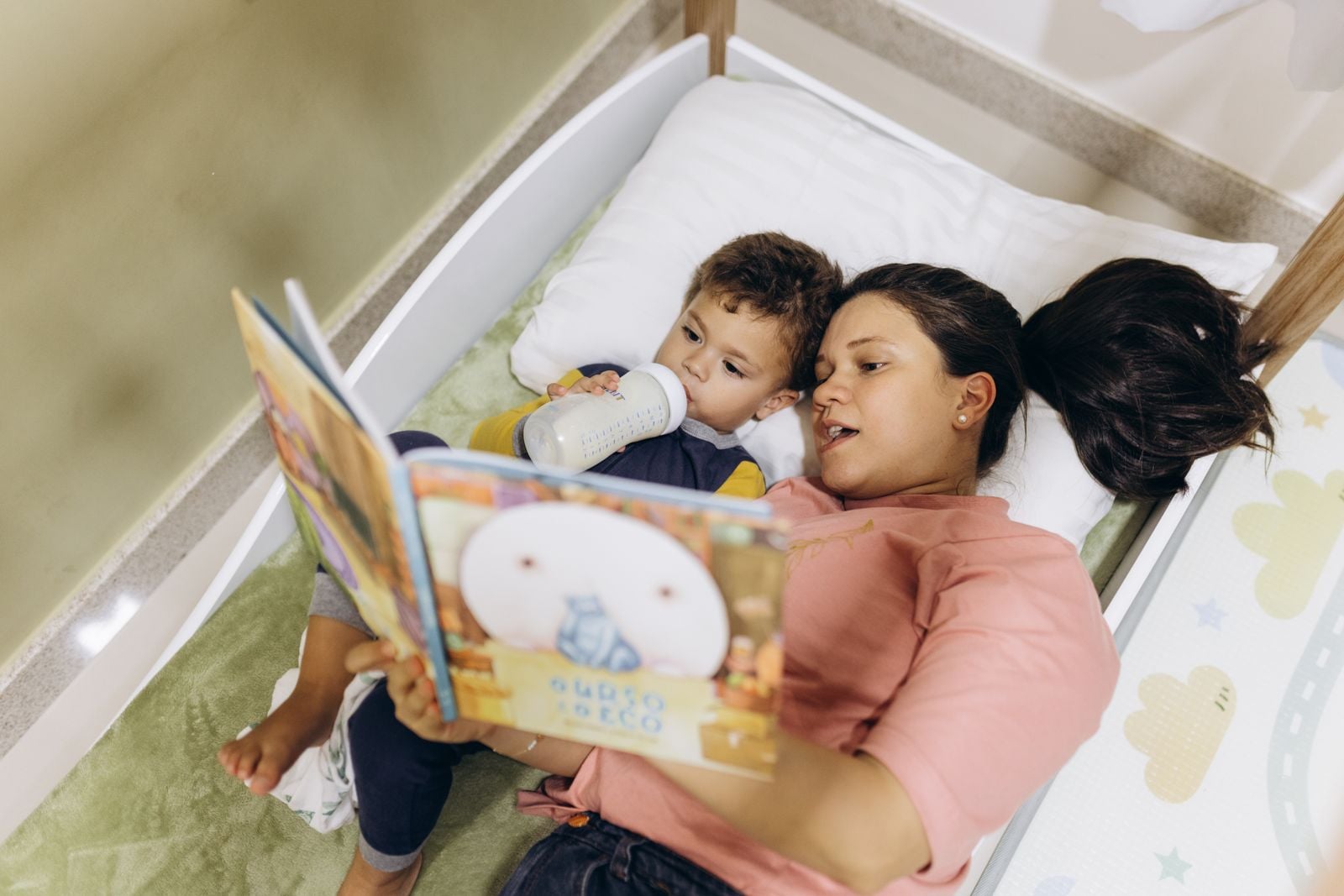
Caregivers often notice the same pattern: questions seem to arrive in bursts before rest periods. The child who has been happily building a train track suddenly wants to know whether worms have bones, whether Grandma is older than the moon, whether the ceiling could fall. The questions arrive in clusters, often thematically linked, often about things seen hours earlier.
As sleep pressure builds, the child’s attention narrows and turns inward, sifting through the day’s material. The questions are not random. They are the audible edge of consolidation beginning.
What the sleep lab found
Sleep neuroscience research has spent years watching what happens to a brain in the first hour or two after learning stops. In a 2025 paper in Science Advances, a team at the University of Michigan reported that dopamine neurons in the ventral tegmental area fire in tight bursts during non-REM sleep right after learning, and that blocking those bursts erased the next-day improvement the animals would otherwise have shown.
The work was done in mice, on motor tasks like walking a thin rod. The finding is still striking. Dopamine, long thought of as the waking chemistry of reward and motivation, keeps working after the lights go out. It lines up with sleep spindles, those brief half-second waves of brain activity linked to memory consolidation, and fires just after each one, as if stamping the day’s lesson into place.
According to the research, sleep appears to be an active period when neural circuits consolidate daily learning patterns.
Why questions cluster where they do
Put the two observations together and a picture forms. A four-year-old’s brain is running a heavy consolidation shift twice a day, once at nap and once at night. The questions that arrive in the run-up look, from the outside, like stalling. From the inside they look more like a child pulling the day’s loose threads through her fingers before the brain does the same, chemically, in the dark.
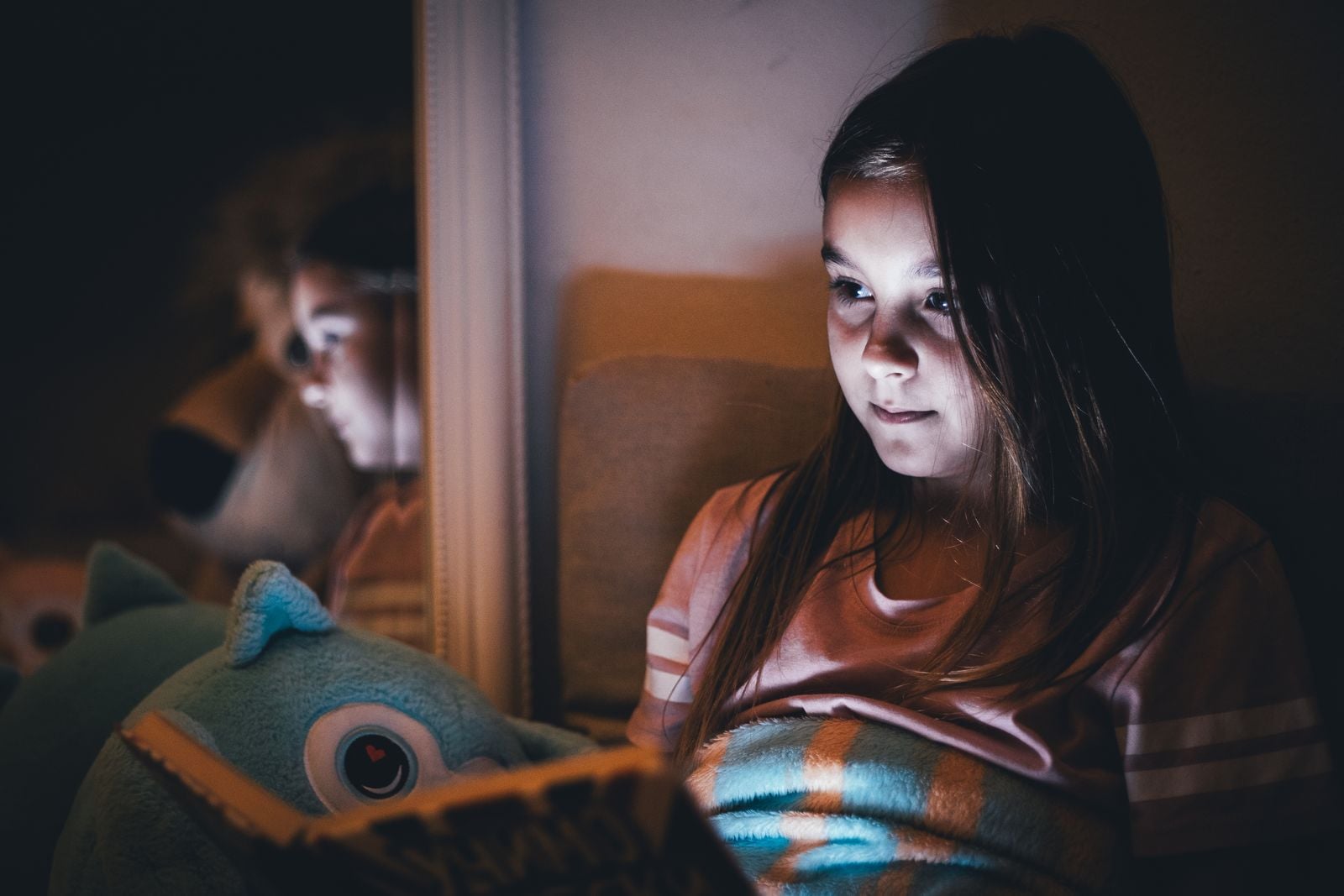
A child who saw a snail on the way home from preschool at eleven in the morning asks about it at 7:45 at night, in pyjamas, holding a toothbrush. The delay is not forgetfulness. It is the material surfacing at the moment the brain is about to file it.
The question itself is a learning tool
Question-asking is not just an output. It changes what gets remembered. Research on curiosity and memory — including the “PACE” framework described by psychologists Matthias Gruber and Charan Ranganath in Trends in Cognitive Sciences — has shown that the act of forming a question reshapes how information is stored when the answer arrives. A child who has asked why birds have hollow bones will remember the answer for longer than a child who has been told it unprompted.
This is why the timing is not incidental. If the brain is going to consolidate today’s material tonight, then the last twenty minutes of asking are, in effect, the child selecting which threads to save.
What conversation does that a chatbot cannot
The rise of Alexa, Siri and their newer cousins has changed the answering side of the equation. Writing in The Conversation on how young children talk to AI, researchers point out that growing up around quick, obedient digital exchanges shapes children’s habits and expectations for conversation. Children tend to use short, direct commands like asking to play cartoons, requesting jokes, or asking simple factual questions. The assistant answers instantly and never tires.
Human conversation is slower and messier. A parent hedges, or asks a question back, or admits they do not know, or gets distracted by the pasta water. That messiness is where a child learns to hold a thought, to rephrase, to wait. It is also, more quietly, where the day’s material gets rehearsed one last time before sleep.
A four-year-old who asks Alexa why the moon is white gets a fact. A four-year-old who asks a grandparent why the moon is white gets a fact, a follow-up question, a pause, a memory of the grandparent’s own childhood, and a slightly longer bedtime.
Repetition, and the Montessori clue
The clustering pattern also helps make sense of something educators have long observed: children will repeat the same task, or the same question, dozens of times without apparent boredom. The repetition is not stubbornness. It is rehearsal for consolidation. The forty repetitions of a cylinder block in the afternoon and the fourteenth but why before bed are the same behaviour dressed differently.
The child is running material past the brain until the brain agrees to keep it.
Reading, questions, and what does not need to happen
One counterintuitive finding is worth sitting with. Parents are often told that a good bedtime story should be interactive — that the adult should stop to ask, and what do you think happens next? A recent study covered in a Conversation write-up of the reading-aloud research found that the social benefits of shared reading show up whether or not the adult pauses to quiz. The reading itself, and the closeness, is doing the work.
Which suggests something useful about the bedtime question storm. The adult does not have to answer brilliantly, or turn every why into a teaching moment. Being there while the child asks is much of the point.
What screens seem to change
Timing matters at the other end of the day too. A cohort study out of Singapore, led by researchers from Inserm and the National University of Singapore and reported through EurekAlert, tracked 502 children from the GUSTO birth cohort and found that higher screen time in the first few years predicted small but measurable differences in academic performance at age nine and working memory at age ten and a half. The mechanism is still debated. One plausible piece of it is that screens crowd out the conversational back-and-forth that fills the pre-nap and pre-bed windows — the very windows where consolidation is loading up.
A child watching a tablet in the last twenty minutes before sleep is not asking, or being asked. The rehearsal step is skipped.
Curiosity as a trainable habit
Question-asking, though it comes naturally, also gets better with practice. A study published in npj Science of Learning, part of the Nature portfolio, found that young children given structured chances to ask questions during science lessons came to value new information more than children who were asked to simply listen — a sign of deepening curiosity, not just more talking. Curiosity, in other words, is not a fixed dial. It responds to how adults treat the questions when they come.
A dismissed question at 7:40 pm is a dismissed rehearsal. The child will still consolidate what happened that day, but with less of the shape she was trying to give it.
The long arc of asking
The clustering of questions before sleep is a young-brain phenomenon, but the underlying pattern — that rest is where learning gets locked in — does not go away. The same dopamine-and-spindle machinery observed in sleep research is still running in an eighty-year-old learning a new piano piece. The volume of questions falls off. The consolidation does not.
What changes across a life is who is asking, and who is listening. At four, the questions arrive in a flood at bath time. At seventy, they arrive more privately, in the moment before falling asleep, when a name from decades ago surfaces and the brain, in its old and reliable way, files it once more.
The four-year-old with the toothbrush and the snail question is doing what every learning brain does. She is asking out loud, one last time, before the room goes quiet and the real work begins.