
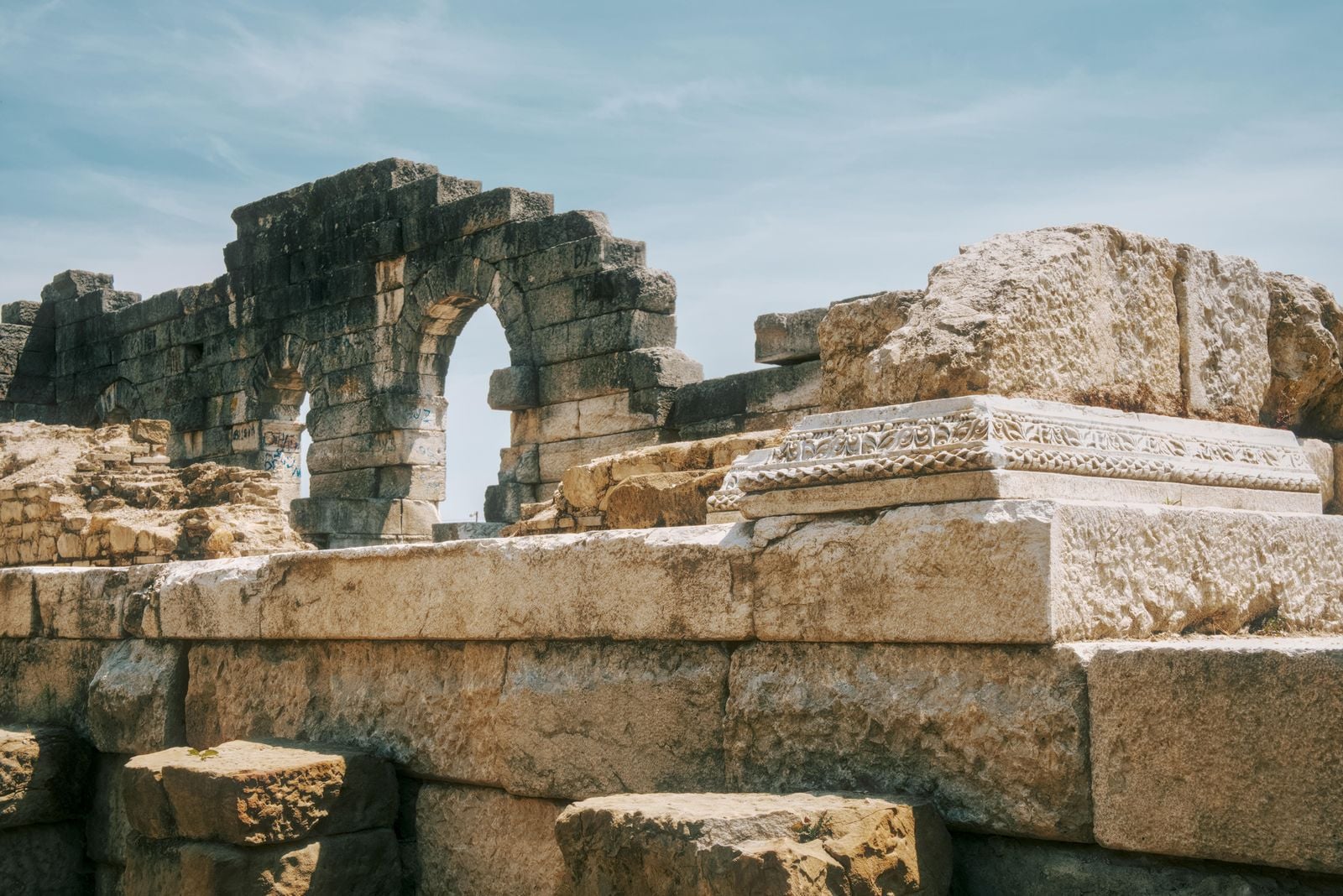
Beneath a Roman toilet seat, an experiment nobody designed has been running for 1,900 years. The concrete slab pulled from under a communal latrine at Hadrian’s Villa in Tivoli, about 17 miles east of Rome, is still binding itself together — crack by hairline crack — because atmospheric carbon dioxide keeps seeping into its pores and crystallising into calcite. A team co-led by Xiaohong Zhu, now at Beijing University of Technology, and Paulo J. M. Monteiro at the University of California, Berkeley published the finding in Science Advances on 8 July 2026, and it rewrites part of what engineers thought they knew about why Roman concrete outlasts almost everything built since.
Modern concrete usually starts crumbling within about a century. This latrine slab has been quietly healing itself for nineteen.
Why a toilet, of all places
Archaeologists rarely get to sample genuinely undisturbed Roman concrete. Temples, palaces and aqueducts are the structures that get restored, and every repair alters the material a scientist would want to read. A latrine is nobody’s restoration priority. The sample came from the waste collector beneath a bench of communal toilets in the western substructures of the Canopus, and it had never been repaired, sealed, or exposed to a modern hand. Which is exactly why it could be trusted.
The Artful Age
A weekly letter on aging well, family across generations, and the creative life after the kids leave home.
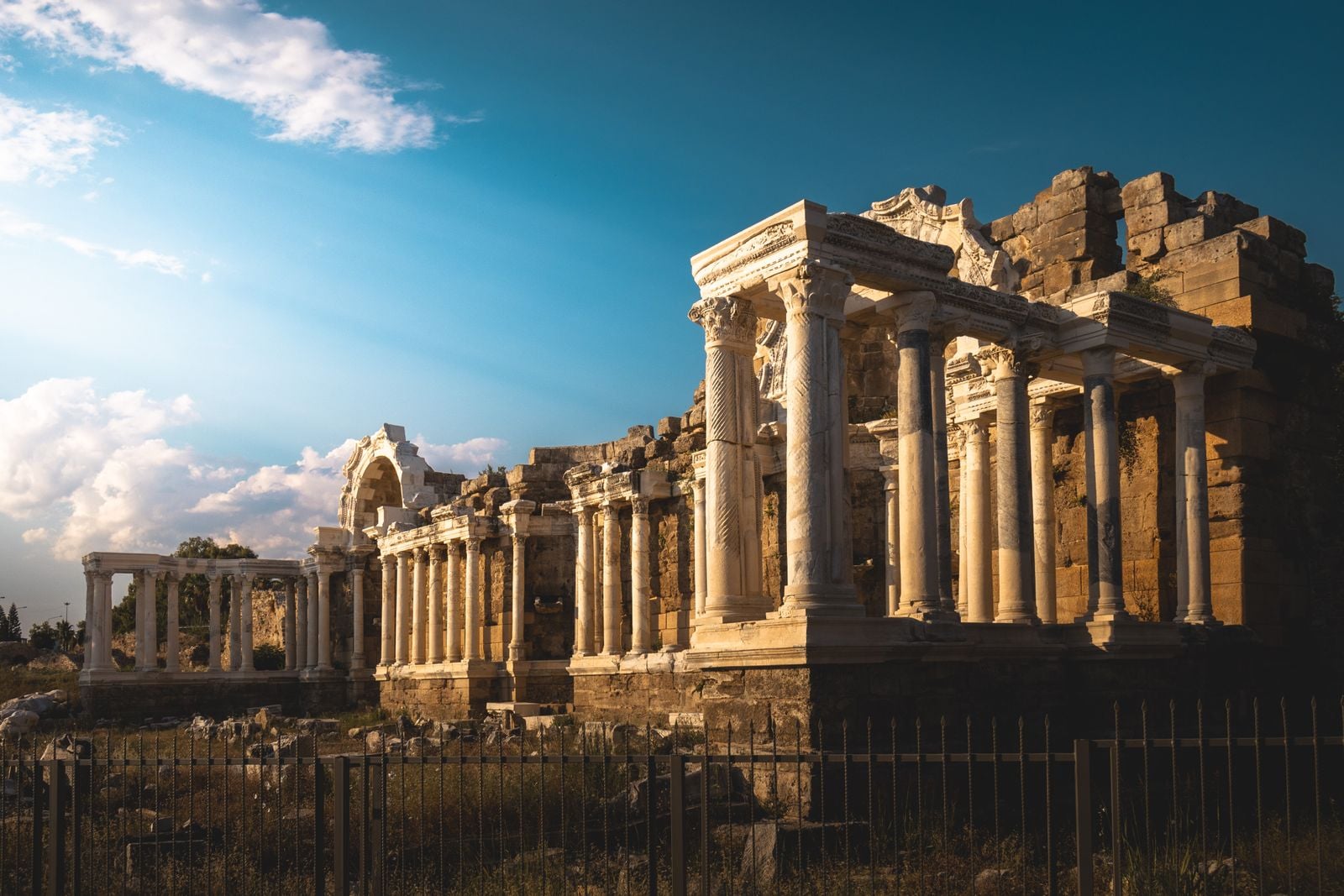
The villa itself is a UNESCO World Heritage site, built for the emperor Hadrian, who ruled from 117 to 138 CE. Hadrian is better known for the wall he ordered across northern Britain, but the villa at Tivoli is where his engineers left their most durable signatures — pools, vaults, hypocaust floors, and the unglamorous plumbing underneath.
What the microscope found
Back at Berkeley, the team ran the slab through a battery of instruments: powder X-ray diffraction, scanning electron microscopy with energy-dispersive X-ray spectroscopy, Raman spectroscopy, transmission electron microscopy, and synchrotron-based micro- and nano-computed tomography. The point of stacking so many techniques was to look at the concrete from the nanoscale up to the bulk material, and to watch how minerals were arranged inside the pore network.
As expected, the concrete contained the classic Roman recipe: volcanic rock and ash, lime, and water. Those ingredients drive the pozzolanic reaction, which produces a binding gel called calcium-aluminum-silicate-hydrate, or C-A-S-H. For decades that reaction has been the standard explanation for why Roman concrete survives.
But the imaging showed the gel was only a small part of what was holding the slab together. The dominant binder, filling pores and threading through fractures, was calcite — the same mineral that forms stalactites in a cave.
The slow chemistry of self-healing
Calcite forms when atmospheric carbon dioxide meets calcium compounds in the presence of moisture. In a fresh piece of concrete this reaction, called carbonation, is often considered a nuisance — it can attack the steel reinforcement inside modern buildings and shorten their life. In a Roman slab with no steel inside, carbonation does something almost opposite. It keeps depositing hard mineral into the very cracks that would otherwise widen and split the material apart.
The team traced the deposits in three dimensions. They found fan-like crystals of radiaxial fibrous calcite growing outward from reaction rims, spreading into nearby pores, then linking up into what the paper describes as continuous mineral bridges. Those bridges quietly took over part of the job of load transfer and blocked the pathways that water and salts would use to attack the concrete from inside.
The reaction is slow. Diffusion-limited, the researchers stress — meaning carbon dioxide has to travel through the pore network one micrometre at a time. Over a century, the effect is modest. Over nineteen centuries, it builds a second binding system that arrives long after the original masons have died.
What the earlier lime-clast study missed
In 2023, a team including MIT’s Admir Masic proposed that Roman concrete self-heals thanks to small white chunks of quicklime — lime clasts — scattered through the mix. When water reaches a crack, the clasts dissolve and recrystallise, plugging the gap. That work got wide attention because it suggested a concrete that could repair itself in weeks, not centuries.
The new latrine study does not contradict it. It adds a second, slower mechanism running alongside the first. As Archaeology News reported when the paper appeared, carbonation worked alongside the lime-clast process for centuries, producing enough calcite to reinforce the concrete and cut its porosity.
Put crudely: the lime clasts are the emergency plumbers. The calcite is the slow tenant who keeps replastering the walls for two millennia.
The volcanic ash still matters
None of this means the pozzolanic reaction was overhyped. The three-dimensional scans showed the volcanic aggregates were still doing chemical work — releasing aluminosilicate species into the surrounding binder and producing C-A-S-H at the interfacial transition zone, the thin boundary where an aggregate meets the paste. That zone is usually the weakest link in modern concrete. In the Roman slab it was one of the strongest.
The concrete, in other words, was built with two chemistries that reinforce each other. The pozzolanic reaction did the early work, locking aggregates into the paste. The carbonation did the late work, sealing the microcracks that inevitably opened as the building settled, heaved, and endured centuries of rain.
Why modern concrete crumbles so much faster
Modern reinforced concrete is typically designed for a service life of roughly 50 to 100 years, and the paper is careful to caution against direct comparisons between Roman and modern concrete. The reason is the steel. Rebar makes modern concrete strong enough for skyscrapers and bridges, but it introduces a fatal vulnerability: once carbonation or chloride penetration reaches the steel, the metal rusts, expands, and blows the concrete apart from within. The same carbonation that heals a Roman latrine slab would kill a modern parking garage.
This is why the news of a self-healing ancient concrete is not a straightforward recipe for modern builders. The Berkeley team is explicit that the slow, diffusion-limited carbonation observed over centuries should not be assumed to deliver rapid climate benefits. But the geometry of how the calcite grew — the fan-shaped crystals bridging pores, the way mineralisation refined rather than blocked the pore network — offers something more useful than a recipe. It offers a design principle.
Researchers are already trying to engineer that principle in synthetic form. In a 2026 Nature Communications paper, a separate team reported a polymer network that migrates through moist cement pores and rebinds damaged surfaces across repeated damage cycles, mimicking the diffusion-and-fill logic the Romans stumbled into with atmospheric CO2. Others are working on bacterial systems that precipitate calcium carbonate inside a crack once it opens.
The climate stakes
Cement manufacturing accounts for roughly 8 to 9 percent of human-made carbon dioxide emissions. Every tonne that has to be produced, transported, and later demolished carries a climate cost. A concrete that lasts three times as long, or repairs itself instead of being torn out and replaced, changes the arithmetic of that footprint.
“This study shows how exploring ancient engineering techniques can lead to important revelations,” Monteiro said in Berkeley’s announcement of the work. “We hope that by unlocking Roman secrets for enhancing concrete durability, we can someday attain sustainable modern infrastructure development.”
The Roman builders, of course, had no idea what they were designing. No molecular imaging, no CO2 monitors, no notion of the calcium-aluminum-silicate-hydrate gel. What they had was a working recipe, generations of masons who noticed which mixes lasted, and enough time to see the difference.
What else the villa is still giving up
The concrete story is not the only thing Hadrian’s Villa has yielded recently. In June 2026, after an excavation campaign in April and May, a team from Pablo de Olavide University in Seville announced a hidden underground chamber beneath the Palazzo sector that may be the oldest structure yet identified at the site — a hypogeum dating to the Roman Republic, which ended in 27 BCE. Rafael Hidalgo, who has directed work at the villa since 2003, told Fox News Digital that the vaulted roof was perfectly preserved, with the impressions of the wooden centering used to pour the opus caementicium still visible on the inner surface of the vault.
Opus caementicium is the same Roman concrete the Berkeley team was analysing. The chamber shows the timber scaffolding grain pressed into a ceiling that has held its curve for more than two thousand years.
A slab still working
The sample sits in a Berkeley lab now, sectioned and imaged and catalogued. The rest of the latrine remains at Tivoli, in the humid inland air east of Rome, where the same reaction the microscope caught in freeze-frame is still going. Every rainfall dissolves a trace of calcium. Every dry morning admits a little more carbon dioxide. Somewhere inside the pore network, a fan of calcite crystals is extending by a few molecules, bridging a fracture that opened during an earthquake nobody recorded.
By the time modern concrete needs replacing for the third time — the year 2226, say — the Hadrian latrine will have been sealing its own cracks for 2,100 years, and counting.