
The human brain does not cross a single biological finish line at 25. The prefrontal cortex develops over a long period, but its many structural and functional features do not all mature on the same schedule. Decades later, some speeded abilities are weaker on average, while vocabulary and accumulated knowledge can remain unusually strong. The accurate story is a set of overlapping curves, not a young brain that is complete and an older brain that is simply declining.
The popular shorthand about 25 came from real neuroscience, but it hardened into a claim the evidence never established. Early imaging studies captured important changes through childhood, adolescence, and early adulthood. They did not reveal a birthday on which judgment, impulse control, or the entire prefrontal cortex became complete.
Where the number 25 came from
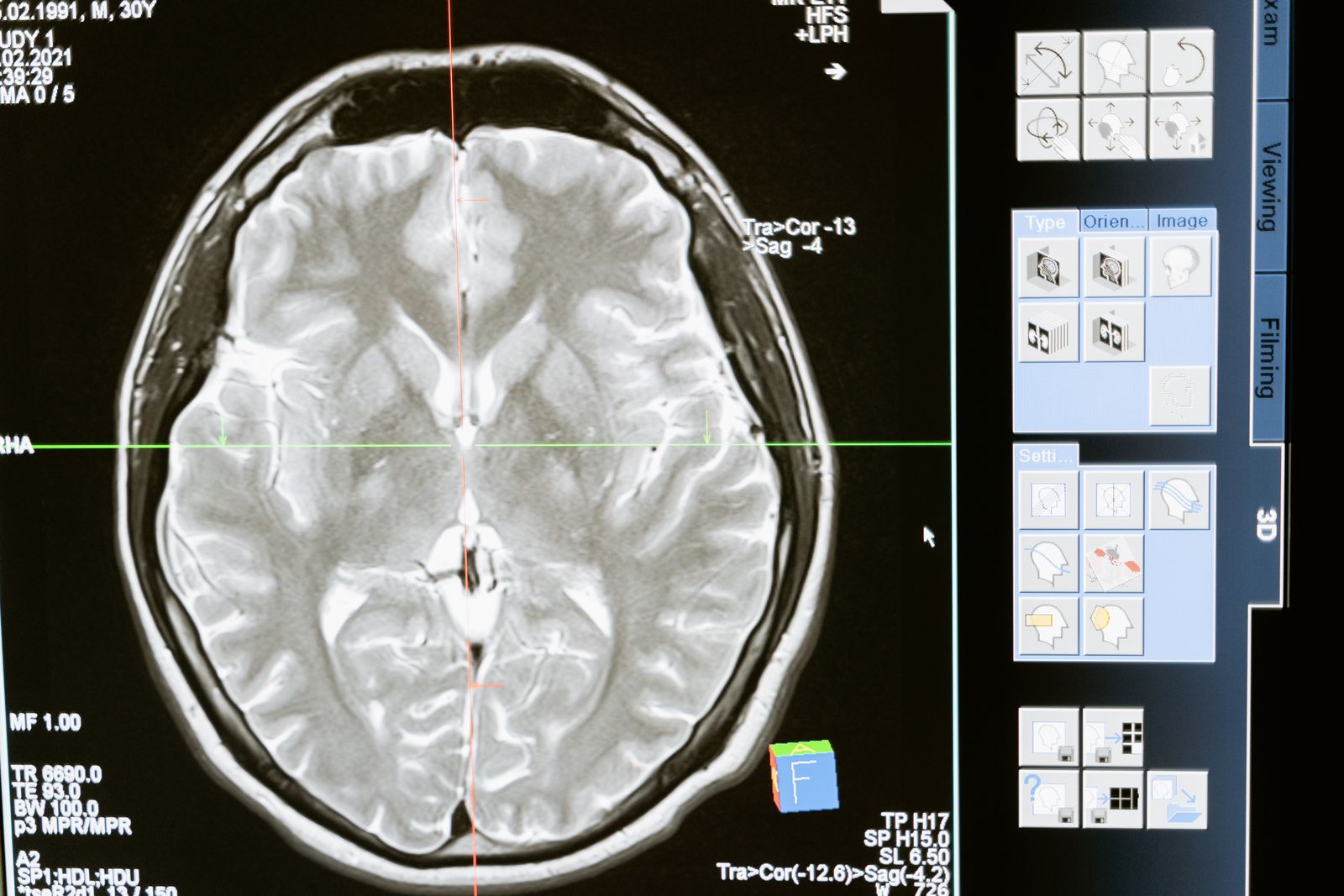
Structural MRI work in the late 1990s and early 2000s repeatedly scanned children and teenagers. It helped map a broad back-to-front pattern of cortical maturation, with some frontal regions still changing in the oldest participants.
The Artful Age
A weekly letter on aging well, family across generations, and the creative life after the kids leave home.
The limitation matters. As an explainer published by EL PAÍS notes, an influential follow-up project included participants from age four but ended its scans at about age 20. Researchers therefore could not identify a precise endpoint from those data. Twenty-five became a convenient estimate, then a cultural certainty.
That does not make the early studies poor science. It means their findings were later compressed into a rule they were not designed to prove. Brain maturation depends on what is measured, which region is examined, and whether the question concerns anatomy, connectivity, behaviour, or a particular cognitive skill.
What newer brain imaging actually found
A 2025 Nature Communications study brought together diffusion imaging from 4,216 people ranging from infancy to age 90. The researchers examined the topology of white-matter networks across the whole brain and identified major turning points around ages nine, 32, 66, and 83.
The period from nine to 32 showed increasing network integration, followed by a phase in which integration decreased and segregation generally increased. That is an important lifespan result. It is not proof that the prefrontal cortex, considered on its own, finishes wiring at 32, and it does not turn the early thirties into a new magic deadline.
A separate 2025 Science Bulletin paper by Wen Li and colleagues examined developmental differences in the regional organisation of the dorsal prefrontal cortex. This regional work reinforces the need for precision: development can involve changing boundaries and connections within a structure, not a single switch for the whole structure.
Different imaging measures also reach their highs and lows at different ages. In the Nature Communications analysis, global network efficiency peaked around 29, while other measures followed different trajectories. The clean conclusion is that brain organisation keeps changing into adulthood. The evidence does not support calling the prefrontal cortex a finished room.

What tends to slow with age
Some cognitive changes begin relatively early. Raw processing speed, reaction time, and parts of working memory tend to weaken across adulthood. A younger adult will often complete an unfamiliar, timed visual task more quickly than an older adult.
These averages do not describe every person, and they do not mean all mental abilities peak together. In one large study discussed by MIT News, raw processing speed appeared to peak around 18 or 19, while short-term memory improved until about 25, levelled off, and began to decline around 35. Other abilities peaked much later.
The brain’s physical tissues change as well. Grey-matter volume reaches its peak early in life and then follows regionally varied patterns of thinning. White matter matures over a longer period and also changes with age.
A 2024 molecular atlas of human brain blood vessels compared samples from early development and adulthood, as well as samples from brain tumours and vascular malformations. It found that endothelial cells lining those vessels behaved differently across stages. That finding shows that the brain’s supporting biology changes with development, but it does not by itself compare an otherwise healthy 25-year-old with an otherwise healthy 70-year-old.
What crystallised intelligence means
Psychologists use crystallised intelligence for accumulated facts, vocabulary, and learned knowledge. It is not simply another name for pattern recognition. Experience can help a person recognise a familiar situation more efficiently, but that everyday advantage should not be treated as the definition of a formal psychological construct.
The distinction still leaves room for a striking later-life strength. The same large cognitive study found that vocabulary, a common measure of crystallised intelligence, peaked in the late sixties or early seventies in its newer data. That is a more defensible claim than saying crystallised intelligence keeps rising through the eighties in most healthy adults.
An experienced nurse may notice familiar warning signs without rebuilding every possibility from the beginning. A practiced cook may recognise the texture of a dough before consulting a timer. Those examples describe domain experience, not a universal neurological power that automatically arrives with age.
Experience can compensate for lost speed in familiar settings. It cannot erase every age-related decline, and chronological age alone does not guarantee expertise or wisdom. Education, work, health, opportunity, and years of deliberate practice all shape what knowledge is available to draw upon.
The brain remains changeable
Plasticity does not disappear when early development ends. The brain remains capable of learning and reorganising across life, although the scale, speed, and mechanisms of change are not identical at every age.
Evidence summarised by SciTechDaily links aerobic exercise, learning languages, and demanding hobbies such as chess with support for neuroplastic abilities. These activities are not guarantees against cognitive decline, and the research does not justify promising that they will make an older brain look decades younger. They are better understood as ways of continuing to challenge a system that remains responsive.
Creative work belongs in that picture too. Learning an unfamiliar technique, reading music, navigating a new place, or solving a practical problem asks the brain to coordinate attention, memory, perception, and movement. The value lies in sustained engagement, not in finding one activity that supposedly keeps the brain young.
A more accurate lifespan timeline
In childhood and adolescence, the brain changes rapidly in structure, connectivity, and function. Through the twenties and into the early thirties, several white-matter and network measures continue to shift. None of this establishes a universal age of completion.
Across adulthood, processing speed generally becomes slower, while vocabulary and accumulated knowledge may remain stable or improve for much longer. Different cognitive abilities peak at different times, and individual trajectories vary widely.
In the Nature Communications topology study, the next broad turning point after 32 appeared around 66, not 50. A further turning point appeared around 83, although the oldest group was much smaller and the authors noted lower statistical power there. A Medical News Today summary accurately lists the study’s four transition ages as nine, 32, 66, and 83.
These are population-level turning points in one kind of structural network analysis. They are not birthdays on which an individual brain abruptly changes phase. The study itself describes nonlinear development, which is the opposite of a simple countdown to completion.
Why the myth matters
The age-25 rule can distort both ends of adulthood. For younger people, it can sound like a biological pass for decisions that also reflect circumstances, learning, and responsibility. For older people, it can support the equally false assumption that the brain has nothing left to build.
Families and classrooms often make the contrast visible. A younger person may adapt quickly to an unfamiliar interface, while an older person sees the social or practical pattern around the task. Neither strength cancels the other, and neither belongs to every member of an age group.
The useful lesson is not that 32 replaces 25, or that knowledge makes age-related losses irrelevant. It is that the human brain changes on many timelines at once. Development, learning, maintenance, and ageing overlap for far longer than the old shorthand suggests.
The last, quiet fact
A 25-year-old may be quicker on a new timed problem. A 70-year-old may bring a larger vocabulary and a deeper store of relevant knowledge. Those are averages, not verdicts on either person.
The brain is never captured by one finish date or one rising line. It is a collection of systems that mature, adapt, hold steady, and decline at different rates. That less dramatic sentence is also the more hopeful one: no birthday completes the brain, and no later birthday reduces it to loss alone.