If someone is truly a good person, the saying goes, then the good things they do come naturally, without calculation or effort. It is a warm idea, and there is a real truth inside it. But taken as a whole it is half right and half misleading, and the misleading half quietly does some damage: it can let people off the hook of actually building character, and it can make anyone who has to work at being good feel like a fraud. The more accurate picture keeps the appealing kernel while correcting two things the saying gets wrong, and it turns out to be kinder and more useful than the original.
The kernel is real: for good people, goodness often is automatic
Start with what the saying gets right, because the science genuinely supports it. For people who are reliably honest and decent, doing the right thing often does not feel like a heroic act of willpower. In a brain-imaging study of honest and dishonest choices, the psychologists Joshua Greene and Joseph Paxton tested two possibilities: that honesty comes from actively resisting the temptation to cheat, or that it comes from simply not being very tempted in the first place, and their data supported the second, since honest individuals showed no extra mental effort when choosing to be honest, as though the wrong option barely registered as a live temptation.
That is a striking result, and it validates the intuition behind the saying. For a genuinely good person, the good action can indeed come naturally, not because they are straining against a strong pull toward the bad one, but because that pull is faint. Virtue that has become part of who you are does not require a fresh internal battle each time; it runs quietly and automatically, which is exactly what the saying is pointing at when it says these actions come naturally.
The Artful Age
A weekly letter on aging well, family across generations, and the creative life after the kids leave home.
But natural does not mean inborn, it means practiced
Here is the first correction. The word natural in the saying tends to smuggle in the idea that good people are simply born that way, that goodness is a fixed endowment you either have or lack. The automaticity the research describes is real, but it is the finished product of habit, not a birthright. People become honest, kind or brave largely by doing honest, kind and brave things over and over until those responses wear a groove and stop requiring deliberation. The ease is earned. What looks like effortless natural goodness in a mature adult is usually the residue of countless earlier choices that were not effortless at all.
This matters for two reasons. It means goodness is something you can cultivate rather than a lottery you either won or lost, which is encouraging. And it means the version of the saying that treats good behavior as innate is quietly corrosive, because it implies that anyone who has to work at doing the right thing must not really be good. That is false. Effortful virtue, choosing the harder right thing when every instinct pulls the other way, is not a lesser form of goodness; it is arguably the more admirable one, and it is how the automatic kind gets built in the first place.
And it overrates the person, underrates the situation
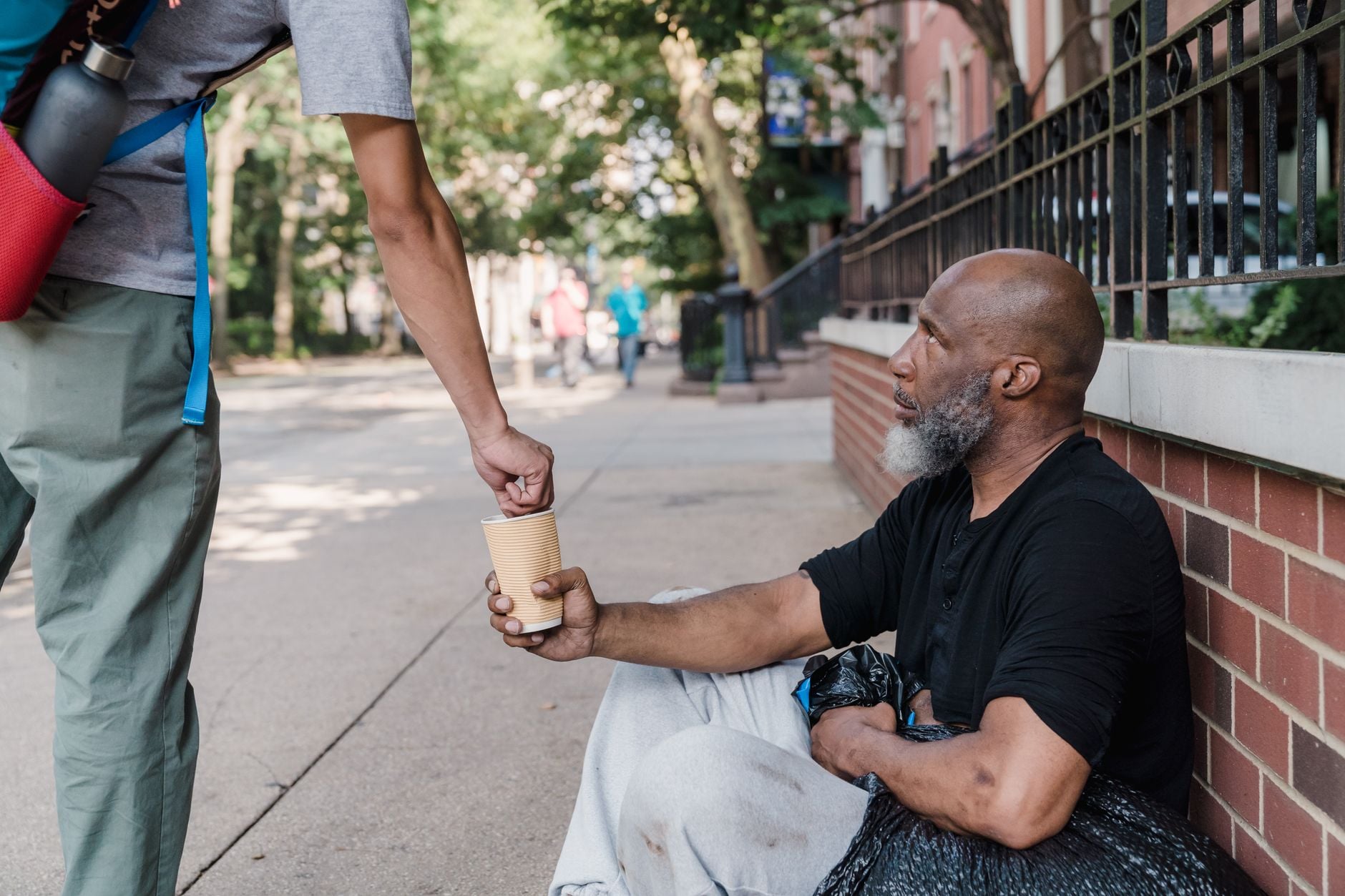
The second correction is more humbling. The saying assumes that good actions flow from good character, so that if the action is missing, the character must be too. But decades of research show that whether people do the decent thing depends enormously on their circumstances, often more than on their virtue. In a classic study, John Darley and Daniel Batson sent seminary students across campus to give a talk, some of them on the parable of the Good Samaritan, and planted a person slumped and groaning in a doorway on the way; they found that whether students stopped to help was predicted not by their religiosity or values but by whether they had been told they were running late, with only about ten percent of those in a hurry stopping, compared with over sixty percent of those who were not.
The lesson is sobering and worth holding onto. People who by any measure wanted to be good, who were literally on their way to preach about helping a stranger in need, mostly walked past a stranger in need when they felt rushed. Situations shape behavior powerfully, and a good person in a bad or pressured situation can fail to act, while the same person with a little more slack would have helped without a second thought. So the absence of the good action is not always a verdict on someone’s character. Sometimes it is a verdict on their circumstances, and recognizing that should make us both humbler about ourselves and more generous in judging others.
Keeping it honest
Put the corrections together and the saying survives in a better form. Goodness can and often does come naturally, but that naturalness is a trained habit rather than an inborn essence, and even genuinely good people are heavily swayed by the situations they find themselves in. Two closing notes keep this fair. The first is to resist using the saying as a weapon, either against others, by concluding that anyone who slips must be secretly bad, or against yourself, by deciding that because kindness does not always come easily to you, you are not a good person. Neither follows. The second is the practical upshot: if you want the good actions to come more naturally, the route is not to wait to become the kind of person for whom they are effortless, but to keep doing them while they are still hard, and to arrange your life so that being good is not constantly competing with being rushed, depleted, or afraid. Do that, and in time the saying comes true from the inside, not because you were born good, but because you practiced until you became it.