Headlines about the things women supposedly notice in older men, and never admit, usually read like a quiet indictment: the softening jaw, the thinning hair, the belt loosened a notch. The genre assumes women are keeping a private ledger of a man’s decline and politely saying nothing. It is worth turning the premise over, because the more interesting truth runs almost exactly opposite. Much of what an older man believes is under scrutiny is barely registered by anyone else, and much of what actually gets noticed and valued is not on the list of things he worries about at all. What women tend not to say out loud is less a catalog of flaws than a quiet appreciation of things men rarely think to count.
The audience is smaller than it feels
Start with the anxious assumption underneath the whole idea, which is that a roomful of people is tracking how you look and how you have aged. Psychology has a name for how wrong that assumption usually is. Thomas Gilovich and colleagues, in the research that named the spotlight effect, found that people consistently overestimate how much others notice their appearance and behavior, because we anchor on our own vivid self-awareness and fail to adjust for the fact that everyone else is preoccupied with themselves.
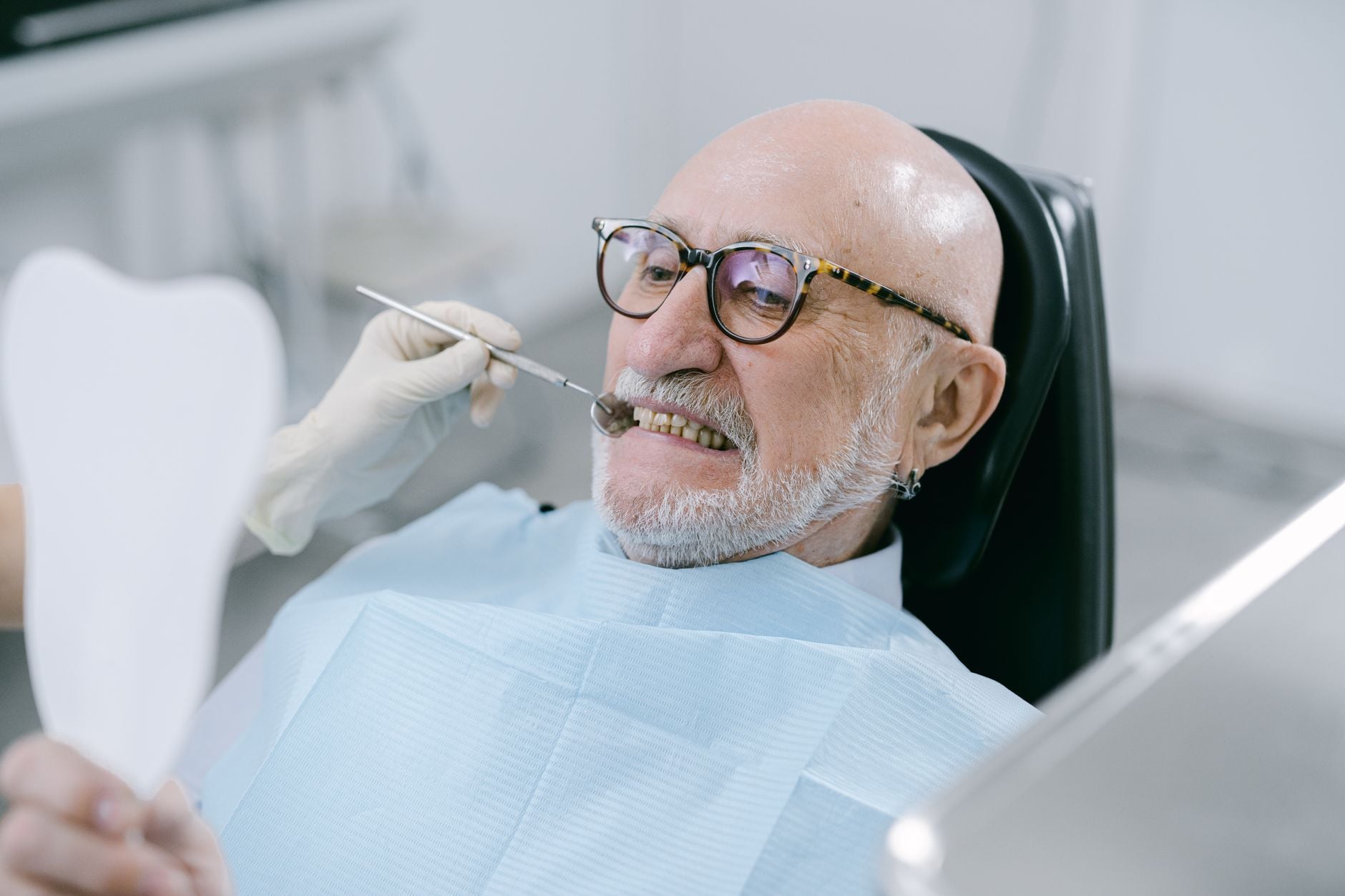
For an older man, this is worth sitting with. The receding hairline you check in every reflective surface, the extra weight, the sense that you no longer turn heads, all of it looms enormous in your own mind and shrinks to almost nothing in anyone else’s. Other people are running the same anxious loop about their own faces and bodies. The woman across the table is not silently itemizing your age; she is far more likely wondering, in her own version of the spotlight, what you are noticing about her. The scrutiny that feels so intense is mostly a private broadcast with an audience of one. Recognizing that does not make the years disappear, but it does drain a good deal of the dread out of them, and men who relax about it tend to become considerably better company.
The Artful Age
A weekly letter on aging well, family across generations, and the creative life after the kids leave home.
What actually gets noticed
If the physical decline is mostly overweighted, what fills the space instead? Here the research on what people genuinely want in a partner is clarifying, and a little humbling for anyone fixated on looks. A set of studies by Katherine Valentine and colleagues found that warmth and trustworthiness, a person’s evident kindness, reliability, and good character, strongly predicted romantic attraction in the early stages of getting to know someone, and predicted satisfaction in relationships already underway.
These are exactly the qualities that do not fade with age, and often deepen. The things women tend to notice, and rarely announce, are the small evidences of character that a man forgets to take credit for. How he speaks to the waiter when the order is wrong. Whether he actually listens or just waits for his turn to talk. Whether he remembers what she said last week. Whether he is at ease with himself or performing a version of a younger man. An older man who is warm, attentive, and comfortable in his own skin is reading as attractive in the terms that the evidence says matter most, whatever his hairline is doing. The unspoken part is not that women are hiding their disappointment. It is that they are quietly registering a kind of appeal he may not know he has.
The things men undersell
There is a longer list of these underrated signals, and most of them cost nothing. Steadiness is one: the ease of a man who is not chasing approval reads as confidence, and confidence at fifty or sixty is a different, more settled thing than the brittle version at twenty-five. Curiosity is another. A man still interested in the world, still learning, still asking questions, comes across as alive in a way that has nothing to do with how many push-ups he can do. Kindness toward people who can do nothing for him gets clocked instantly. So does the ability to laugh at himself, which signals a man who has made peace with being human.
None of this is a formula, and it would be dishonest to pretend that appearance counts for nothing or that everyone weighs these things identically. People differ, first impressions are real, and looking after your health and turning up as a tidier version of yourself is simply respectful, to yourself and to whoever you are meeting. The point is not to stop caring how you present. It is to stop misallocating the worry. The energy an older man spends grieving his younger face is energy not spent on the things that are actually landing.
So the honest version of the list is gentler than the clickbait one, and a good deal more useful. What women notice and seldom say is not a secret tally of everything time has taken. It is warmth, attention, humor, and ease, noticed all the more clearly because so many people never manage them at any age. The good news buried in that is quietly liberating. The qualities that draw people to you are almost entirely the ones still fully within your reach, and they tend to get better with practice.