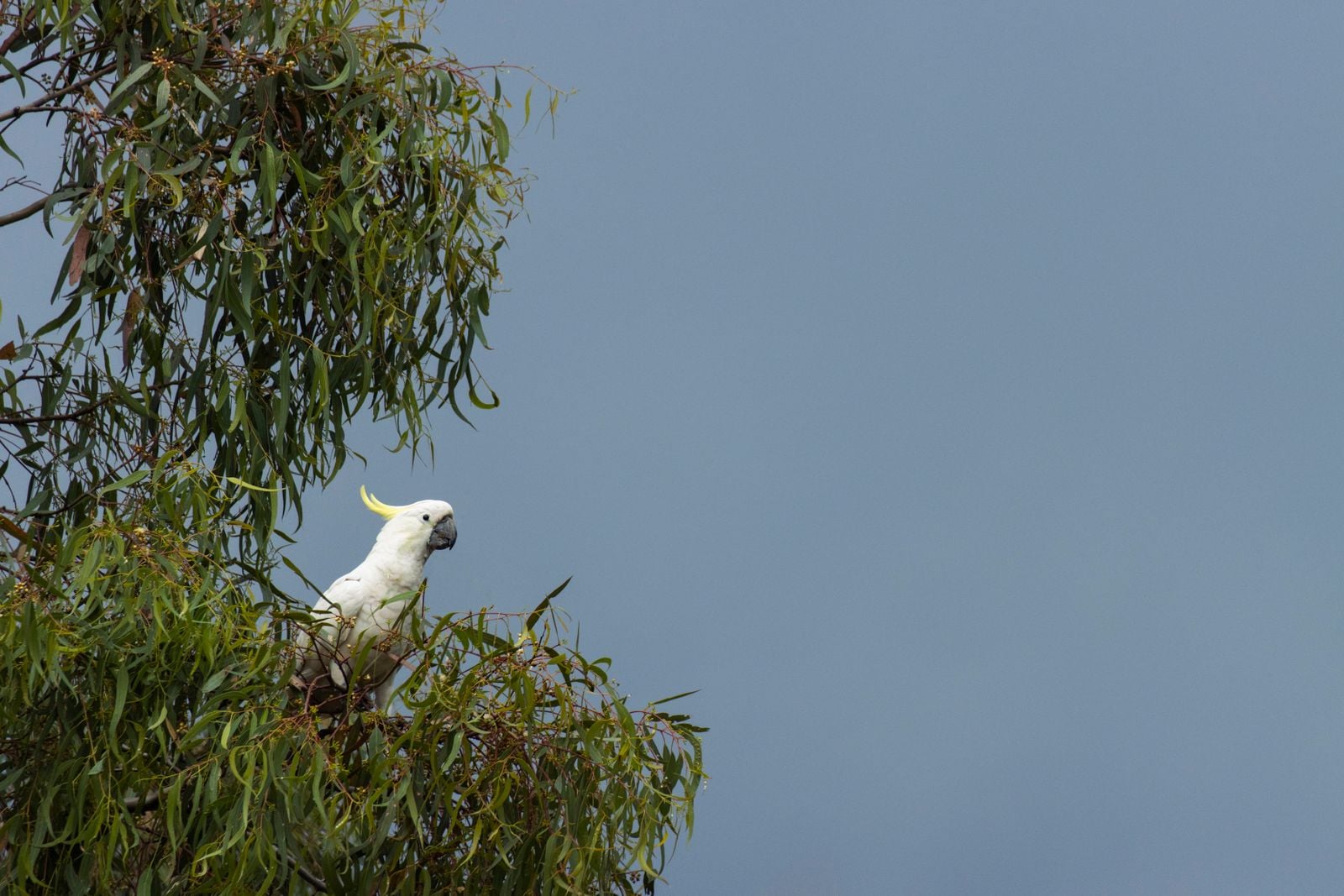
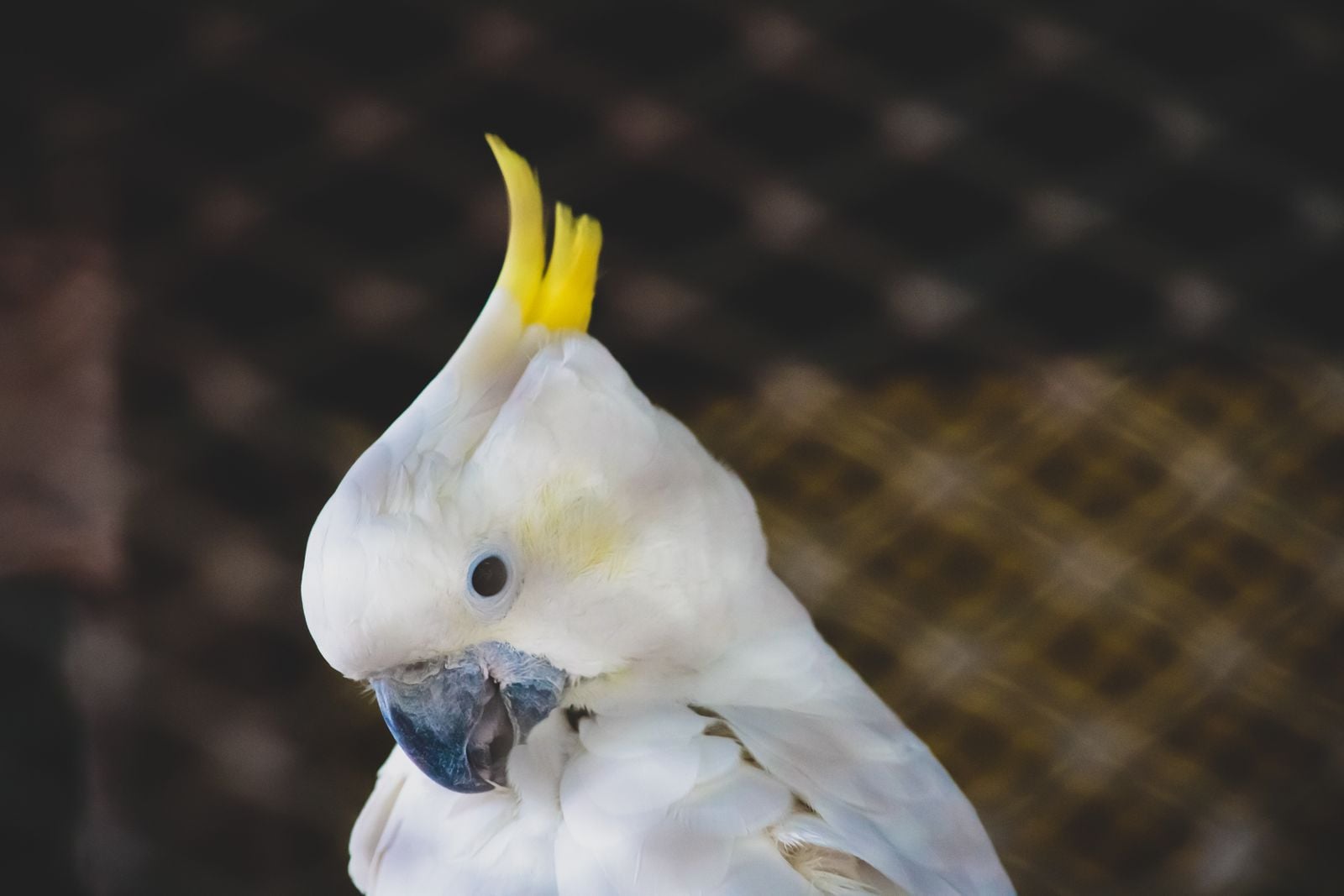
In the summer of 2018, in three quiet suburbs on the southern edge of Sydney, sulphur-crested cockatoos figured out how to break into household wheelie bins. The move was specific and physical: grip the lip of the lid with the beak, walk sideways along the rim while holding on, and use body weight to flip the whole plastic hood backwards. Within two years, the trick had been documented in 44 suburbs, mapped bird by bird by a team led by behavioural ecologist Barbara Klump, then at the Max Planck Institute of Animal Behavior, working with the University of Sydney and the Australian Museum.
The birds were teaching each other.
That is the finding that turned a suburban nuisance into a case study in animal culture. A wild parrot invented a foraging technique, other parrots watched, other parrots copied, and the behaviour rolled outward across greater Sydney like a rumour with feathers. The original 2021 study in Science tracked how quickly the skill spread and how sharply it clustered geographically — a signature of learning, not instinct.
The Artful Age
A weekly letter on aging well, family across generations, and the creative life after the kids leave home.
The move itself
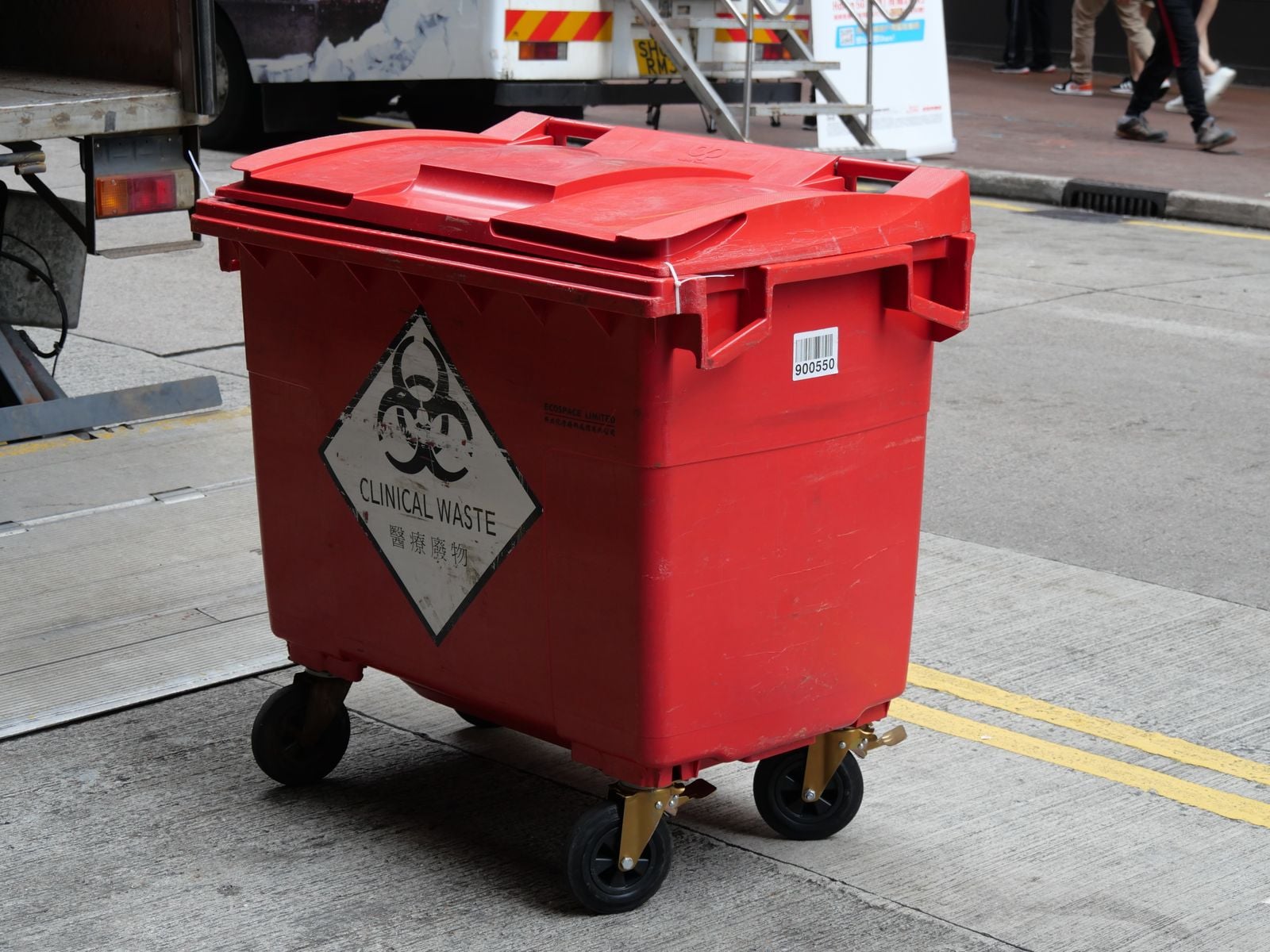
A standard Australian wheelie bin is chest-high on a person and topped with a hinged plastic lid heavy enough that a gust of wind will not open it. A cockatoo weighs about 900 grams. The maths should not work.
What the birds do, according to the original study as reported by CNN, is a five-stage routine: pry the lid open with the beak, twist the neck sideways and hop onto the rim of the bin, hold the lid open with the beak or a foot, walk along the rim, and finally flip the lid the rest of the way open.
The bird then climbs down into the bin, or hangs off the edge, and starts sorting. Bread and fruit are the preferred targets. Sydney’s cockies, one resident told the researchers, will fling coffee grounds and cling film across the driveway to get at a discarded loaf.
How the researchers proved it was learning, not instinct
The obvious question — the one you have to answer before you can call anything culture — is whether every cockatoo just works this out independently. Big-brained parrot, obvious food source, why not?
The map answered it. When Klump and colleagues plotted where and when bin-opening was reported, they saw a spread pattern that looked nothing like independent invention. In 2018 the behaviour was recorded in three suburbs. By late 2019 it was in dozens more, and the new sites were mostly adjacent to old ones. The wave moved outward from the original clusters rather than popping up randomly across the city.
The team also noticed regional dialects. Birds in one area opened the lid to about 45 degrees and held it there. Birds elsewhere flipped it all the way over onto the back of the bin. Cockatoos in a third cluster used a slightly different beak grip. As Gizmodo reported, these local variations are the parrot equivalent of regional cheese-making — the same skill, adapted slightly, and passed on faithfully within a neighbourhood.
Adult males, larger and more dominant, did most of the opening. Younger birds and females watched, then joined in. The technique moved along the social network the way a good joke moves through a workplace.
The humans fight back
By 2019 the birds had a working method and the residents had a problem. Rubbish scattered across the footpath twice a week. Bin day became an ambush.
What happened next is the second, stranger half of the story. Klump’s team went back out in 2022 and surveyed 3,283 wheelie bins across four affected suburbs, cataloguing every improvised anti-cockatoo device residents had bolted, tied, wedged or balanced onto their bins. They found 52 distinct techniques, ranging from a rubber snake laid on the lid to shoes jammed into the hinge.
The methods sorted into a rough ladder of escalation. At the bottom: no protection, or something visual like a fake snake. Cockatoos ignored these within days. Next rung: a heavy object on the lid. Bricks were the classic choice, and for a while they worked, until the birds learned to shove them off. One rung up: an object tied or fixed to the lid — a full water bottle cable-tied to the handle, so the weight could not be dislodged. Higher still: a stick threaded through the lid hinge, so the flap could not open past a certain angle. Cockatoos have not yet cracked that one.
According to survey data reported in the Forbes article, residents tried various methods to protect their bins, with some finding that bricks were initially effective before cockatoos adapted, while others reported success with sticks.
The humans were learning from each other too
Here is where the study turns into something unusual. Klump’s team was not just documenting a bird behaviour. They were watching two species run the same social-learning playbook against each other.
When the researchers mapped which houses used which protection methods, the pattern matched the cockatoo pattern almost exactly. Neighbouring bins on the same street tended to have similar defences. Bins geographically close but out of sight of each other — say, on the far side of a highway or behind a fence line — did not cluster. People were copying what they could see.
A follow-up online survey of 1,134 Sydney residents confirmed it. Of those who protected their bins, 64% said they had drawn on social information, and of that group, 60% said they had copied a neighbour or someone on their street. Another 61% said they had escalated their defences over time in response to the birds getting cleverer.
Two social species, both smart, both watching each other, both iterating. The birds and the humans have been running parallel innovation cycles on the same object — a plastic bin lid — for more than half a decade.
Why cockatoos, and why Sydney
Sulphur-crested cockatoos are big, loud, long-lived parrots. They can reach 40 years in the wild. Their brains, relative to body size, are in the same league as great apes on some measures. They live in flocks of dozens, sometimes hundreds, and spend a lot of time watching each other — the exact conditions social learning needs to catch.
Sydney supplied the other half of the equation. The city has a large, tolerated urban cockatoo population, wheelie bins with a standardised design that is the same on almost every street, and a bin-collection schedule reliable enough that the birds can time their visits. As the National Audubon Society noted in its coverage, this is the kind of behaviour that only shows up when a clever species and a predictable human artefact overlap for long enough.
Rural cockatoos, foraging over unpredictable bushland, have no equivalent trick. It took the specific texture of suburbia — identical bins, identical schedule, endless bread crusts — to make the innovation pay.
What counts as culture
For most of the twentieth century, culture was the line researchers drew between humans and everything else. Tool use fell first — chimpanzees, then crows, then otters. Teaching fell next. What held out longest was the idea of a learned behaviour that spreads geographically, varies between populations, and gets passed down across generations. That was supposed to be ours.
The Sydney cockatoos meet the definition. The behaviour is learned, not innate. It varies by region. It spreads along social networks. It has been passed from adult birds to juveniles who were not present at the original invention. If a chimpanzee community did this with termite-fishing sticks, nobody would hesitate to call it culture. The behaviour has been widely covered as evidence that a clever bird picked up a skill, and then the skill spread.
Klump has said she expects these kinds of overlaps to become more common as cities push into what used to be wildlife habitat. The wheelie bin story is small and specific, but the shape of it — a species that adapts fast enough to exploit human infrastructure, and a human population that adapts back — is likely to keep repeating.
What the birds have not cracked yet
As of the most recent survey, the stick-in-the-hinge defence is holding. So are certain commercial bin locks that release when the bin is tipped upside down by a garbage truck’s mechanical arm. Cockatoos have been filmed attacking these bins, giving up, and moving to the next house.
Whether the truce lasts is an open question. The team’s working assumption is that a bird will eventually work out the stick — perhaps by pulling it out with the beak — and once one bird does, the technique will travel. The researchers plan to keep tracking new methods as they appear.
In the meantime, the escalation continues in slow motion. A resident notices their brick has been shoved off. They see a neighbour with a water bottle cable-tied to the handle and copy that. Two streets over, someone tries the stick trick and it holds. Word travels. A cockatoo lands on a lid, tests the edge, finds no purchase, and flies to the next house.
Somewhere in southern Sydney tomorrow morning, a bird about the size of a football will hop onto a plastic hood, wedge its beak under the front lip, and start walking sideways along the rim. If the lid moves, it eats. If it does not, it goes looking for a house that has not yet joined the arms race.