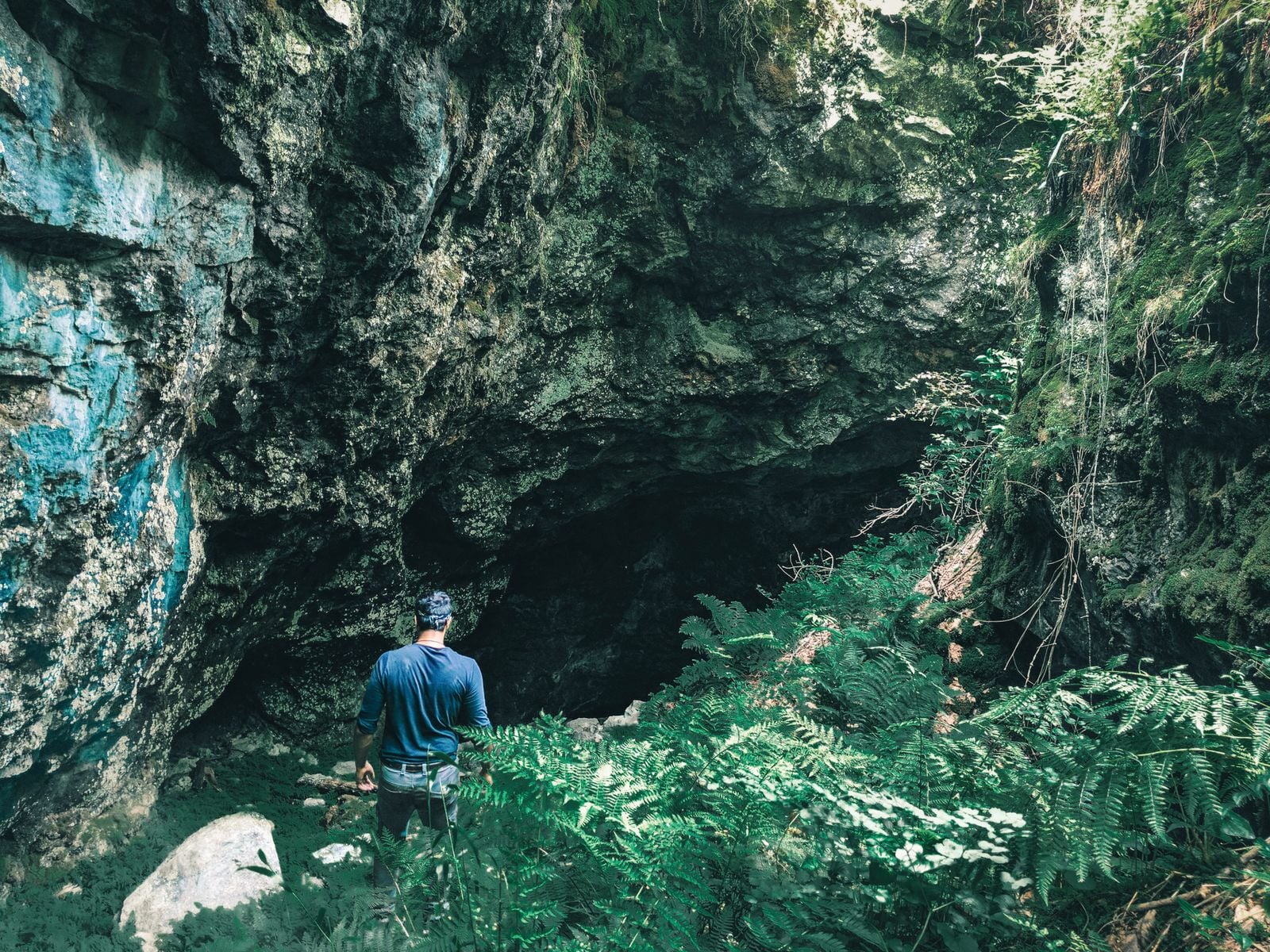
A cave the size of a small living room, tucked into a limestone shoulder of the eastern Pyrenees at 2,235 metres above sea level, held the traces of 23 hearths, nearly 200 fragments of green copper mineral, a child’s finger bone, a marine shell pendant carried up from the Mediterranean coast, and a brown bear tooth pierced for wearing. People walked up there with all of it, over and over, for more than 4,000 years. The site is called Cova 338, and a paper describing it appeared in Frontiers in Environmental Archaeology.
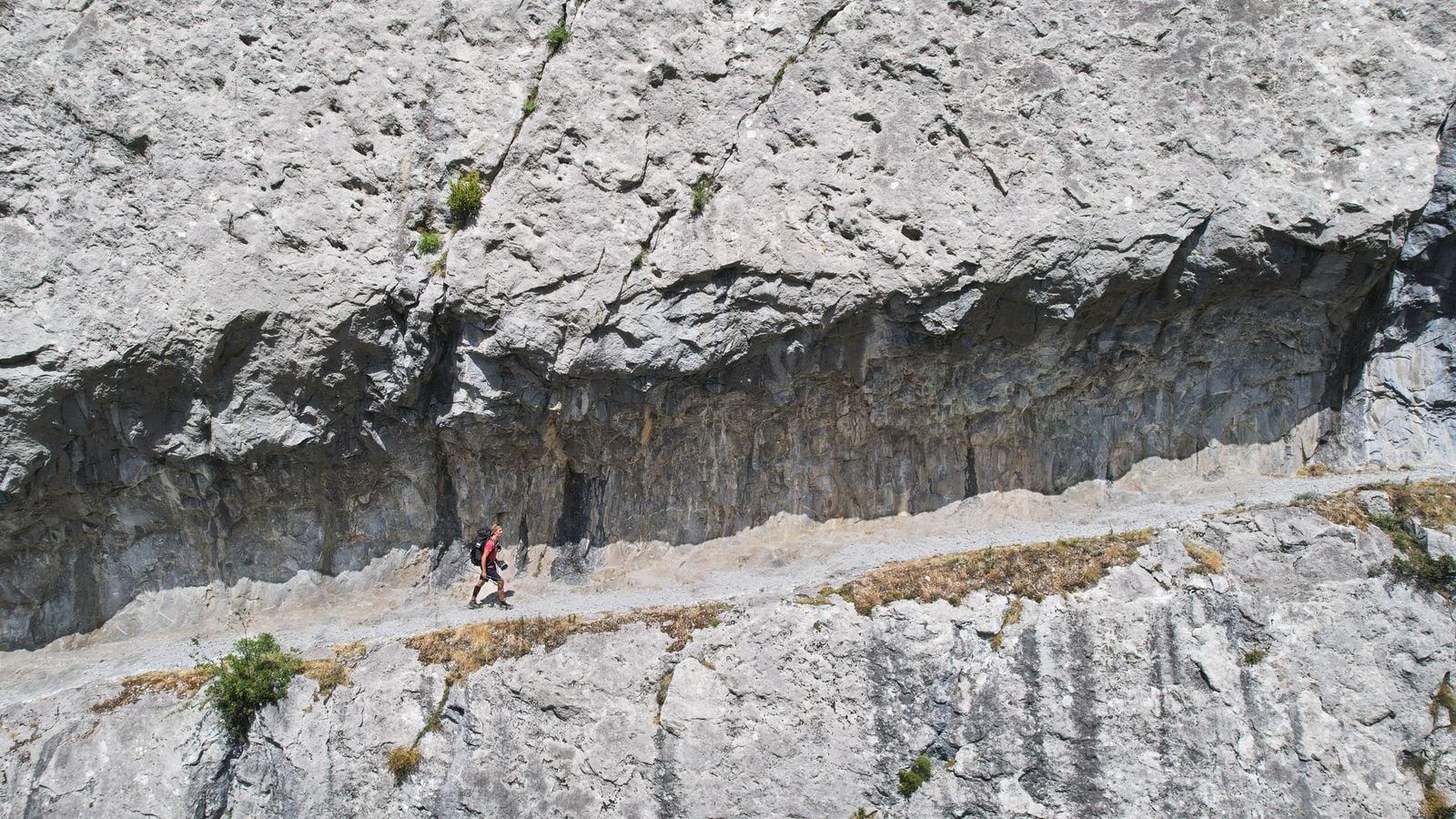
Getting there still requires a long walk. The Núria Valley, in the Ripollès district of Girona in northeastern Spain, sits inside a natural park where motorised access is forbidden. The archaeologists who dug the cave hauled every trowel, every sieve, every sample bag up on foot, and carried the excavated sediment back down the same way.
The assumption the cave broke
For most of the twentieth century, Pyrenean archaeology treated anything above 2,000 metres as effectively empty. High-altitude sites were understood as places prehistoric groups passed through — a shepherd’s shelter, a hunter’s overnight, a route between valleys. Marginal. Occasional. Not somewhere people would carry pottery and ore and children.
The Artful Age
A weekly letter on aging well, family across generations, and the creative life after the kids leave home.
Cova 338 does not fit that picture. Between the early 5th millennium BCE and the late 1st millennium BCE — a span of roughly four thousand years — people came back to this specific cave with intent. They rebuilt fires in the same spots. They brought vessels. They brought food. They brought copper-bearing rock that does not exist anywhere near the site, treated it with heat, and left the crushed green fragments behind in the ash.
The lead author, Carlos Tornero of the Universitat Autònoma de Barcelona and IPHES-CERCA, put it bluntly in the release: the mountain was not a barrier. It was somewhere they went.
What the excavation actually covered
The team excavated a section of the cave near the entrance across three field seasons. From that narrow window, the material that came back down the mountain was dense enough to redraw a chapter of European prehistory.
The oldest layer reaching back roughly 6,000 years, according to the reporting in Popular Science. The uppermost layer thin and lightly used. The middle layers — the meat of the sequence — full of fire pits stacked on top of each other, ceramic sherds, animal bone with butchery marks, and the green mineral.
Twenty-three hearths is a striking concentration. Some cut into earlier ones, meaning people relit fires in the same locations across visits separated by years, sometimes generations. That pattern is not what shelter-seeking looks like. It is what a remembered, purposefully used site looks like.
The green mineral
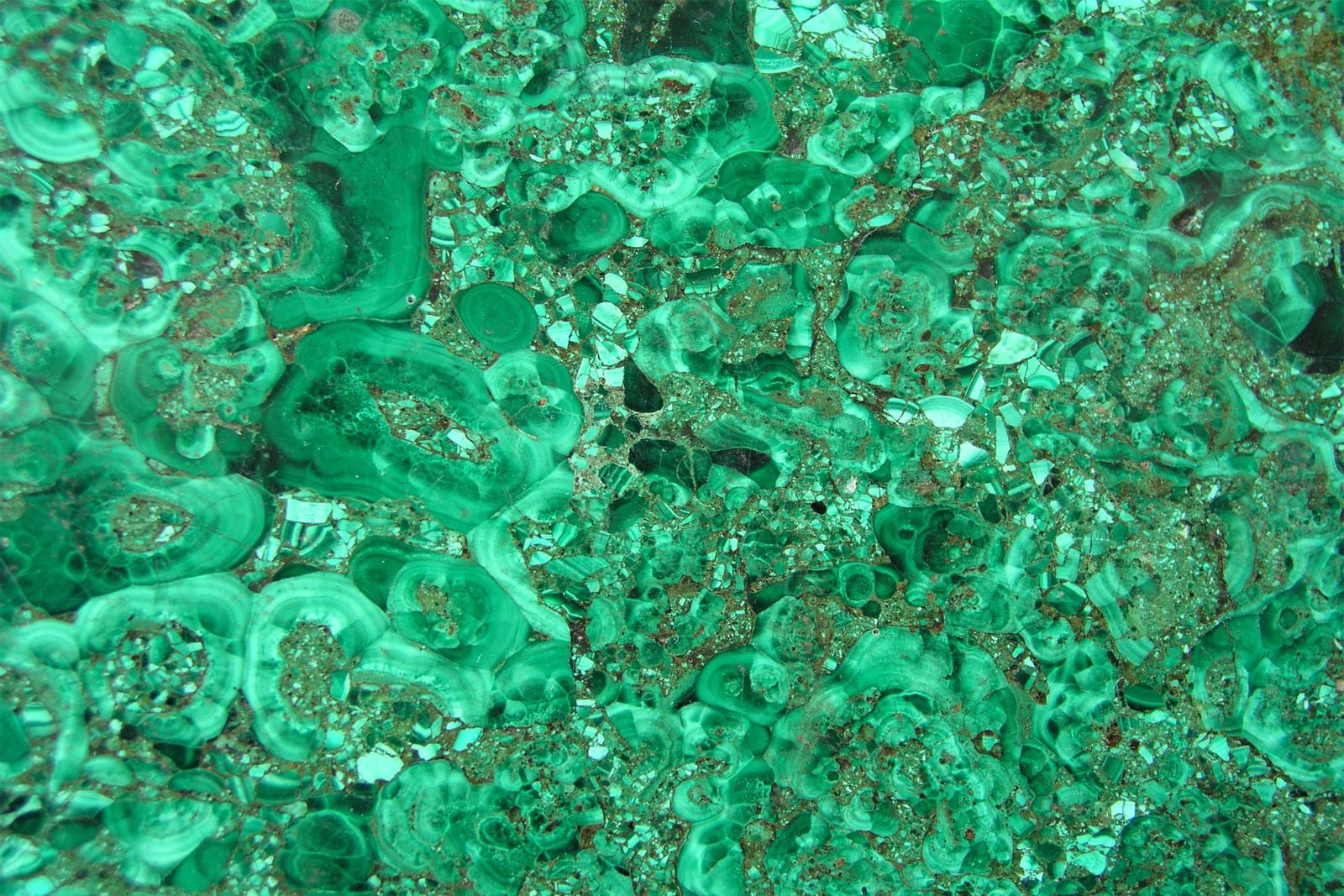
The single most surprising element in the cave is the rock. Nearly 200 fragments of green mineral, most likely malachite, were recovered from the excavated area. Malachite is a copper carbonate that forms in vivid green nodules and bands, often near weathered copper deposits. It does not occur naturally at Cova 338. Every fragment was carried in from elsewhere.
Many of the pieces show thermal alteration — the discolouration and structural change that come from sustained exposure to intense heat. Other materials in the cave, including bone and pottery, do not show comparable burn signatures, which rules out an accidental fire sweeping through the deposit.
According to the research team, many malachite fragments show signs of thermal alteration while other cave materials do not, suggesting fire was deliberately used to process the copper-bearing stones. The evidence suggests the burning was intentional rather than accidental.
The paper is careful about the word smelting. Smelting — the chemical reduction of copper ore to liberate the metal — requires sustained temperatures above 1,000 degrees Celsius and specific reducing conditions. The researchers carefully distinguish between copper processing activities and true smelting. What Cova 338 shows is that copper-bearing rock was brought to a high mountain cave and subjected to fire, deliberately, again and again, across the Late Neolithic and the Bronze Age. Whether the final metallurgical steps happened on site or downslope is still open.
Even at that level of caution, the site enters the record as one of the earliest known examples of copper mineral exploitation in Western Europe, and the earliest at this altitude in the Pyrenees.
What a logistical site looks like
The researchers describe Cova 338 as a logistical site: not a home, not a permanent settlement, but a specific destination within a structured seasonal system. People planned trips to it. They arrived supplied. They knew what they had come for.
The evidence for planning is scattered through the excavated area. Ceramic fragments, suggesting vessels were brought or stored. Butchered animal bone, meaning food was prepared on site. Hearths reused across generations. Ornaments carried in and lost or left behind. This is the material footprint of expeditions, not accidents.
And the expeditions were serious. Reaching 2,235 metres on foot from the valley floor, carrying enough gear to butcher animals, cook, work rock, and light 23 separate fires over centuries, is not something a group does casually. Even today, with mapped trails and modern boots, the walk from Núria up to that shoulder is a full day’s effort.
A child, a shell, a bear tooth
In one stratigraphic layer, the team recovered a finger bone and a baby tooth. They belong to at least one child. Whether the two elements come from the same individual has not been established, and no cause of death has been identified. The paper raises the possibility that the cave functioned as a burial site during some phases, alongside its working role — a mixed use that is not unusual for Chalcolithic Iberia.
Two personal ornaments came from the Bronze Age layers, both dating to roughly the second millennium BCE. One is a pendant made from a Glycimeris marine shell, a bivalve that lives on Mediterranean coasts. The other is a pendant made from a brown bear’s incisor, drilled for suspension.
The shell has parallels at other Catalan prehistoric sites and points to shared traditions across the region. The bear tooth is rarer. Tornero, quoted in the team’s public commentary, suggests it may carry a specific symbolic weight, possibly tied to the mountain environment itself.
A marine shell, carried inland and uphill to 2,235 metres, and found there roughly 4,000 years later. On foot, through Bronze Age terrain, with a river or two to ford and a mountain range to climb, it is a journey measured in days.
How does a place stay known for four thousand years?
This is the question the site poses that archaeology can identify but not entirely answer. The radiocarbon sequence shows distinct phases of use separated by intervals of apparent abandonment — periods long enough that no living person in the returning group could plausibly have visited the cave before.
Someone, or something, kept the location transmissible across those gaps. A name. A route. A story about the green rock in the high cave. A seasonal practice tied to a particular movement of herds or hunting parties. Whatever the mechanism, the knowledge of where Cova 338 was, and why it mattered, kept being handed forward across generations who had never seen it.
That kind of durable geographic memory is harder to hold than it sounds. Consider how quickly a location fades from a family when nobody has visited in fifty years. Now stretch that across two hundred generations, without writing, without maps.
The logistics of digging at 2,235 metres
The excavation itself is worth pausing on. Because the cave sits inside the Ter and Freser Headwaters Natural Park, motorised access is not permitted. Every piece of equipment used across three field seasons — trowels, buckets, sieves, sample bags, water for flotation, the recording gear for 3D documentation — was carried in on foot from the Núria Valley. All the excavated sediment was carried back out the same way for wet-sieving and flotation at lower altitude.
The team applied high-resolution methods: 3D recording of every find in place, systematic sediment sampling, flotation to catch charred seeds and micro-remains, careful stratigraphic control across a small working area. Doing that at altitude, with the weather windows the Pyrenees allow, is a slow business. The pace of a careful modern excavation anywhere becomes slower still with the pack-in, pack-out constraint.
The site has since been closed to the public and physically protected, to preserve what remains of the deposit for future work. Follow-up seasons are planned to expand the excavation, run detailed mineralogical analysis on the green fragments to confirm the malachite identification, and try to source the mineral to a specific ore body.
What the finding rewrites
The high Pyrenees have long been read, in the archaeological literature, as a threshold zone — a place prehistoric people crossed, occasionally sheltered in, and generally did not do much with. Pastoralism in the alpine meadows was assumed to have started later and stayed thinner than the lowland picture.
Cova 338 shifts that. It shows a specific site above 2,000 metres being used systematically, with complex activities, for economic purposes that required both organisation and specialised knowledge. The mountain was integrated into the territorial reach of Chalcolithic and Bronze Age communities, not left as a blank margin.
The paper places the site among the earliest known examples in Western Europe of high-altitude mineral processing. Coverage of the finding has emphasised how much this rearranges the standard map of where and when copper exploitation began in the region. Iberian Chalcolithic and Bronze Age copper working is already well documented in lowland sites; what was missing was the alpine dimension.
There is a broader through-line here about how easy it is to underestimate the physical range of ancient people. In a recent piece on Roman concrete that has held together for nineteen centuries beneath a villa at Tivoli, the surprise was chemical — a material behaving better than modern equivalents. The surprise at Cova 338 is behavioural. People walked further, climbed higher, and returned more often than the models allowed for.
The detail that stays
A section of cave floor, dug three summers running. Twenty-three fire pits. Nearly two hundred fragments of green rock that never occurred in that mountain. A shell from a beach carried uphill. A bear tooth threaded for wearing. The finger bone of a child, and a baby tooth that may or may not belong to the same body. Four thousand years of returning.
The mineralogical work is still ahead. So is the search for the source ore body, the pollen analysis, the isotope work on the animal bone that will say something about herding ranges. What is already fixed is the image of the cave itself: a small, cold, hard-won room at 2,235 metres, lit by fire, with green stones cracking in the heat, and someone up there watching them do it, again, and again, and again.