
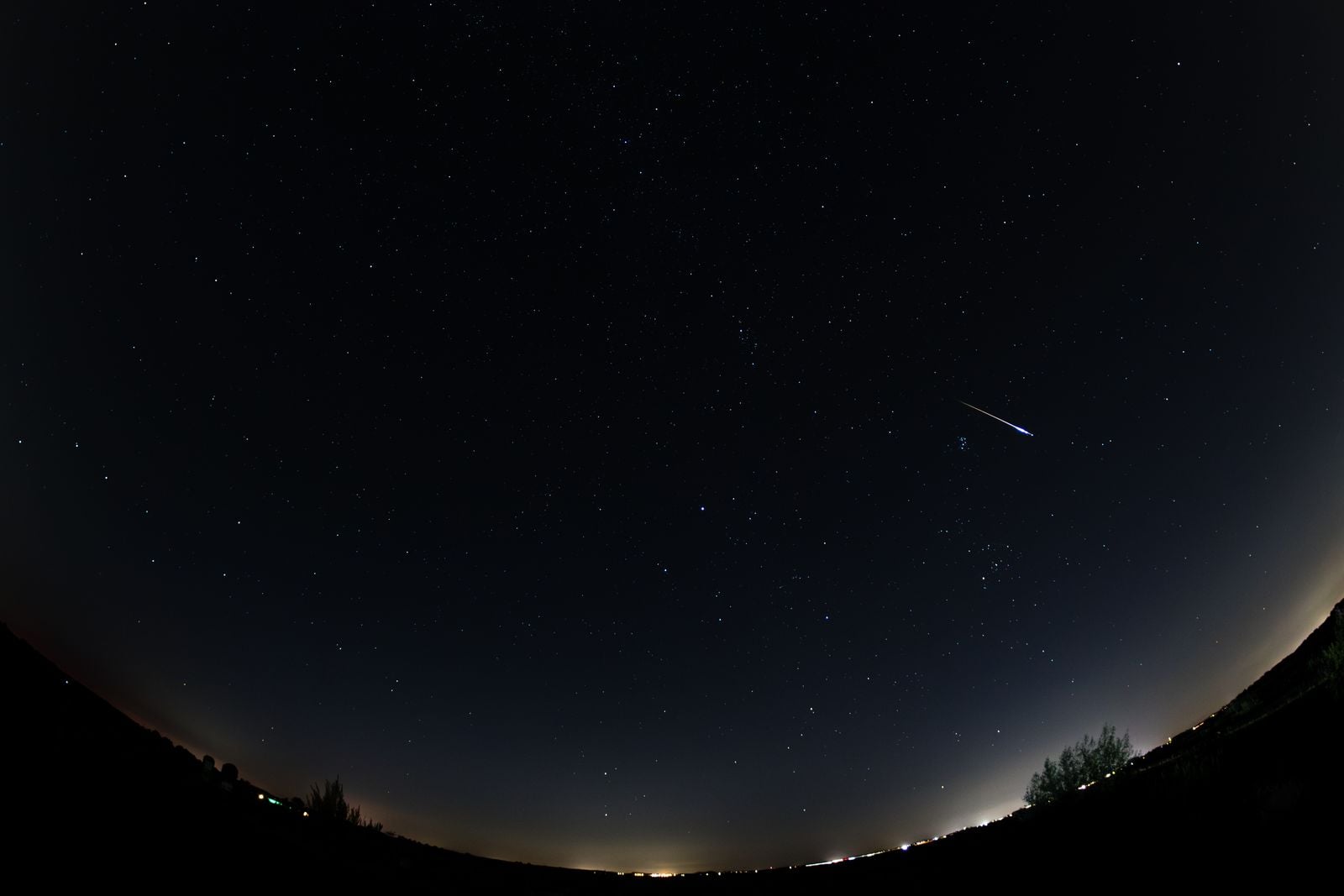
On the morning of 30 June 1908, an object from space broke apart in the atmosphere above the basin of the Podkamennaya Tunguska River in central Siberia. The European Space Agency has described the destruction as approximately 80 million trees across an area comparable to Greater London. Later surveys found that the fallen trees formed a broadly radial, butterfly-shaped pattern around the blast zone, although local terrain and forest conditions meant that individual trunks did not all point with geometric precision toward one marsh.
No confirmed impact crater was found. That absence, once treated as Tunguska’s central mystery, became one of the strongest clues that most of the object’s destructive energy had been released above the ground.
The morning the sky split in two
Eyewitnesses across central Siberia described a brilliant fireball, a flash brighter than the sun, loud reports resembling artillery fire, and a wave of intense heat. Some Evenki reindeer herders were knocked unconscious or thrown through the air, dwellings were damaged, and herds of reindeer were killed. Seismic instruments hundreds of kilometres away recorded the disturbance, while unusually bright nights were reported across parts of Europe and Asia.
The Artful Age
A weekly letter on aging well, family across generations, and the creative life after the kids leave home.
At the Vanavara trading post, roughly 65 kilometres from the inferred epicentre, a witness described heat so intense that his shirt seemed to be burning before the blast threw him from the porch. The region’s remoteness, followed by war, revolution, and civil conflict in Russia, delayed a scientific investigation for nearly two decades.
Leonid Kulik reaches the blast zone
Russian mineralogist Leonid Kulik first travelled toward Tunguska in 1921 but could not reach the damaged area. He succeeded in 1927 and returned during the late 1920s and 1930s. His expeditions produced some of the first detailed photographs and surveys of the destruction, which later researchers used to map the butterfly-shaped tree-fall zone around the inferred epicentre.
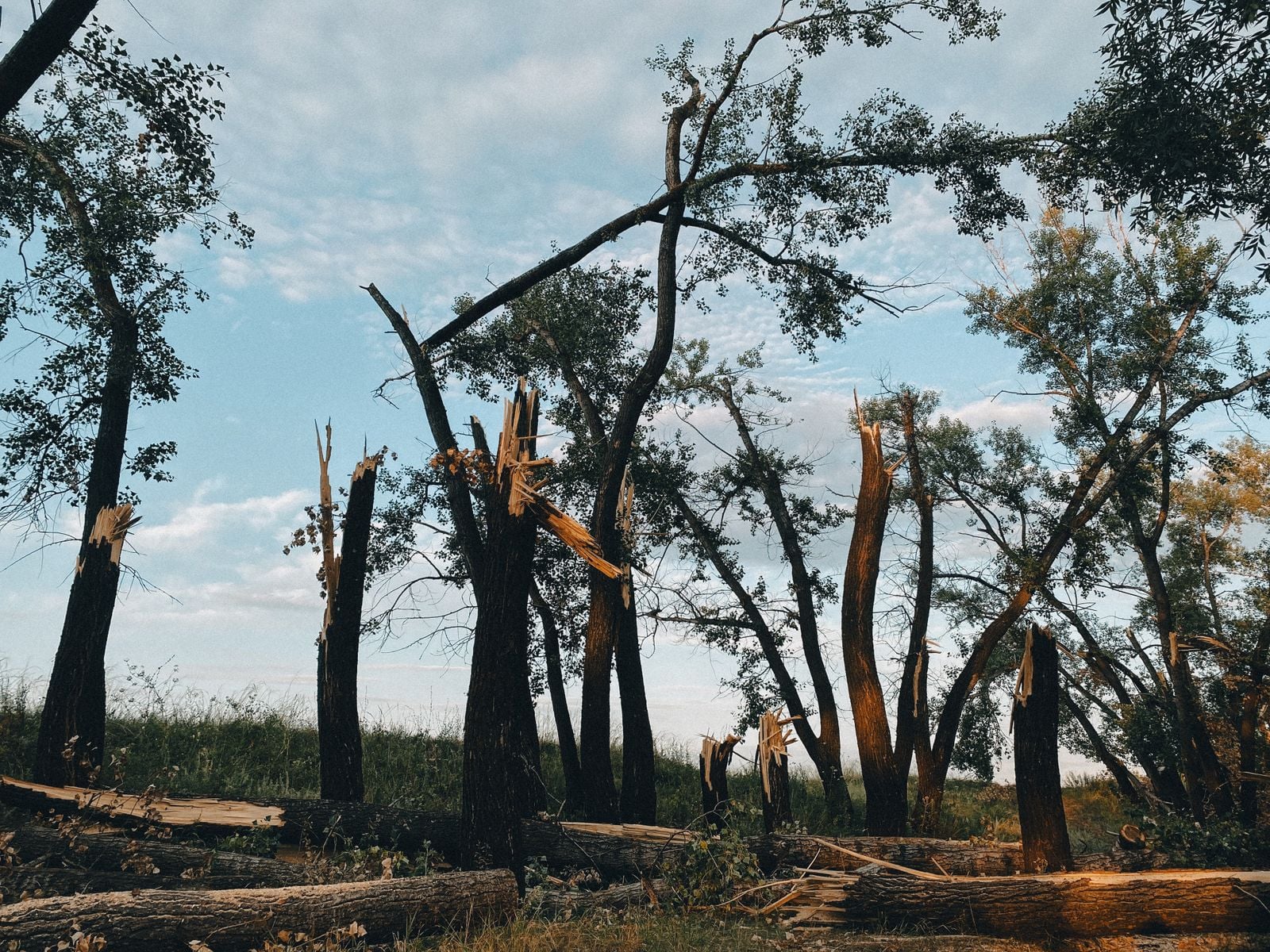
Kulik expected to find a conventional meteorite crater and recover iron fragments. Instead, he encountered an enormous field of felled and scorched trees, together with boggy depressions that produced no large meteorite remains when investigated. Near the centre, some trunks remained upright but had been stripped of their branches and bark.
Later surveys refined the pattern rather than reducing it to one perfectly circular fan. The damage extended roughly nine to 22 miles from the inferred epicentre in different directions, creating the distinctive butterfly-shaped outline now associated with Tunguska.
What happens during an airburst
An asteroid entering the atmosphere at many kilometres per second compresses and heats the gas in front of it. As the difference in pressure across the object exceeds the strength of its material, it can fragment. Fragmentation exposes more material to the atmosphere, accelerates ablation, and transfers much of the object’s kinetic energy into heat and a powerful shockwave.
This process does not require the entire object to remain intact until it reaches the surface. Small fragments or microscopic material may survive, but if most of the energy is released at altitude, the result can be widespread blast damage without a conventional impact crater.
Modern modelling generally favours a stony asteroid tens of metres across. Estimates vary with assumptions about its speed, density, trajectory, and strength, but a burst altitude of several kilometres is consistent with the observed tree-fall pattern and the central zone of stripped, upright trunks.
Kulik had been looking for a large piece of wreckage. What the forest preserved instead was the footprint of a shockwave.

Why some trees at the centre stayed standing
One of the most striking details in photographs from the expeditions is a stand of trees near the inferred epicentre that remained upright while losing their branches and bark. NASA’s historical account describes them as resembling telegraph poles.
Directly beneath an airburst, the blast wave reaches the ground at a steep angle. Farther away, it moves across the surface more obliquely and produces a stronger overturning force against the sides of tree trunks. That difference helps explain why some central trunks remained standing while trees farther out snapped or toppled.
The resulting destruction was not a uniform circle. Its elongated, butterfly-like shape also carried information about the object’s trajectory and the way its energy was released through the atmosphere.
How large was the explosion?
Tunguska’s energy cannot be measured directly because no instruments were present at the blast site. Estimates have instead been reconstructed from the tree-fall area, seismic and atmospheric-pressure records, eyewitness accounts, and computer models.
A commonly cited ESA estimate places the event at 10–15 megatons of TNT, with approximately 2,200 square kilometres of forest destroyed. Other published models produce values outside that range, so no single yield should be presented as exact.
Even the lower estimates make Tunguska vastly more energetic than the atomic bomb dropped on Hiroshima. The precise size and mass of the incoming body remain uncertain because composition, speed, entry angle, and fragmentation behaviour can produce different amounts of surface damage.
The iron asteroid that may have passed through
The leading explanation remains a stony asteroid that fragmented in the atmosphere. A peer-reviewed 2020 study proposed a very different possibility.
Daniil Khrennikov of Siberian Federal University and his colleagues modelled iron, stone, and icy bodies with diameters of 50, 100, and 200 metres. Their preferred Tunguska scenario involved an iron asteroid passing through the atmosphere and returning to a near-solar orbit.
In that scenario, the asteroid followed a shallow path with a minimum altitude of roughly 10–15 kilometres and travelled approximately 3,000 kilometres through the atmosphere. The 450–700-kilometre figure discussed in the paper refers to estimates derived from visual observations, not the full modelled atmospheric passage.
The researchers argued that iron lost through high-temperature sublimation could later appear as ordinary-looking iron oxides, helping explain why no distinctive fragments were recovered. They also suggested that atmospheric dust could account for the bright European nights reported after the event.
The paper did not directly model the formation of the Tunguska shockwave, however, and its iron fly-through scenario remains a minority proposal. NASA-backed modelling continues to identify a stony asteroid airburst as the strongest overall fit to the evidence.
Lake Cheko and the disputed crater
Lake Cheko lies roughly eight kilometres north-northwest of the inferred explosion epicentre. In 2007, Luca Gasperini and colleagues proposed that the lake might occupy a crater excavated by a fragment that survived the airburst. Their survey found a funnel-shaped lake floor and a reflector beneath the centre that could represent either a buried fragment or sediment compacted during an impact.
That interpretation was quickly challenged. A 2008 response cited the lake’s morphology, the absence of identified impactor material, the strength required for a fragment to survive, and mature trees apparently unaffected near the shore.
More direct counter-evidence arrived from sediment cores collected in 2016. Radiometric measurements and annual sediment layers indicated that Lake Cheko existed well before the 1908 Tunguska event. That result strongly weakens the proposal that the entire lake basin was created by a Tunguska fragment.
The scientific literature therefore contains a real debate, but no Tunguska impact crater has been confirmed. Lake Cheko is not the central point toward which every fallen tree can be said to have pointed.
The Chelyabinsk reminder
On 15 February 2013, a much smaller asteroid entered the atmosphere near Chelyabinsk in Russia. NASA’s Jet Propulsion Laboratory estimated that it was about 17–20 metres across, reached maximum brightness at an altitude of approximately 23.3 kilometres, and released about 440 kilotons of energy.
The shockwave blew out roughly a million windows and injured more than 1,000 people, many through flying glass. The object arrived from a direction within 15 degrees of the sun, an area that ground-based asteroid-detection telescopes could not scan.
Chelyabinsk demonstrated how a relatively small object can cause widespread damage without reaching the surface intact. It also gave researchers modern videos, sensor records, recovered fragments, and damage maps against which older Tunguska models could be tested.
A NASA assessment published in 2019 concluded that Tunguska-scale impacts probably occur on the order of millennia rather than centuries. Smaller Chelyabinsk-scale objects are more numerous and harder to discover before they reach Earth.
What Kulik’s photographs still show
Kulik’s photographs and the later tree surveys remain the clearest physical records of Tunguska’s blast pattern. They show full-grown trunks lying in broad, aligned fields, together with the upright, stripped trees closer to the inferred centre.
Modern satellite imagery tells a different story from the historical photographs. A Landsat 8 image acquired in July 2024 shows healthy pine forest, rivers, and marshes. According to NASA Earth Observatory, the image contains no visible signs of the old impact or blast damage.
The butterfly-shaped footprint survives in historical surveys and scientific reconstructions, not as an obvious scar that can still be seen from orbit. More than a century of forest growth has concealed the damage that confronted Kulik.
The lucky part of the story
Tunguska occurred over one of the most sparsely populated regions on Earth. A 2019 reassessment of surviving eyewitness records nevertheless concluded that at least 30 people were inside or near the tree-fall area and that at least three people may have died directly or later from its effects. The authors also noted gaps and contradictions in the historical record.
The same blast over a densely populated region would have been catastrophic. Tunguska therefore matters not simply as an unexplained historical event, but as evidence that an asteroid does not need to strike the surface to devastate a large area.
The universe sometimes leaves its evidence in unexpected landscapes. Another recent piece examined the 1986 Lake Nyos disaster in Cameroon, where a quiet volcanic lake concealed the conditions for a very different kind of sudden release.
At Tunguska, the forest has grown back and the modern landscape no longer advertises what happened there. The evidence survives in eyewitness accounts, expedition photographs, tree-fall maps, seismic records, and models that continue to test what kind of object entered the Siberian sky that morning.