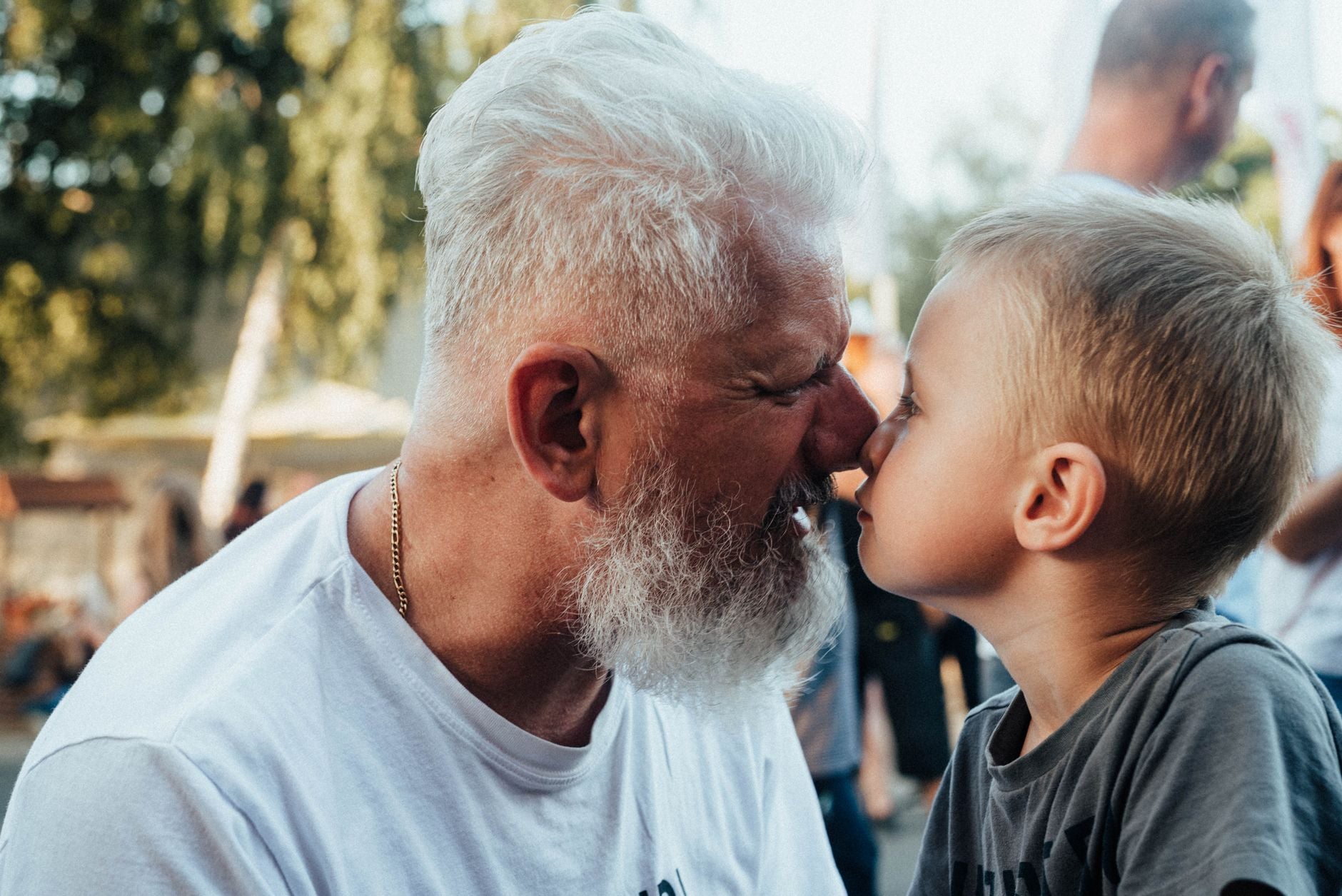
Ask people about their happiest childhood memories of a grandparent and the answers rarely involve anything expensive. The big theme-park trip fades; what stays is the standing Saturday visit, the same story told for the hundredth time, the particular way flour got everywhere when you baked together. That pattern is not random, and it is genuinely useful for any grandparent wondering what actually lands. Two of the things grandparents do turn out to have real research behind them, and both are the kind of thing that costs nothing and can be started this week.
They tell the family’s stories
Grandparents are usually the only people alive who can tell a child where they came from, and it turns out this is more than pleasant nostalgia. In research published in New Directions for Child and Adolescent Development, the psychologist Robyn Fivush found that young people who knew more of their family’s intergenerational stories, how their parents and grandparents met, struggled, and came through hard times, tended to show higher self-esteem, lower rates of depression and anxiety, and a stronger sense of meaning and purpose.
The reason seems to be that these stories hand a child something larger than themselves to belong to. Knowing that your grandmother crossed an ocean with one suitcase, or that your grandfather failed at something before he succeeded, places a child inside a longer story of people who faced difficulty and kept going. That sense of continuity is quietly steadying, and it is something a grandparent is uniquely positioned to give, because they hold the memories no one else does. The happy memory, for the child, is the telling itself: the same tale requested again and again, the laughter at the familiar part, the feeling of being let into something that belongs to the family. It costs nothing but the willingness to talk about your own life honestly, the good parts and the hard ones. One fair caveat: the research is correlational, so it is not that reciting facts works like a spell, but rather that families who share their stories tend to be close in other ways too. Still, the storytelling is a real and repeatable part of that closeness.
The Artful Age
A weekly letter on aging well, family across generations, and the creative life after the kids leave home.
They keep the small rituals going
The second thing is repetition, which sounds like the opposite of a special memory but is actually its foundation. Children treasure the things that happen reliably. In a review in the Journal of Family Psychology, Barbara Fiese and colleagues examined 50 years of research on family routines and rituals and found that predictable routines were linked to better child health and adjustment, while meaningful rituals, the birthdays, holidays, and special outings a family repeats, were associated with children’s stronger emotional health.
This is why the grandparent traditions people remember are so often modest and recurring: the pancakes made only at their house, the walk to the same duck pond, the card game after dinner, the phrase said at every goodbye. The magic is precisely in the fact that it happens every time. A ritual tells a child, without a word, that they can count on this person and this pleasure, and that reliability is its own kind of joy. It also gives the relationship a shape that does not depend on grand occasions or good health, which matters as grandparents age. A tradition can be tiny. What makes it a ritual is that it is kept, so the humble repeated thing quietly outperforms the one spectacular day out.
The through-line worth remembering
What these two have in common is that neither is about money, novelty, or effortful entertainment. Both are about giving a child a sense of belonging and reliability, one through the stories that place them in a family, the other through the small events they can depend on. Woven through both is the thing children register most of all, which is unhurried attention: a grandparent who is genuinely present, glad to have them there, and in no rush. That is the soil the stories and rituals grow in.
None of this requires being a natural storyteller or an organized planner, and it is worth saying plainly that not every family has the health, proximity, or history to do all of it, which is no one’s failing. But the reassuring takeaway is how little is actually needed. A grandparent who tells a child where they come from and keeps one or two small traditions alive is doing, on the evidence, close to the most valuable thing available, and it will very likely be what that child remembers most warmly long after the toys are forgotten.