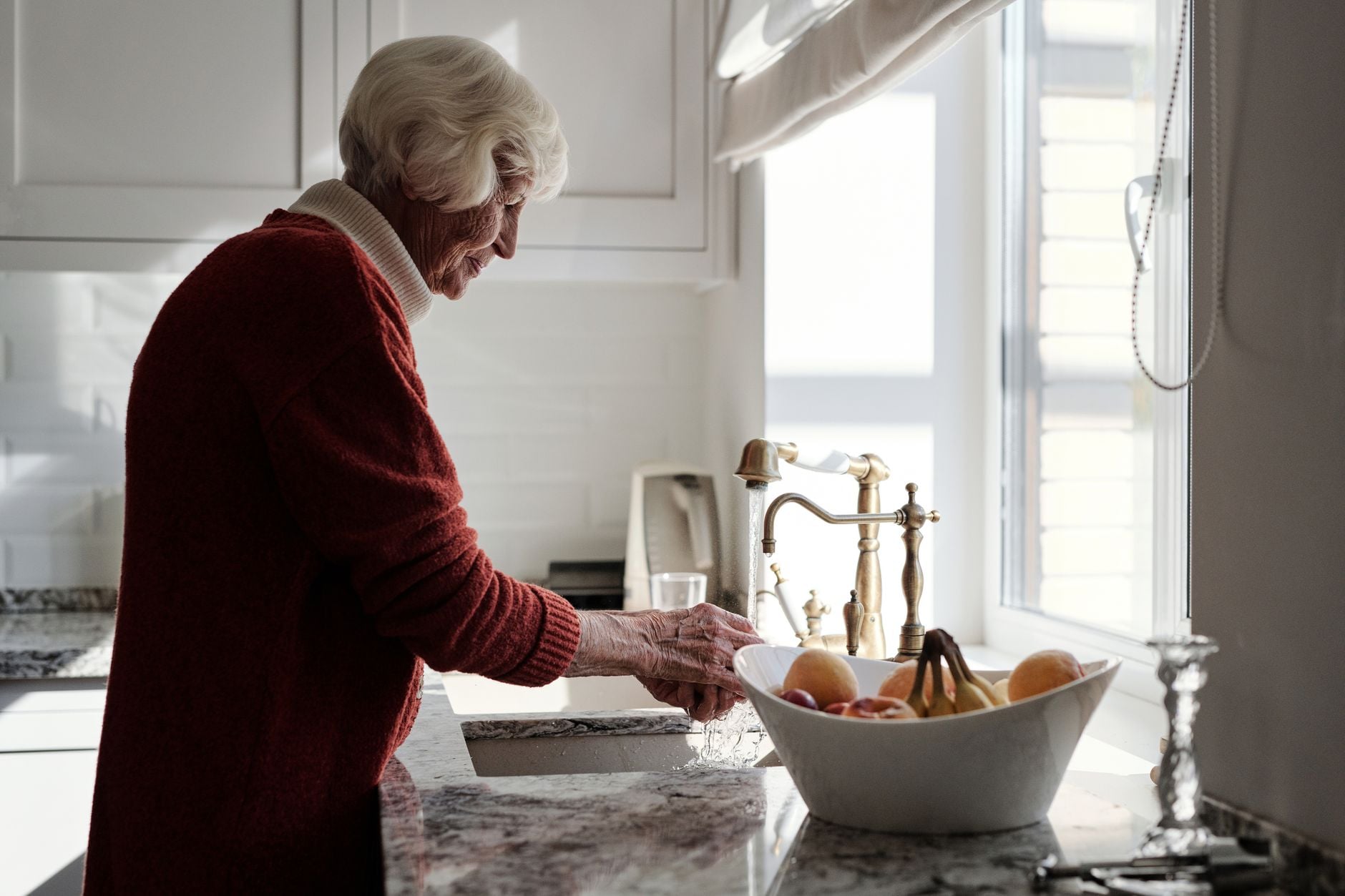
There is a version of this that almost everyone recognizes. The washing is on by seven. The bank is called the moment it opens. The appointment gets booked for the first slot of the day, and if the only slot left is three in the afternoon, it can wait until next week.
A visiting adult child watches all this and wonders why any of it has to happen before nine.
It is worth saying at the outset what the research below is and is not. No study described here watched anyone’s morning. These are laboratory experiments about when people perform best on cognitive tasks, and this is a reading of that literature rather than medical advice about any particular person.
The Artful Age
A weekly letter on aging well, family across generations, and the creative life after the kids leave home.
What a review of 65 studies found
In April 2025, a team led by Satyam Chauhan at Brunel University of London published a systematic review in Chronobiology International, “Chronotype and synchrony effects in human cognitive performance”, gathering 65 studies on whether a person’s body-clock type affects how well they think. The protocol was registered in advance and the searches followed PRISMA guidelines. It is a narrative review, which means it counts how many studies reported an effect rather than pooling their results into a single number.
The first finding is deflating for anyone who has described themselves as a morning person or a night owl as though it explained something. More than 80 percent of the reviewed studies found no main effect of chronotype on cognitive function at all. Being a lark does not make you sharper. Being an owl does not make you duller.
That morning performance in older adults tends to be better is not itself news, and we have covered the smartphone-testing work that tracked it hour by hour. What this review adds is a harder question: not whether performance drifts across a day, but whether the field has been accounting for that drift when it measures aging at all.
What appears to matter is the match between a person’s clock and the hour at which they are tested, which researchers call the synchrony effect. Here the review found something lopsided. In adults aged 18 to 45, evidence of a synchrony effect turned up in 29 of 64 studies, or 45.31 percent, which is fewer than half. In older adults it turned up in 10 of 12 studies, mostly on tasks involving fluid abilities.
The number in the abstract and the number in the text
That 83 percent is the figure in the abstract, and the review’s own age section is worth reading beside it, because the two do not quite match.
Of the 11 studies that compared younger and older adults head to head, seven reported a significant synchrony effect, on memory and recognition, on accuracy, and on reaction times. That is 63.63 percent. The rest are more mixed. Hogan and colleagues found the effect on associate learning only in older morning types. Rothen and Meier found it in younger evening types but not in older morning types. Bonnefond and colleagues found no synchrony effect at all on their two tasks.
The base is also thin. Only 12 of the 65 studies in the review involved older adults in any form.
What it looks like in the brain
The most concrete evidence in this literature is a 2014 study by John Anderson, Karen Campbell, Tarek Amer, Cheryl Grady and Lynn Hasher in Psychology and Aging, “Timing is everything”. Hasher’s group originated the synchrony-effect claim in the early 1990s, so this is the proponents’ own strongest demonstration rather than an independent test of it.
Participants lay in a scanner doing a task in which pictures and letter strings were displayed on top of one another, attending to one stream and ignoring the other. Afterwards they took a word-fragment test that measured how much of the ignored material had leaked in anyway.
Older adults scanned in the morning, in sessions running from 8:30 to 10:30, were better able to ignore the unattended stream than older adults scanned between one and five in the afternoon. More striking, they activated the same attention-control regions the young adults used, in rostral prefrontal and superior parietal cortex. The afternoon group activated neither those regions nor anything that looked like compensation for their absence. The authors describe the afternoon pattern as closer to dedifferentiation.
Both older groups scored the same on the standard morningness questionnaire, and both leaned considerably more toward mornings than the young adults did.
The sample was small: 16 young adults, 16 older adults in the afternoon, 18 older adults in the morning. It was between-subjects, meaning the older adults tested in the morning were different people from those tested in the afternoon. And the design was not fully crossed, because no young group was tested in the morning, a limitation the authors raise themselves.
The part that should trouble researchers
Both papers arrive at the same uncomfortable place, which is that a good deal of research on aging may be measuring the clock along with the mind.
Diurnal preference shifts toward mornings in adults over about 55. Research sessions and clinical assessments, meanwhile, get scheduled across the working day. The Anderson paper observes that few publications indicate the time at which participants were tested at all, which makes it difficult to know how much of the published literature on age differences is partly an artifact of when the appointment happened to be.
The Chauhan review puts it more bluntly. Not acknowledging these synchrony effects, the authors write, may result in exaggerated cognitive deficits especially in the elderly, and they raise it specifically in the context of assessments for the diagnosis of possible dementia or other cognitive disorders.
The finding that runs the other way
The same review reports something that spoils any simple rule about mornings. Several studies have found an asynchrony effect: better performance at a person’s worst time of day on insight problems, on creative and divergent tasks, on semantic analogies.
The proposed explanation is that the weakened attention and inhibition of an off-peak hour let in material that would otherwise be filtered out, which is unhelpful for holding a train of thought and useful for arriving somewhere unexpected. If the morning is when the accounts get done, the late afternoon may be when the odd idea turns up. Those studies were not read in the original here; they are reported as the review describes them.
What this does and does not license
The review’s authors are careful about how much weight any of this bears. Testing times across the 65 studies ranged from half past seven in the morning to two in the morning, and some papers did not report a time at all. Procedures and cognitive measures varied widely. Seasonal variation was generally overlooked, and most studies did not report melatonin, cortisol or body temperature, which are the physiological markers that would show where a person’s clock actually sits.
None of this is a reason to reorganize anyone’s day, and none of it is diagnostic. If an older person’s thinking has changed in a way that worries them or their family, that is a conversation for a doctor rather than something to be explained by the hour on the clock.
What the evidence does support is narrower and more domestic. Someone who has worked out over decades that the difficult phone call goes better at half past eight than at half past three has arrived, without a questionnaire, at a pattern the laboratories have been circling since the early 1990s. The habit may look like inflexibility from the doorway. The research suggests it is at least tracking something real, even if the studies that could say how much are still, on the authors’ own count, only twelve.