
The working mother’s apology is supposed to go like this: I’m sorry for the evenings I missed, the school pickups I wasn’t there for, the weekends that got swallowed by deadlines. I’m sorry the job took so much. That’s the story we’re given — the career as the thing that pulls a mother away from her family, and the guilt that follows her out the door every morning.
That’s not my apology. Mine runs the other direction entirely.
I left work deliberately. After twenty years building a career — advertising, PR, training — I stepped away to be present for my children. My daughter Megan was growing fast, asking harder questions. My son Dylan, who is on the autism spectrum, needed the kind of close, consistent attention that a full schedule was making difficult to give. The decision made sense. I had the circumstances that allowed it, and I made the choice with both eyes open. I didn’t leave because I had to. I left because I thought it was the right thing to do.
The Artful Age
A weekly letter on aging well, family across generations, and the creative life after the kids leave home.
What I didn’t anticipate was what would happen to me inside that choice.
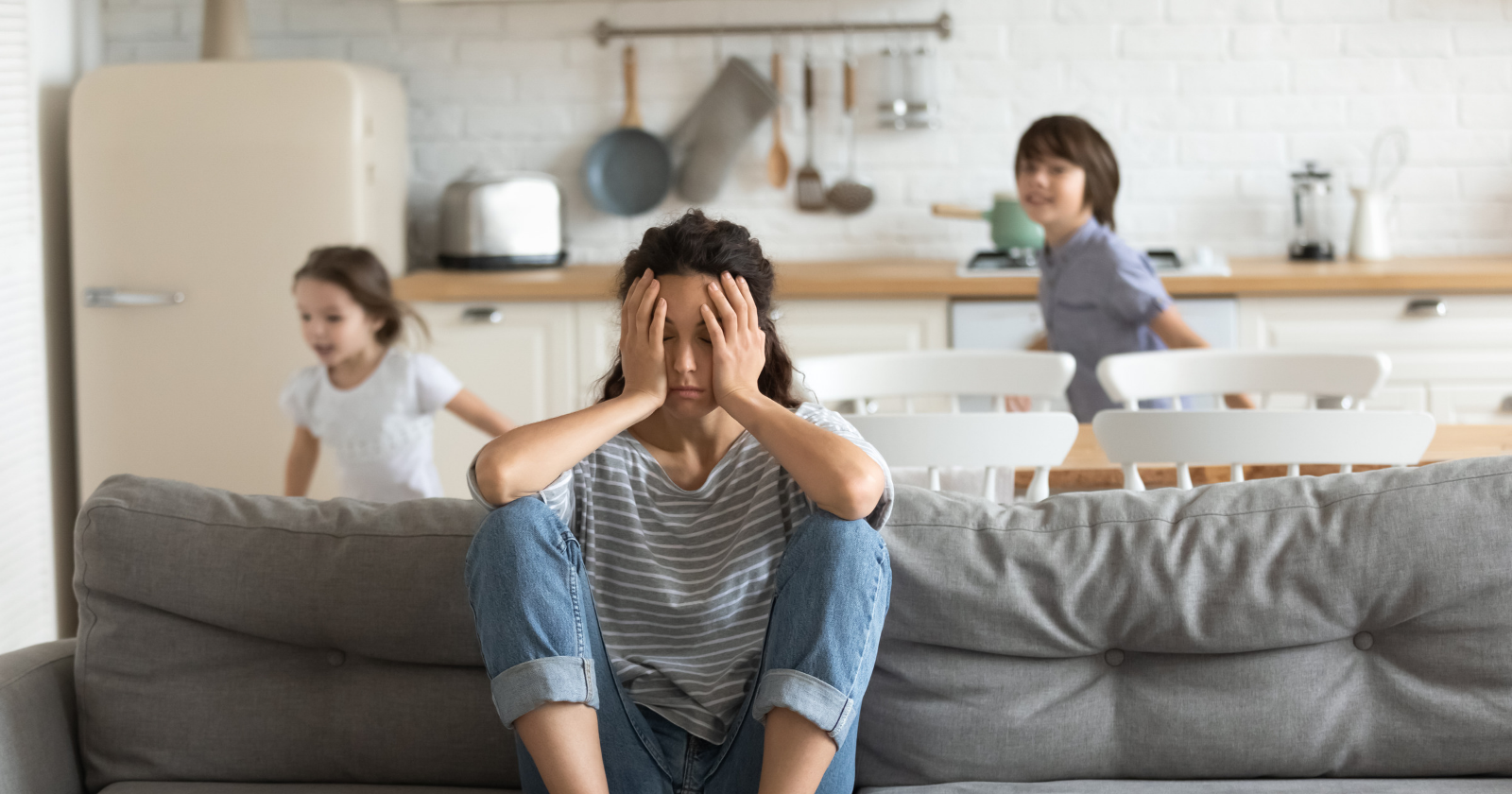
It didn’t happen fast. That’s part of why it’s so hard to write about, and why it took so long to notice. There was no moment I can point to and say: that’s when I disappeared. It was more like a slow lowering of the volume. I was still physically there — making breakfast, managing the routines, doing all of it. But I was doing it from somewhere further away than I realized. Over two or three years, I became quieter. Flatter. Shorter with the kids in ways I told myself were just tiredness. Less curious about things that had nothing to do with the house. The version of me that had opinions and projects and a self that existed outside this family was not gone, exactly. She had just gone very still.
I thought this was what sacrifice looked like. I thought the self-effacement was the point.
I wasn’t depressed in a clinical sense — and if any of this sounds familiar in a way that goes beyond ordinary weariness, talking to a therapist is worth far more than anything I could offer here. But what I was experiencing was something research actually documents. A 2012 Gallup study of more than 60,000 U.S. women found that stay-at-home mothers reported more sadness, anger, and diagnosed depression than employed mothers. They also experienced fewer positive emotions day to day — less smiling, less laughing, less of the ordinary lightness that makes a person easy to be around. The conventional narrative frames the stay-at-home choice as the emotionally richer one. The data doesn’t always agree.
None of that means staying home is wrong. It means identity doesn’t politely wait on the shelf while you’re doing other things. It keeps needing to be somewhere.
Dr. Lucia Garcia-Lorenzo, a Professor of Organisational and Social Psychology at the London School of Economics, has spent years studying working mothers and the tensions embedded in the role. “If you put your identity as a mother first, then your career suffers,” she notes, “or if you focus too much on your career, then you may have to outsource care for your children. That tension is never fully resolved.” What I had done — without naming it — was decide the tension didn’t apply to me. I would choose one side entirely and the other side would quiet down.
It did quiet down. That was the problem.
The moment I understood what had happened came from Megan. She was eleven or twelve, and she told me — not to be cruel, not dramatically, just as a statement of fact the way children deliver them — that she missed going to my office and seeing me happy working. Not that she missed me when I worked. She missed seeing me happy. I didn’t say anything right away. I’m not sure I was capable of it. She had been watching the slow change across years and had found the exact words for it before I had.
What she noticed wasn’t that work had taken me away from her. What she noticed was that its absence had taken something from me, and that the smaller version of me left behind was the one she came home to every afternoon. Children have a way of measuring the people in front of them that adults underestimate. They aren’t watching our schedules. They’re watching our faces.
I went back to work. Not the same career — a different role, one I could do from home, that fit the reality of our family’s days. Work that was mine. Something I was accountable for that didn’t involve anyone’s dentist appointment or lunchbox.
The balance took time to find. But what came back — and I felt it before I had words for it — was the sense of having somewhere to return from. When work was done, I was done. I came back to the kids from a defined elsewhere rather than simply being in the house continuously, tracking everything, never fully off. The patience came back. The curiosity came back. I became warmer and more genuinely present in the hours I was with them than I had been during all the hours I was never anywhere else.
Professor Kathleen L. McGinn of Harvard Business School, whose research followed adults across dozens of countries, puts it plainly: “People still have this belief that when moms are employed, it’s somehow detrimental to their children.” Her data says otherwise. Daughters of employed mothers are more likely to work, more likely to hold supervisory roles, and earn higher wages — without evidence that their wellbeing suffers as a result. The belief that a mother’s career costs her children something essential is one the evidence keeps failing to support.
But statistics aside, what I want to say is simpler and more personal than any study: I was not a better mother for stopping. I was a more present one by hours of the day and far less present by everything that actually matters. My children didn’t need me home all the time. They needed me to be there when I was there.
So the apology I owe them — and have, in different ways, started to give — is not for the career years, the agency years, the years when I was building something that had nothing to do with them. It’s for the years I convinced myself that dissolving into full-time motherhood was the selfless choice. It felt like giving. It was, in ways I didn’t see at the time, a long slow retreat from myself. And they could tell. Megan could tell. She was waiting for me to find my way back, and she told me so, at eleven years old, in the most matter-of-fact sentence I have ever heard.
McGinn says she hopes the guilt will eventually fade: “As we gradually understand that our children aren’t suffering, I hope the guilt will go away.” I think the guilt has been pointed at the wrong thing for a long time. Working was never what I owed an apology for. The apology belongs to the years I left myself behind in a house full of people I love, and let them notice before I did.