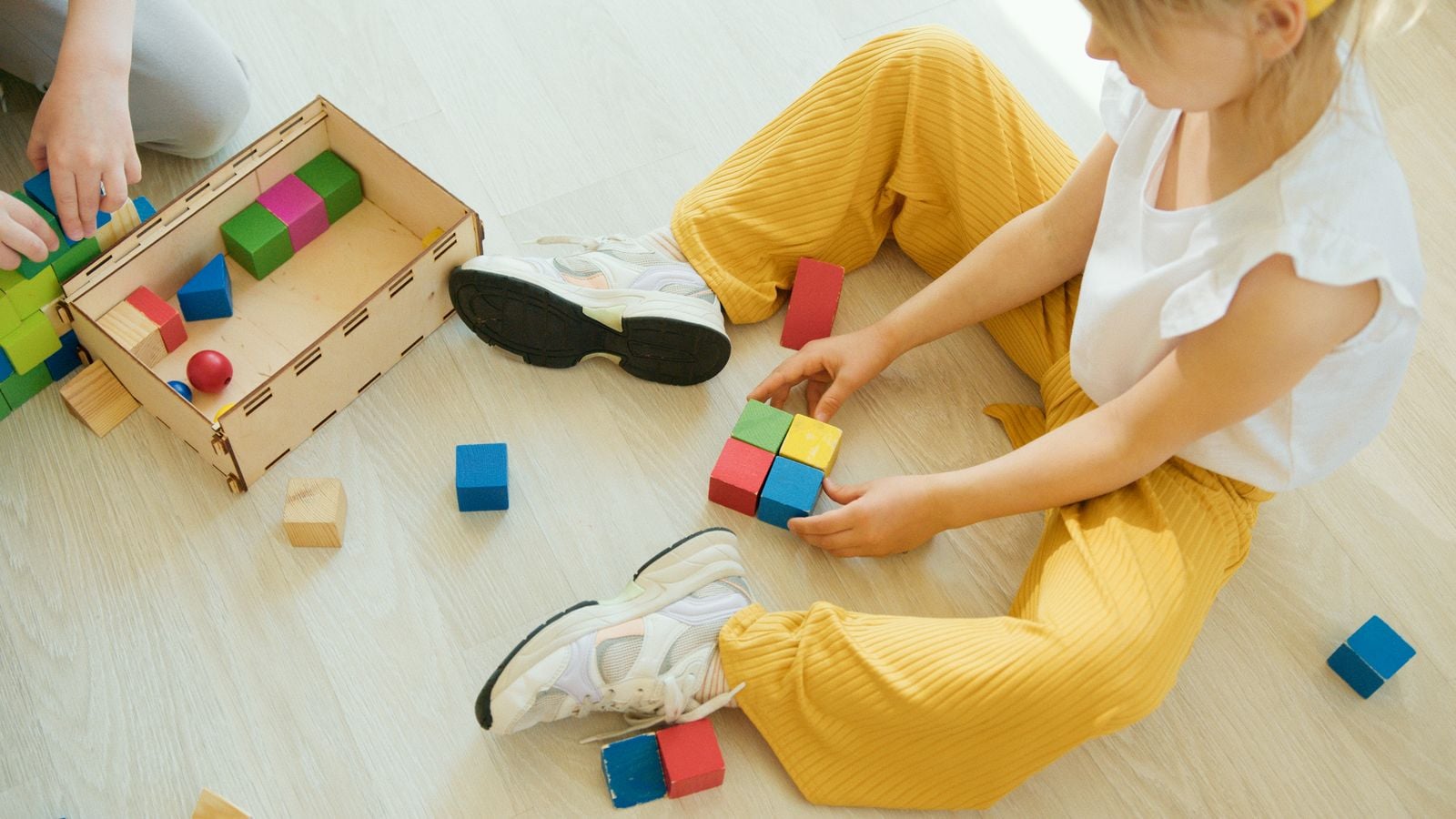
In a small room at the University of Toledo in 2017, occupational therapist Dr. Alexia Metz watched toddlers do something that quietly overturned a generation of parenting advice. When she gave children between 18 and 30 months old just four toys to play with, they stayed with each toy roughly twice as long as children given sixteen. They pressed every button. They stacked, restacked, and then invented small pretend games on top of what they had already built.
The study, later published in Infant Behavior and Development, was small. Its finding was not.
The children with sixteen toys behaved the way most parents have watched their own children behave at a birthday party or a holiday morning. They picked something up. They put it down. They picked something else up. They put that down too. Metz described the pattern to TODAY as almost frantic — a kind of shiny object syndrome in miniature, where the mere presence of another option pulled attention off whatever was already in the child’s hands.
The Artful Age
A weekly letter on aging well, family across generations, and the creative life after the kids leave home.
What the room actually looked like
The setup was deliberately plain. Age-appropriate sit-and-play items — stacking blocks, a dump truck, the sort of classic toddler equipment that has barely changed in fifty years. Half the children entered a room with four of these toys arranged on the floor. The other half entered a room with sixteen. The play sessions were timed and recorded.
Metz was not measuring joy on a smile-meter. She was measuring duration of engagement with a single toy, and the variety of actions a child performed with it. A child who pushes a truck across the floor once has done one thing. A child who pushes it, loads a block into the bed, drives it under a chair, unloads the block, and then narrates the whole scene has done five.
In the four-toy room, the children did the second thing. In the sixteen-toy room, they mostly did the first, then moved on.
The Harvard toy problem
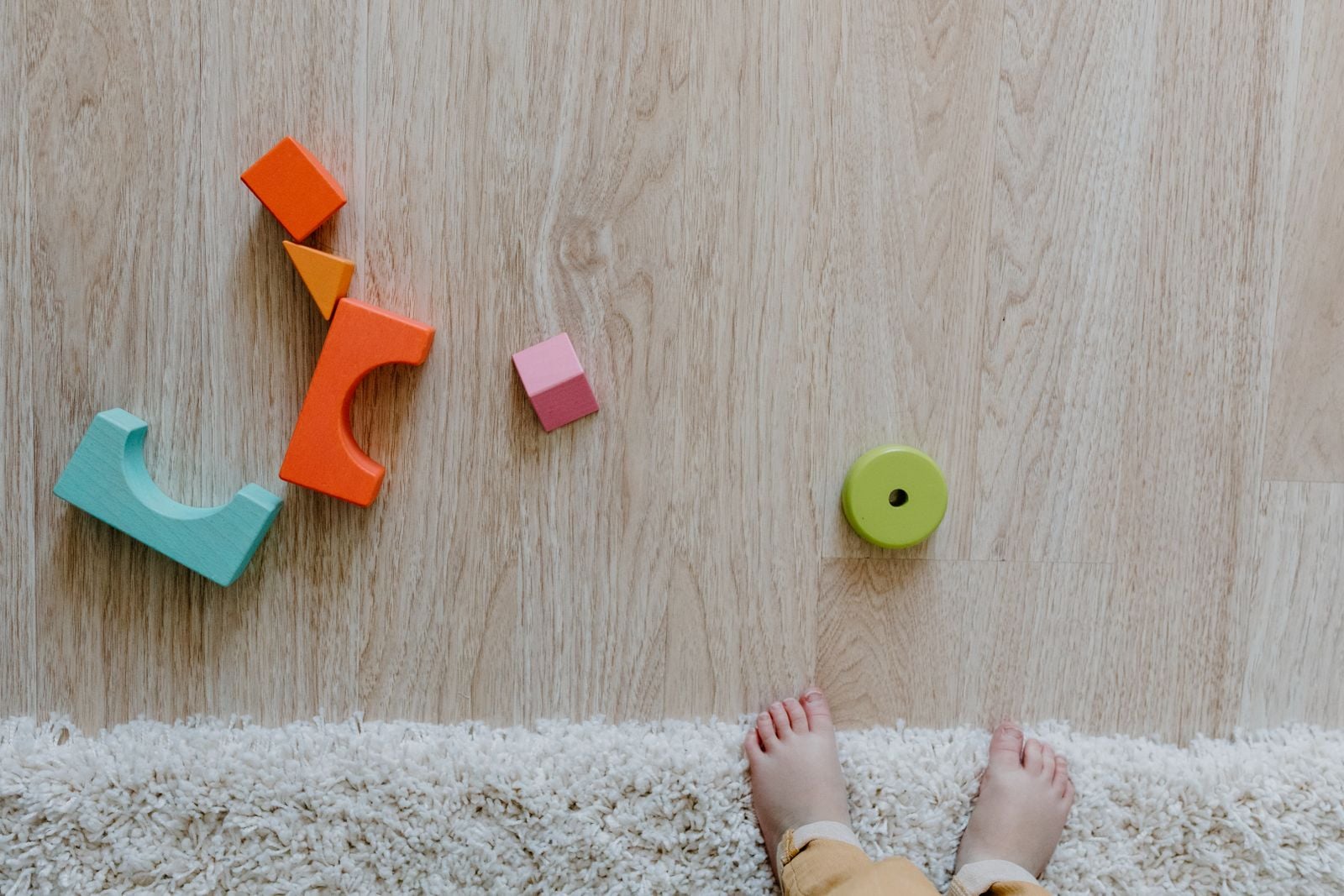
Metz has a phrase for what drives parents to fill a playroom. “We keep bringing home more and more toys, thinking this is the toy that will get my kid into Harvard,” she told the New York Post. “But then we don’t see the value in their playing because they can’t organize themselves enough to play.”
That last phrase is the mechanism. A toddler brain is still building the skill of settling — of choosing an object, staying with it, discovering what it does. Every additional toy in the room is another interruption to that process, another small pull on attention. The fifteen toys a child is not currently holding are not neutral. They are competitors.
The pattern echoes a broader idea in early-childhood research: attention fragments when competing options stay visible, and a game cannot deepen if the next distraction is already sitting on the rug.
What “twice as long” actually means
Doubling the play duration with a single toy is not a small effect. In toddler research, sustained attention on one object is one of the better early predictors of later focus, language development, and problem-solving. It is the raw material for pretend play, which itself is the raw material for narrative thinking.
When a child has time to sit with a dump truck long enough to notice that the bed tilts, that the wheels spin backwards, that a block fits inside it — that is the point at which the truck stops being an object and becomes a prop. The prop is where imagination begins.
Cut the session short by presenting a shinier option two feet away, and the truck never gets to become a prop. It stays an object. The child moves on.
Why sixteen feels generous and lands as chaos
To an adult, sixteen toys on a floor looks like abundance. To an eighteen-month-old, it looks like a decision tree with sixteen branches and no way to prune it. Executive function — the mental machinery for prioritising, sequencing, and sticking with a choice — is barely online at that age. The prefrontal cortex is still under construction and will keep building well into a person’s twenties.
Metz described what she saw in the sixteen-toy room to Motherly: children took a rapid inventory, touched things in quick succession, and never settled. “That exploration is so fast-paced,” she said, “that they don’t have time to sit and explore all the things a toy can do before they need to move on to the next one.”
The four-toy children did something different at the very start. They also took an inventory. They looked at everything. But then they had time to circle back. “They went and they looked at them all, but then they had time to go back to each toy,” Metz explained. “They sat down and they played with it for twice as long, and they did many more things with it.”
The rotation fix
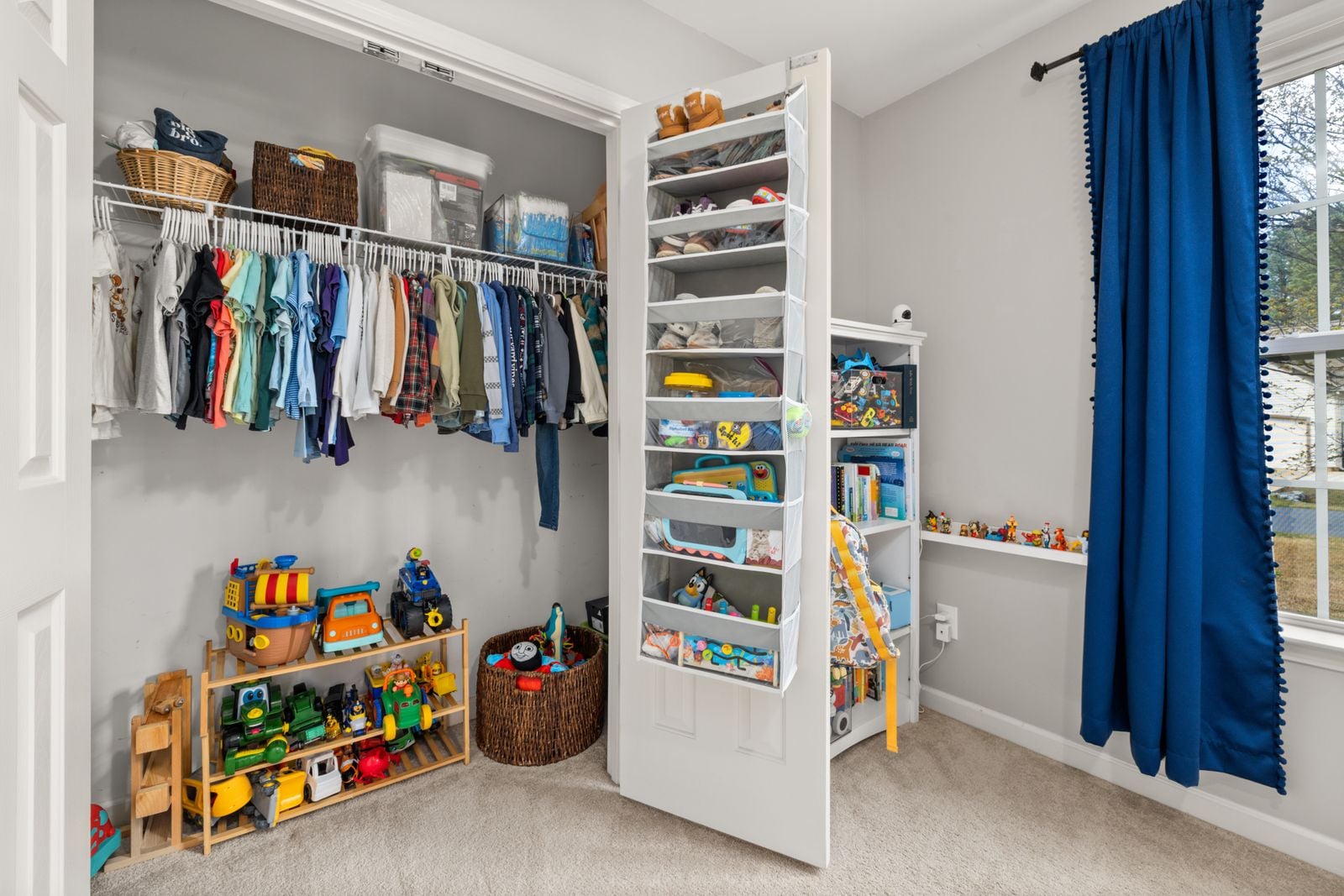
The study is not an argument for throwing toys away. Metz has been careful to say so in every interview she has given about the work. Her recommendation is structural: keep whatever you own, but only let a small number be visible and reachable at any one time.
“You can have your hundreds of toys if you have a place to store them, so that when a kid has time to play there’s just a smaller number available at the moment,” Metz has explained to Motherly. The published study makes a related point, as ScienceAlert reported: rotating stored toys back into play can offer novelty without the distraction of having too many toys out at once.
The rotation trick works because novelty comes from contrast, not from quantity. A dump truck that has been in a closet for three weeks is a new dump truck when it reappears on Tuesday morning. A child who saw it every day for three weeks stopped seeing it about a week and a half in.
The apartment that made the research
Part of the reason Metz noticed this pattern at all is that she raised twins in a 1,000-square-foot Chicago apartment. There was no spare room for a toy explosion. The constraint became the observation.
“There was just no space,” she has recalled to TODAY. “My kids had everything they could want or need — and lots of these are really great therapist-approved toys — but it’s just too much. They can’t settle down and play.”
Therapist-approved does not equal helpful in bulk. The Montessori tradition has argued something similar for over a century: a limited, curated set of materials, presented one at a time, produces deeper engagement than a well-stocked toy shelf. Metz’s study put a number on the intuition.
What the four-toy children were doing
The interesting question is not why sixteen toys failed. It is what the four-toy children did with the extra minutes. They stacked. They knocked things down. They tried to fit one object inside another. They started to narrate — to themselves, to the toy, to no one in particular.
Some began early forms of pretend play, the kind child development researchers watch for because it correlates with later language and social skills. A block became food. A truck became a bed. The physical object stayed the same. The meaning shifted.
That shift takes time. It cannot happen in the eight seconds a child spends with a toy before glancing at the fifteen alternatives on the rug.
The gift-giving problem
The study has become a fixture in holiday parenting coverage for a predictable reason. Christmas mornings, birthday parties, and grandparent visits tend to produce exactly the sixteen-toy condition Metz created in the lab — often on a single afternoon. The child unwraps, plays for a minute, unwraps again, plays for a minute, and by evening is overstimulated and cranky in a room full of new things.
Parents notice the crankiness and often blame sugar, or overtiredness, or the disruption of routine. Some of that is real. But the research suggests the abundance itself is part of the problem. A brain that cannot settle cannot rest.
Metz’s suggestion in interviews with Motherly and others has been consistent: accept the gifts, then quietly store most of them. Bring them out in ones and twos over the following months. The child gets a slow parade of new things instead of a single overwhelming pile.
Where the finding fits
Metz has been careful to note the limits of her own work. The toys in her study were classic sit-and-play items — the kind that reward repeated interaction. Modern battery-powered toys with lights, sounds, and preset routines may behave differently, because the toy itself is doing more of the entertaining. The child is a passenger rather than an author.
That distinction matters. A toy that does one thing when you press one button teaches the child that toys are for pressing buttons. A wooden block teaches nothing and therefore teaches everything: it can be a tower, a car, a piece of food, a phone, a boat. The open-ended object survives the rotation. The single-purpose object gets boring quickly, no matter how many buttons it has.
The quiet room, twelve minutes in
If you have ever watched a two-year-old at a doctor’s office with a basket of three battered waiting-room toys, you have seen the four-toy finding in the wild. The child does not complain about the selection. The child sits down with a plastic giraffe and, over the course of ten minutes, gives it a personality, a voice, a small crisis, and a resolution.
Bring that same child home to a room with a full toy shelf and the giraffe never gets a name. There is always something else on the shelf, just there, waiting to be picked up and put down.
Metz’s line, delivered to reporter after reporter, has become the take-home for parents who find the research: “Recognise toys for their short-term value and then pass them on.” The dump truck is not a permanent fixture. It is a prop for a season, and the season is shorter than the packaging suggests.
In the Toledo lab, the children with four toys did not know they were part of a study. They only knew that the room was quiet, the floor was uncluttered, and the truck in front of them had not yet given up all its secrets. So they stayed. Twice as long. Which, at eighteen months old, is the closest thing to concentration a person can offer.