
Three months after I retired, I sat at my kitchen table on a Tuesday morning with three empty hours stretching ahead of me — and I felt useless.
Not free. Not relaxed. Useless.
I was embarrassed to even admit it, because I’d planned for this. I’d looked forward to it. I had books I wanted to write, ideas I wanted to follow, projects on the side already started. I thought I was walking into freedom.
The Artful Age
A weekly letter on aging well, family across generations, and the creative life after the kids leave home.
What I walked into was that kitchen table.
I’ve also told this story in a short video, if you’d rather watch than read:
The wrong question
For weeks after that Tuesday morning, I kept asking myself the same thing: what am I going to DO with my time?
I had answers. Books. Travel. Walks. Volunteering. Friends. I could list them.
The list wasn’t the problem. The list didn’t fix anything. I was still sitting at that kitchen table on a Tuesday morning feeling like I didn’t matter.
Because the real question wasn’t what I was going to do.
It was something underneath that.
What am I FOR now?
Not what will occupy me. What am I for. What is the shape of me, now that the roles that used to define me — the job, the title, the team, the daily need — aren’t holding me in place anymore.
That’s the question most retirement advice never touches. It’s not about activities. It’s about identity. And it’s a question you can’t goal-set your way out of.
“You’re so lucky”
Something else worth naming — the hardest part isn’t the question itself.
The hardest part is that you’re surrounded by people telling you how lucky you are.
For years, I’d heard it. You’re so lucky to be planning for this. I wish I could retire. And when the reality landed differently than I’d expected, I felt something I didn’t have a name for. A version of shame, I think. As though I was the woman with no plan and no purpose and apparently no gratitude either.
So I didn’t tell anyone.
Until one day, sitting with a friend over coffee, I heard myself say it out loud.
I don’t know who I am anymore.
And the strange thing was — saying it didn’t make me feel worse. It made the room feel smaller. Manageable. Honest.
That was the start.
The idea that shifted things
What began to unstick me came from the work of Professor Nancy Pachana, a clinical geropsychologist who writes generously about ageing and identity. Her book Ageing: A Very Short Introduction (Oxford University Press) is a good place to start if you ever want to read her.
She puts it like this:
The clues to your next chapter are not hiding somewhere new.
They’ve been hiding in plain sight your whole life.
I sat with that. Not a productive sit — a real one. The kind where you re-read the sentence three times because you sense it means something you don’t fully have yet.
When I finally let myself look — really look — I noticed something that had been true my whole life.
I’ve always been a teacher.
Not just in the corporate sense of my career. In how I listened when a colleague was working out a hard decision. In the letters I wrote to my children. In what energised me when I was sitting with someone thinking their way through a mess. In the books I underlined. The conversations I stayed too long in. The questions I asked without meaning to.
That hadn’t gone anywhere.
It was just no longer being expressed through the role that had been holding it for me.
The role was gone. The thing underneath the role wasn’t.
Curiosity as the method
Nancy talks about curiosity as the way you find these clues. About doing something that scares you a little. The instrument you always meant to learn. The photography course. The neighbour you’ve never quite gotten to know.
Not because the activity itself matters.
Because curiosity is how you find the parts of yourself that haven’t had room to breathe.
There’s a small piece of neuroscience worth adding here. Researchers who study curiosity have found that the feeling of wanting to know something — that quiet pull toward a question or an idea — activates the brain’s reward circuitry in the same way novelty does. Which means the brain doesn’t lose its capacity for real engagement when the career stops. It just needs something to be genuinely curious about.
On a neurological level, a retirement filled with honest curiosity isn’t a step down from a career at its most engaged. It’s the same engine. Pointed at a different thing.
I’d add something to that from my own experience.
The clues aren’t always in the new things.
Sometimes they’re in the old.
The conversation you didn’t want to end. The book you read and couldn’t stop thinking about. The walk where you came back feeling lighter than when you left. The person whose company steadies you without either of you saying much.
Those are signals. Those are clues. Pay attention to them.
The three retirees I keep meeting
Since I’ve started writing about this openly, I keep meeting three kinds of retirees.
The first is the one who is still in the what will I do? question. They have a busy calendar and a slight edge to how they talk about it — as though the busyness is proof of something. They are working hard, quietly, to look like they’ve got this figured out. Underneath, most of them will tell you (if you sit with them long enough) that they don’t feel quite like themselves.
The second is the one who has stopped trying and is coasting. Not unhappy. Not thriving either. Something has gone quiet in them and they don’t know if it can be woken up again.
The third is the one who has done a slower thing. They didn’t find a brand new purpose. They didn’t reinvent themselves. They spent some months — sometimes longer — sitting with the what am I for now? question, and they let it reshape their attention rather than their calendar. What they contribute now looks a little smaller than the career they left, but it feels more like theirs. There’s less performing. More presence. When you’re with them, you have the sense that they’re actually here.
That third group is the one I want to keep learning from.
What to try
If any of this resonates and you’d like something small to try — I want to leave you with something concrete, not just a nice essay.
Each day this week, notice one moment when something lit you up. Even a small thing. A conversation. A song. A view. A new idea. Write one sentence about it. Phone notes is fine.
At the end of the week, look at what you’ve written, and ask yourself one question:
What is this telling me about who I’m becoming?
Not who I used to be. Not who anyone else thinks I should be.
Who I’m becoming.
That’s it. No project. Just noticing.
And if you’d like more structure alongside the noticing, my free guide walks you through the three phases of the retirement transition and gives you reflection prompts to help you locate where you are right now. It’s short. Two minutes to read the introduction, maybe fifteen minutes to sit with the questions properly. It’s the thing I wish I’d had before that Tuesday morning at the kitchen table. (We have a family connection to Jeanette Brown, so we may earn money if you buy through this link.)
I’m still figuring this out, day to day. I don’t have it all sorted. But I have a direction now.
And the difference between having a direction and not having one — that’s the difference between feeling useful and feeling useless.
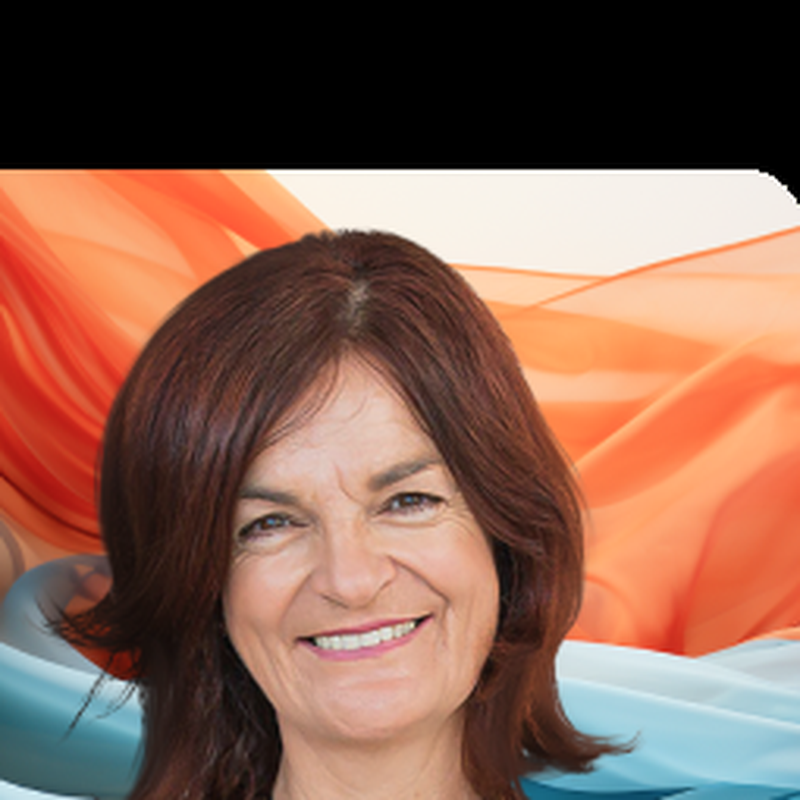
Jeanette Brown writes about the inner side of retirement — the part that doesn’t get covered in the financial planning books. She has a background in education and coaching, and lives in Australia. You can find her work at jeanettebrown.net.