Thirty-six and a half seconds after Apollo 12 cleared the pad at Kennedy Space Center on 14 November 1969, an electrical discharge tore through the launch vehicle. NASA records the first event at 36.5 seconds after liftoff, when the spacecraft was about 6,000 feet above the ground. Fifteen and a half seconds later, at 52 seconds, a second lightning event followed.
Inside the command module, warning lights appeared across the panel and the master alarm sounded. On the ground, telemetry dissolved into values that made little sense. The Saturn V kept climbing while Mission Control suddenly had trouble telling which spacecraft systems had actually failed and which instruments were merely reporting nonsense.
What happened over roughly the next minute became one of Apollo’s most famous recoveries. It depended on flight controller John Aaron recognising a pattern he had seen during an obscure ground test, and on Alan Bean knowing where to find a seldom-used switch labelled for the Signal Conditioning Equipment.
The Artful Age
A weekly letter on aging well, family across generations, and the creative life after the kids leave home.
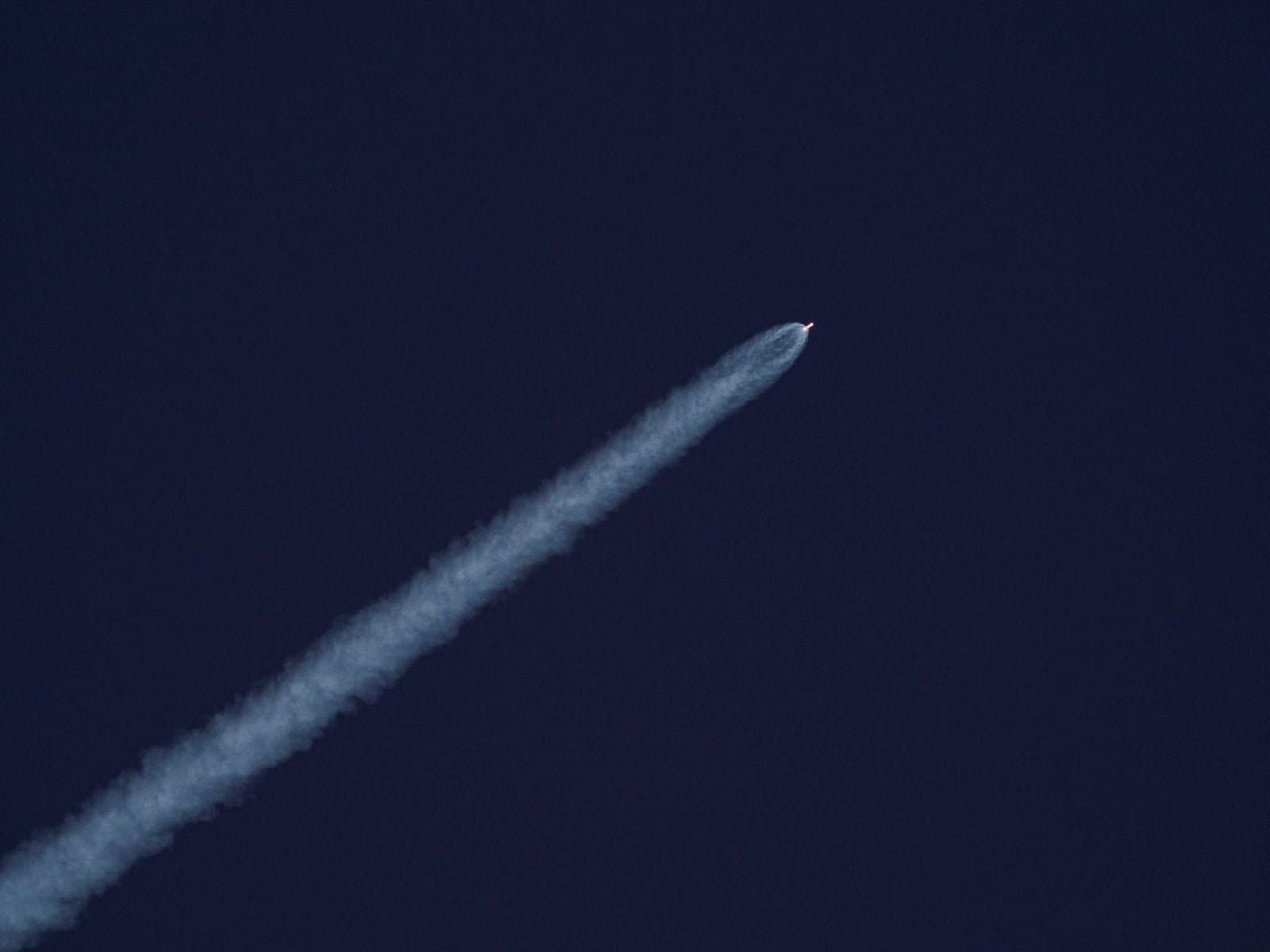
A rocket launching into rain
Apollo 12 lifted off at 11:22 a.m. Eastern time into a dark, rainy sky. NASA’s account of the mission notes that the vehicle triggered a lightning discharge during ascent. The weather had not stopped the launch under the rules then in force, but the incident exposed a hazard those rules had not adequately accounted for.
The important distinction was that Apollo 12 did not simply blunder into an ordinary thunderbolt already on its way. The rocket was climbing through an electrically charged cloud environment, and the long conductive path created by a large launch vehicle and its exhaust plume helped make a discharge possible.
The spacecraft took the most obvious electrical punishment. Much of the command and service module instrumentation went offline, and all three fuel cells dropped offline as well. Batteries carried the electrical load while the crew and ground controllers tried to work out what had happened.
The engines still sounded normal
Commander Pete Conrad had another piece of information that the telemetry screens could not provide: the Saturn V still sounded and felt as though it was flying normally. He did not pull the abort handle.
That decision mattered because the launch vehicle had its own guidance and control equipment separate from much of the command module hardware that was misbehaving. The booster continued its ascent while the spacecraft above it presented Mission Control with a jumble of electrical warnings.
NASA’s later history of the launch describes the same basic split. The spacecraft electronics and fuel cells were disrupted, but the ascent continued, leaving the crew and controllers with a narrow window in which to understand the failures rather than immediately abandon the mission.
The pattern John Aaron had seen once before
At the EECOM console, John Aaron noticed something unusual about the bad telemetry. The numbers were not simply disappearing or dropping uniformly to zero. They were landing on strange intermediate values, the kind of pattern that suggested the measurement chain itself might be corrupt.
Aaron had encountered that pattern before. In a later oral-history account reproduced by the Apollo Flight Journal, he recalled being on a third-shift command module test at Kennedy when operators accidentally dropped spacecraft power. Instead of clean zeros, readings appeared at peculiar values such as 6.7 and 12.3.
He had been curious enough to investigate the anomaly afterward. The trail led to the Signal Conditioning Equipment, or SCE, which sat between many spacecraft sensors and the systems that displayed or transmitted their measurements.
Those sensors did not all produce information in the same electrical form. The SCE conditioned their outputs into signals that onboard equipment and ground telemetry could interpret. When voltage fell outside the normal supply’s operating range, that translation could become corrupted even though every underlying system had not independently failed.
The call: SCE to auxiliary
Aaron’s answer was to put the SCE on its auxiliary supply. NASA’s 2024 Apollo 12 history describes the solution as moving a seldom-used selector from Normal to Auxiliary and notes that Bean remembered the switch’s location and carried out the change.
The flight transcript places the radioed instruction at about 96 seconds after liftoff. Conrad initially heard “FCE” and asked for clarification. The call was repeated, Bean moved the SCE selector, and at 1 minute 50 seconds Conrad confirmed that SCE was on auxiliary.
The important point is that the switch did not magically repair Apollo 12. It restored coherent information. Once the telemetry became readable again, controllers could separate genuine electrical failures from misleading instrument readings and begin dealing with the actual problems.
The fuel cells could be brought back into service. The spacecraft guidance reference that had been upset could be dealt with later. Meanwhile, the Saturn V continued doing its own job and carried Apollo 12 into Earth orbit.
The decision that came next
Reaching orbit did not automatically mean the mission could continue to the Moon. Lightning had upset multiple spacecraft systems, and controllers still had to establish that there was no hidden problem serious enough to make continuing unsafe.
NASA’s Apollo 12 mission history records that the electrical circuits were checked after one and a half revolutions and no significant problems were noted. Only after that checkout did the Saturn V’s S-IVB third stage reignite and send Apollo 12 onto its translunar trajectory.
The mission that had looked deeply uncertain in its first minute went on to achieve one of Apollo’s defining feats. Conrad and Bean landed Intrepid close enough to Surveyor 3 to walk to the robotic spacecraft, examine it and bring components back to Earth.
That precision was not incidental. Apollo 12 demonstrated that astronauts could deliberately reach a tightly defined target on another world rather than simply aim for a broad safe landing zone.
What the switch actually did
The SCE story is often flattened into a legend about one obscure control saving a Moon mission. The real sequence is more interesting because the switch solved a narrower problem.
It did not steer the Saturn V. It did not restart the fuel cells by itself. It did not realign the spacecraft’s guidance reference. Its auxiliary supply brought the signal-conditioning system back into a useful operating state so Mission Control could once again understand what the spacecraft was reporting.
Before that change, the console presented what looked like failures spreading in unrelated directions at once. After it, the situation could be broken into individual faults: fuel cells offline, batteries carrying the load, guidance information upset, other systems still functioning.
Aaron’s contribution was therefore diagnostic as much as electrical. He recognised that bad information was itself a failure mode, then gave the team a way to restore visibility before deciding what to fix next.
What NASA changed afterward
Apollo 12 made triggered lightning a launch-safety problem that could no longer be treated like ordinary thunderstorm avoidance. The incident showed that a rocket could help initiate a discharge while passing through an electrically dangerous cloud environment even when natural lightning was not already occurring nearby.
The lesson became more urgent in 1987. An Atlas-Centaur 67 launch encountered triggered lightning, and NASA investigators concluded that the electrical transient altered computer memory, producing a hard-over engine command and a chain of excessive aerodynamic loads that ended in the vehicle’s breakup.
Modern launch operations therefore use detailed criteria aimed not only at visible thunderstorms but at atmospheric conditions capable of producing natural or triggered lightning. NASA’s current Lightning Launch Commit Criteria standard, version B dated 27 August 2026, establishes common criteria for avoiding those hazards during United States space launches.
Distributed knowledge, connected fast
Mission Control is often remembered as a room where everybody seemed to know everything. Apollo 12 shows something more realistic. Different people held different pieces of the answer.
Aaron recognised the telemetry signature because he had once followed an odd ground-test failure farther than his immediate job required. Bean knew his cockpit well enough to locate an obscure selector when the call reached him. Conrad had direct sensory evidence that the launch vehicle itself still felt healthy enough not to abort immediately.
No single person possessed a complete picture at the instant the lightning struck. The recovery worked because specialised knowledge moved quickly through the chain and because the team could distinguish between what it knew, what it could still observe and what it needed to test.
Yankee Clipper is still on display
Apollo 12 splashed down in the Pacific on 24 November 1969 after completing the second crewed lunar landing mission. Its command module, Yankee Clipper, is now part of the collection at the Virginia Air & Space Science Center in Hampton.
More than half a century after the launch, formal lightning criteria still account for the possibility that a rocket can help trigger the electrical event engineers are trying to avoid. Apollo 12 did not prove that lightning was harmless to a Saturn V. It showed how quickly a launch could become an electrical emergency, and how much could depend on one controller recognising the shape of bad data before everyone else could see what it meant.