
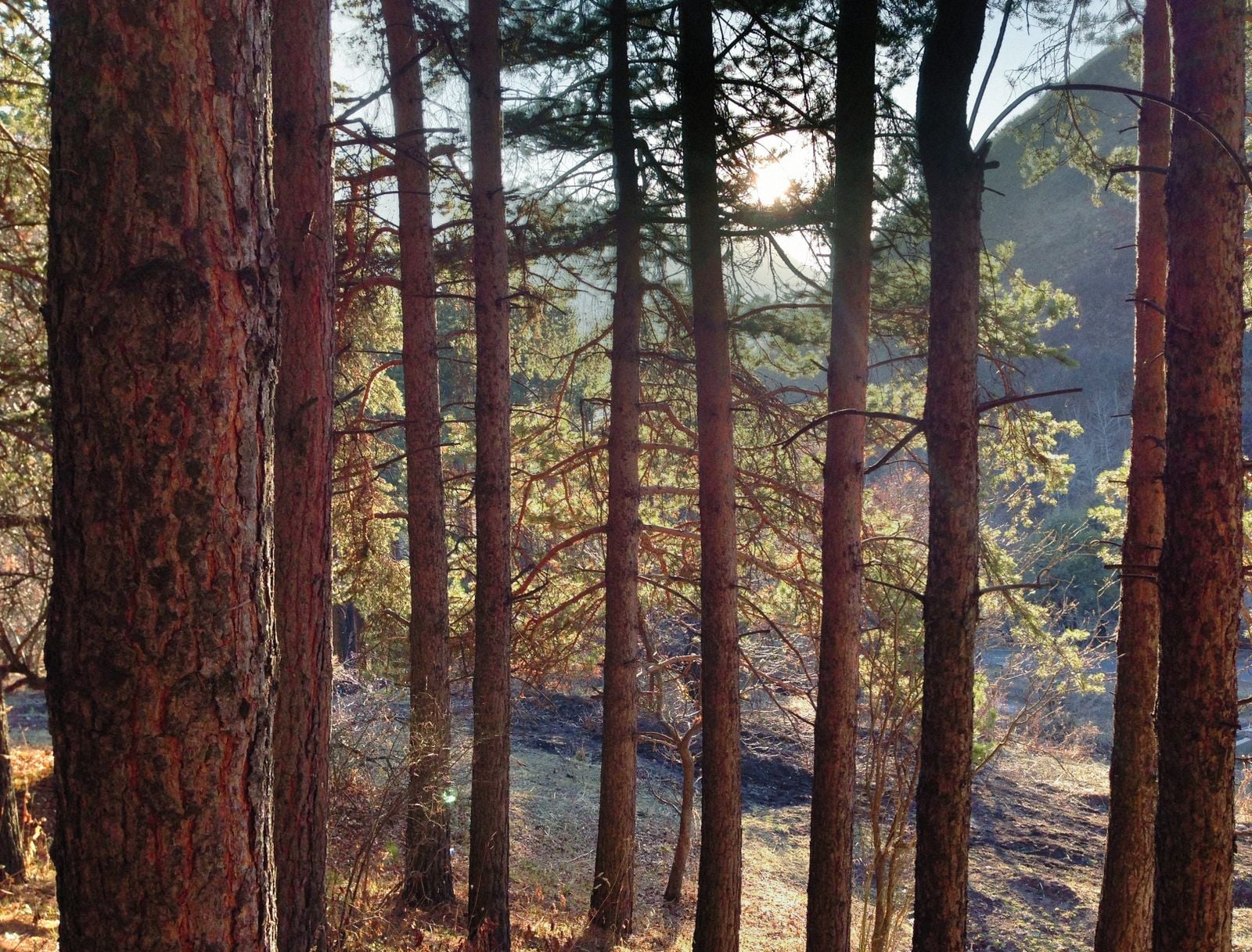
Roughly 150 kilometres northwest of Sydney sits a sandstone canyon whose coordinates are kept in a locked file at a New South Wales government office. Inside that canyon stand fewer than 100 wild trees with knobbly chocolate-brown bark, flat blue-green fronds, and a lineage older than the Rocky Mountains. They are Wollemi pines, Wollemia nobilis, and until September 1994 the entire scientific consensus held that the genus had disappeared from Earth millions of years ago, known previously only from fossils dating back roughly 90 million years.
The reason anyone knows otherwise is that an off-duty park ranger named David Noble abseiled into the wrong slot canyon on a weekend, found a strange frond he did not recognise, and carried it home to Katoomba in his pack.
A weekend canyon, a frond in a rucksack
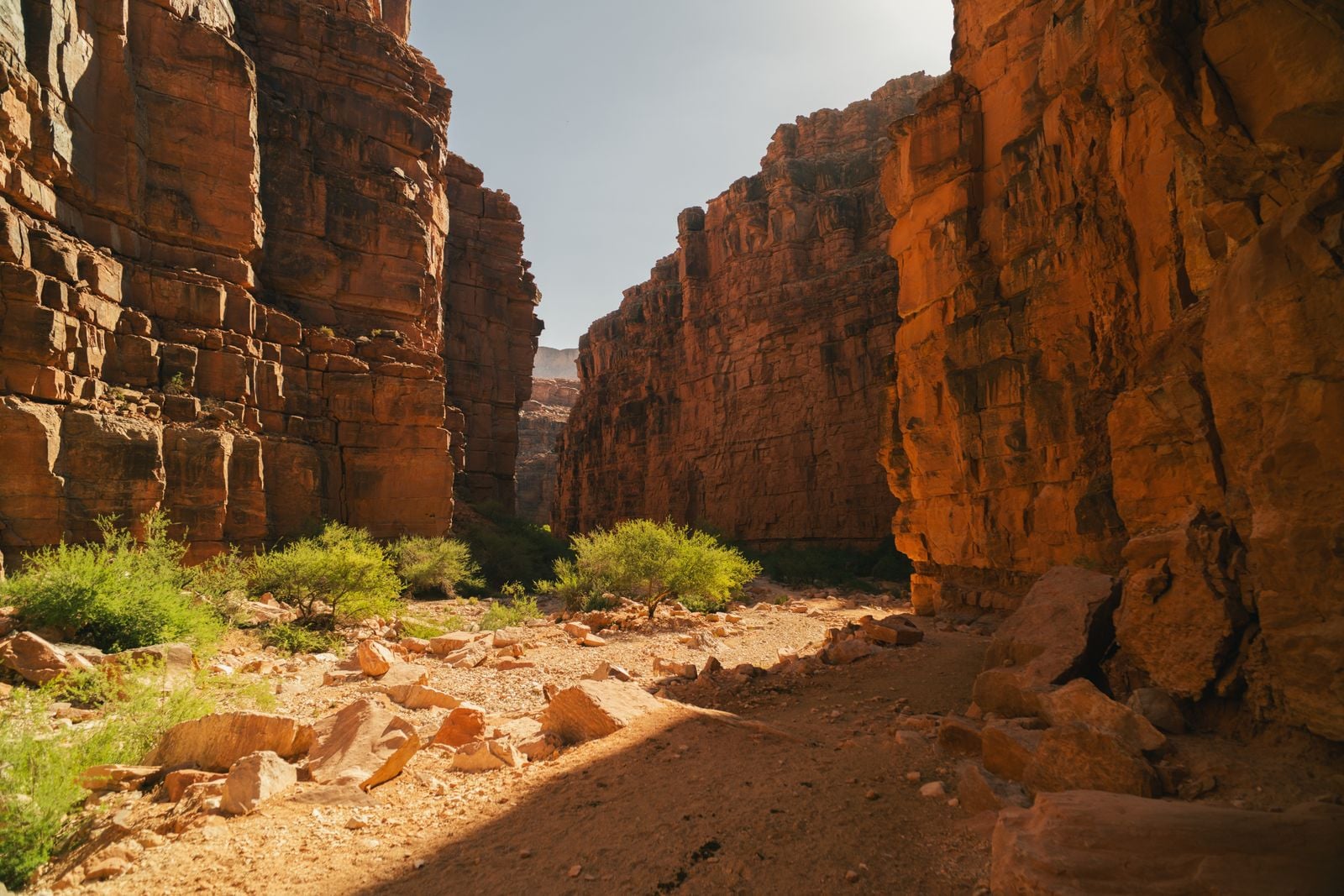
Noble was a fit young officer with the NSW National Parks and Wildlife Service, and he spent his rest days rope-descending the sandstone slots of Wollemi National Park — a wilderness close enough to Sydney to catch the city’s glow at night, but rugged enough that satellite maps still show blank pockets where nobody has walked. On that September day in 1994, he roped down into a gorge he had not visited before and found himself standing under trees he could not place.
The Artful Age
A weekly letter on aging well, family across generations, and the creative life after the kids leave home.
He knew the flora of the Blue Mountains. These trees were not it. Their bark looked as if it had been dipped in bubbling chocolate. Their fronds were flat, arranged in two neat ranks along the stem, and coloured a curious blue-green that shifted toward bronze near the crown. He pocketed a piece of fallen foliage and hiked out.
Back at the ranger station, he showed the sample to a botanist. Within weeks it was clear the frond did not match any living species in the herbarium. It matched something older. As Space Daily’s account of the discovery records, botanists took several months to accept that the canyon Noble had entered contained a species known previously only from rock impressions.
Older than the flowers
The genus Wollemia belongs to the Araucariaceae, an ancient conifer family that dominated the southern supercontinent of Gondwana during the Jurassic and Cretaceous. Fossilised pollen and leaf impressions matching the Wollemi date back roughly 90 million years — a period when flowering plants were still a botanical minority and when non-avian dinosaurs still walked the same forests.
Set that against a human timescale for a moment. The last common ancestor of humans and chimpanzees lived about seven million years ago. The Wollemi lineage has been recognisably itself for more than ten times that span. It watched the Chicxulub asteroid strike, watched the non-avian dinosaurs die, watched Australia rift away from Antarctica, watched the continent dry into eucalypt scrubland. And it kept growing, in one canyon, essentially unchanged.
Botanists sometimes describe such species as living fossils—an imprecise but useful term. The tree Noble found in 1994 does not just resemble the fossils. It matches them.
What the tree actually looks like
A mature Wollemi can grow tall — roughly the height of a multi-storey building. A single tree can produce multiple trunks from one base, and individual trunks may live for centuries.
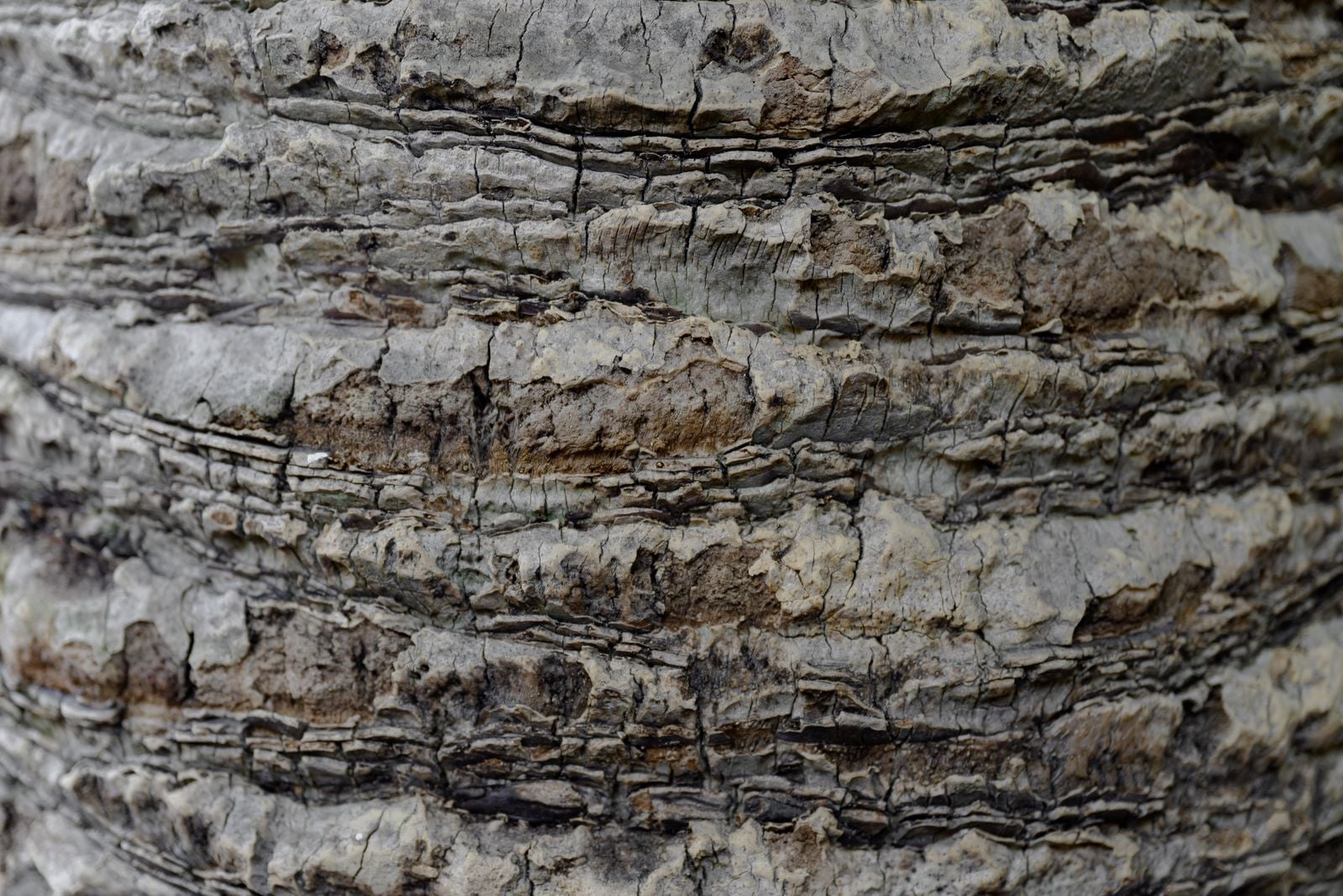
The bark is the signature. Dark brown nodules cover the trunk like clusters of bubbles, giving mature specimens the look of something dipped in Coco Pops. The leaves are ferny, flattened, held in ranks along the stem, and the whole tree carries a curious blue tint that catches light differently to any other conifer in the Blue Mountains. Individual trees produce both male and female cones, and the entire wild population is so genetically uniform that the grove behaves almost as a single clonal organism.
That uniformity is not a curiosity. It is a warning. A population with almost no genetic variation has almost no backup plans when a new pathogen, a hotter summer, or a fire season arrives.
Why the location is a state secret
The site is not hidden for drama. It is hidden because the trees are extraordinarily vulnerable to a soil-borne water mould called Phytophthora cinnamomi, responsible for root rot in thousands of Australian plant species. According to the ABC’s rare access visit to the grove in 2024, it takes just one gram of infected soil, tracked in on a boot sole, to introduce the pathogen. There is no cure.
Journalists permitted near the canyon are flown in by helicopter with the windows effectively curtained. They are sworn to secrecy. Cameras have their GPS tags stripped. Boots are soaked in methylated spirits. Notebooks are checked. The paranoia is proportional to what is at stake: a species that survived the extinction of the dinosaurs could be extinguished this decade by a muddy sole.
The 2019 fires and the sprinkler defence
In the catastrophic 2019–2020 Black Summer, flames swept through Wollemi National Park and came within metres of the grove. Remote-area firefighters were deployed to protect the trees with irrigation systems, and aerial water bombing and fire retardant were laid down around the catchment. Most of the mature wild population survived. Almost every sapling at a nearby translocation site did not.
Rebuilding the juvenile bank from seed will take decades — assuming no further fires. The climate models for the sandstone canyons of the Blue Mountains do not cooperate with that timeline. Hotter, drier summers are the forecast, and the fire seasons that scorched the edge of the grove in 2019 are expected to intensify.
Growth is glacial. Seedlings grow slowly until they can push a crown into the rainforest canopy. A tree planted at a translocation site today may not cone until the middle of the next century.
The strategy: hide, propagate, sell
The insurance policy has three parts. First, keep the wild location secret and the biosecurity strict. Second, quietly establish translocation sites elsewhere in the wilderness, in sandstone-slot microclimates that match the source canyon. Third — and this is the strange one — sell the tree.
The Australian government authorised licensed nurseries to propagate Wollemi pines from cuttings and sell them to gardeners worldwide. The logic is simple: if the species exists in tens of thousands of gardens on six continents, it can never truly go extinct. Kew Gardens has one. So does the Royal Botanic Garden in Sydney. A sapling now sits in a courtyard at the Vatican. A specimen recently bore fruit at a Worcestershire estate, raising hopes of viable seedlings in the English climate.
A donated Wollemi named Wally now grows in the Department of Ecology and Evolutionary Biology greenhouse at the University of Colorado Boulder, where undergraduates can stand next to a tree whose ancestors watched the Cretaceous close. The surviving Wollemi grove sits alongside the coelacanth and the bridled nailtail wallaby as one of the most striking Lazarus taxa on record — species presumed gone that turned out to be hiding in a canyon, a reef, or a paddock all along.
Where citizen science fits
David Noble was not a research botanist. He was a park ranger on his day off. That places him in a lineage Australian Geographic has documented at length: the fencing contractor who spotted a bridled nailtail wallaby near Dingo, Queensland, in 1973 after the marsupial had been presumed extinct for four decades; the bird-watcher who spent 150 hours over three years relocating a new species of peacock spider in Namadgi National Park. The pattern is consistent. Somebody doing ordinary outdoor work notices an anomaly and is right about it.
Science Blog has explored this before. The essay on how Pierre Janssen noticed an unfamiliar yellow line in the spectrum of a solar eclipse in 1868 and, in effect, discovered helium 27 years before anyone isolated it on Earth, sits in the same tradition: a person doing careful, patient work, spotting something that does not fit the catalogue, and being taken seriously.
The genetic bottleneck, and one small crack of hope
For decades, researchers scanning the DNA of wild Wollemi pines found essentially no variation between individuals. Every tree in the canyon appeared to be a near-clone of every other. A 2023 genome study described the species as a critically endangered living fossil with strikingly low diversity. Recently, though, botanists at the Botanic Gardens of Sydney using newer genomic techniques identified small differences between some individuals for the first time — a slim margin, but a real one, and enough to guide breeding decisions for the insurance populations.
Every wild tree, then, carries weight out of proportion to its size. Lose one, and you may have lost a version of the species that exists nowhere else.
What thirty-two years has bought
Thirty-two years on from Noble’s descent, the wild population is stable. Secret translocation sites are quietly filling in. Cultivated specimens sit in botanic gardens on six continents. In September 2024, on the 30th anniversary of the discovery, a batch of rare direct-lineage saplings was auctioned to fund ongoing conservation work.
The recovery programme has become a template for other critically endangered plants: secret location, quarantine protocols, translocation sites, commercial propagation, active fire defence. It is expensive and dependent on the discipline of a small workforce. It is also, so far, working.
Stand at the base of a mature Wollemi — a cultivated one, in Kew or Boulder or the Vatican courtyard, since the wild ones are off-limits — and press a palm against the bark. The bubbly texture is not ornamental. It is the structural fingerprint of a conifer genus that split from its relatives before flowers evolved, before grasses evolved, before the continents settled into the shapes on a modern globe.
The tree does not know any of this. It does not know that a ranger with a rope found it on a weekend in 1994, that its coordinates now sit in a locked file, or that a version of itself has been auctioned to a bidder in London. It grows slowly and waits for a gap in the canopy.
Ninety million years is a long time to wait. It has waited longer.