
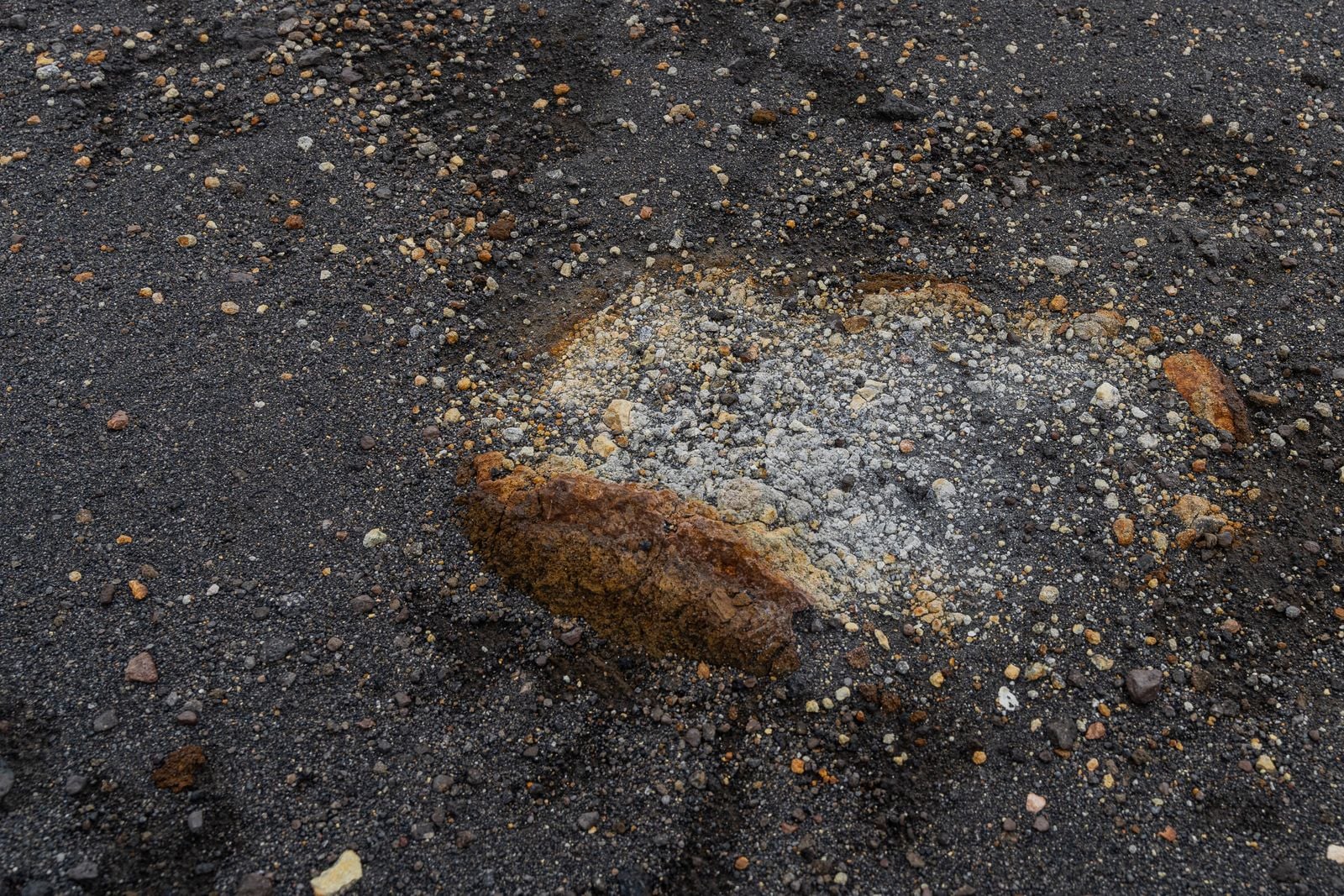
Shortly before 11am on 28 September 1969, a fireball crossed the sky near Murchison in central Victoria and broke into several pieces. The Meteoritical Bulletin records an observed fall, a smoke cloud, a tremor and stones scattered over more than five square miles. About 100 kilograms of material would eventually be catalogued.
The most extraordinary material was invisible to the people gathering those dark stones from roads, roofs and paddocks. Microscopic silicon carbide grains inside the meteorite had formed before the Solar System, and laboratory estimates placed some between 5 and 7 billion years old. The Field Museum describes them as the oldest solid material yet found on Earth.
A spring Sunday in central Victoria
Murchison lies roughly two hours north of Melbourne. In ABC Science’s 2019 oral history of the fall, residents remembered preparing for church, celebrating a 21st birthday and building a ferret cage when the noise stopped the town. Witnesses described a blue plume in a clear sky and a sharp smell resembling methylated spirits.
The Artful Age
A weekly letter on aging well, family across generations, and the creative life after the kids leave home.
Marianne Begg recalled that 115 dairy cows had crowded into a distant corner of their paddock with their ears raised. Residents proposed explanations ranging from a plane crash to an explosion at the nearby military training area. With no immediate source of confirmation, people eventually resumed their Sunday routines.
A black substance in the dairy yard
That evening, farmer Arnold Brisbane returned for the second milking and found black, charcoal-like material on a yard he had cleaned earlier. He threw much of it over a fence and washed the remainder into the manure pit because he had no reason to recognise it as a meteorite. The following morning, he carried a sample to the Shepparton News.
The newspaper took the material to police and contacted the University of Melbourne’s geology department. That chain of decisions helped researchers obtain unusually fresh specimens before prolonged exposure to rain, soil and handling could alter them. Other pieces had also landed across the district, so the scientific record did not depend on one fragment alone.
John Lovering’s two encounters with the meteorite
John Lovering, then professor of geology at the University of Melbourne, was returning from the United States with Apollo 11 lunar samples on the day of the fall. While he was standing at Melbourne airport with the samples, a journalist from The Age told him that something had fallen near Murchison. He did not examine the meteorite at the airport.
A few days later, Lovering was waiting to appear on the ABC television program This Day Tonight when someone arrived with a meteorite fragment in a gas-swollen plastic bag. He opened it, noticed the strong mixture of organic odours and recognised the black material as a carbonaceous chondrite. His excitement reportedly had to subside before the broadcast began.
The search across the paddocks
The recovered fragments were spread through a long strip of farmland running through Murchison and neighbouring areas. One substantial piece pierced the roof of a hay shed, while smaller pieces were found on roads and in fields. University of Melbourne geology student Andrew Gleadow was assigned to search Brisbane’s manure pit in gumboots, sieving the slurry for hard fragments.
Brothers Peter and Kim Gillick, aged 10 and 11, approached the search methodically. They studied where different-sized pieces had landed, marked likely areas on maps and walked organised lines through the paddocks. Kim later estimated that the brothers recovered roughly one-third of the approximately 100 kilograms eventually collected.
Residents have long suspected that a larger piece may have continued toward the Waranga Basin and disappeared into its mud. That remains a local possibility rather than a confirmed recovery site. What is certain is that the fall produced many fragments rather than one crater-forming impact.
What the Murchison meteorite contains
Murchison is classified as a CM2 carbonaceous chondrite, a primitive meteorite rich in carbon compounds and minerals altered by water on its parent asteroid. Most of the stone dates from the beginning of the Solar System, roughly 4.6 billion years ago. The headline age belongs only to rare presolar grains embedded within that younger material.
The grains are recognisable because their isotope ratios are radically different from ordinary Solar System matter. Most of the silicon carbide grains studied by Philipp Heck and his colleagues originated in outflows from low- to intermediate-mass asymptotic giant branch stars. These were ageing stars shedding newly condensed mineral dust into interstellar space.
How scientists estimated the grains’ ages
In January 2020, Heck and his collaborators published their analysis in the Proceedings of the National Academy of Sciences. They determined cosmic-ray exposure ages for 40 large presolar silicon carbide grains extracted from Murchison. The research combined new measurements with consistently recalculated results from earlier work.
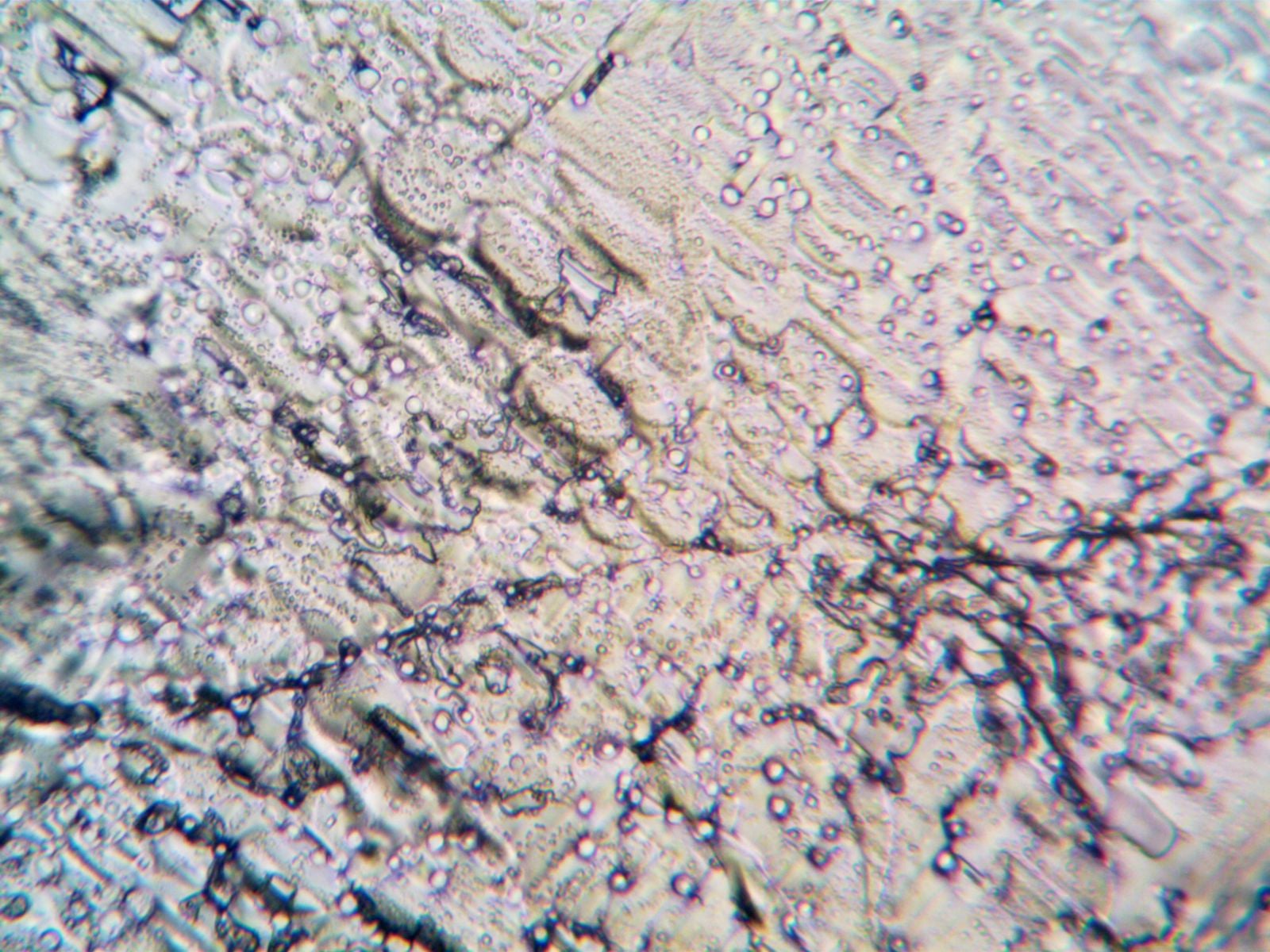
Isolating the grains requires crushing meteorite material and dissolving much of the surrounding rock with acids. Silicon carbide is exceptionally durable, so some grains remain after less resistant minerals disappear. Researchers can then examine the survivors with mass spectrometers.
While travelling through interstellar space, the grains were bombarded by galactic cosmic rays. Those collisions produced small quantities of isotopes such as neon-21, and their accumulated abundance provided an estimate of how long each grain had remained exposed. Combining that exposure interval with the roughly 4.6 billion years since the Solar System formed produced total age estimates.
Most grains had comparatively short interstellar exposure histories and total estimated ages between about 4.6 and 4.9 billion years. A minority had spent far longer in interstellar space, with the oldest estimate reaching roughly 7 billion years. That extreme figure carries substantial uncertainty, so it is best understood as an estimate rather than an exact birthday.
A possible episode of increased star formation
The distribution of exposure ages offered another clue. Around 60 percent of the grains had interstellar lifetimes shorter than 300 million years, while a smaller group survived for more than a billion years. A simple steady-state model did not reproduce that pattern.
Heck’s team proposed that many parent stars may have formed during a moderately enhanced period of Milky Way star formation around 7 billion years ago. Those stars later reached their dust-producing phase shortly before the Solar System formed. The paper describes this interpretation as a plausible and partly speculative explanation, not a final reconstruction of the entire galaxy’s history.
Putting seven billion years in perspective
The universe is approximately 13.8 billion years old, so the oldest estimate would place one Murchison grain at around half the universe’s present age. It would have formed billions of years before Earth and more than two billion years before the Sun. By the time the Solar System began assembling, that grain had already completed an immense journey through interstellar space.
The grain’s parent was an evolved star that expelled silicon carbide in its outflow. Its precise identity, location and surviving remnant cannot be reconstructed from the grain, so it would be speculation to place a particular white dwarf somewhere in today’s Milky Way. What the isotope record establishes is more limited and more remarkable: the material formed beyond the Solar System and survived long enough to become part of it.
The second archive inside Murchison
Murchison also became central to the study of extraterrestrial organic chemistry. In 1970, a team including Keith Kvenvolden and Carleton Moore published “Evidence for Extraterrestrial Amino-acids and Hydrocarbons in the Murchison Meteorite” in Nature. Later isotope studies strengthened the conclusion that important amino acids in the samples were indigenous to the meteorite rather than ordinary terrestrial contamination.
Subsequent work has identified a much broader chemical inventory, including nucleobases and insoluble organic material. In 2019, researchers also reported ribose and other bio-essential sugars in Murchison. These findings show that asteroid chemistry can produce and preserve some ingredients used by life, but they do not demonstrate that life itself arrived on Earth in meteorites.
The organic compounds also help explain why fresh Murchison material produced such a distinctive smell. Philipp Heck told ABC Science that fragments could retain the characteristic odour decades after the fall. The smell was evidence of complex chemistry, not evidence of organisms inside the rock.
A different kind of falling-sky story
Murchison belongs to a wider history of events in which material or information from the sky changed scientific understanding. The 1908 Tunguska airburst flattened an enormous area of Siberian forest without producing a confirmed crater. Its evidence was written across fallen trees rather than preserved inside recovered stones.
During the total solar eclipse of 18 August 1868, Pierre Janssen observed an unfamiliar yellow spectral line over Guntur, India. That observation contributed to the identification of helium before the element was isolated on Earth. Murchison was quieter than either event, but its fragments opened an equally unusual route into deep history.
The supply is valuable and finite
Fragments of Murchison are now held by museums and research institutions around the world. The Field Museum documents climate-controlled storage in dust-tight metal cabinets, clean handling procedures and a detailed record of each specimen’s use. Those controls matter because organic-chemistry studies are especially vulnerable to contamination.
Not every investigation destroys its sample. Imaging, density measurements and several other techniques can be non-destructive, while cutting, grinding, dissolving and mass-spectrometry preparation consume at least part of a specimen. Isolating presolar grains is one of the destructive procedures, so curators must balance current research against the need to retain material for future instruments and independent verification.
Murchison is no longer the only directly sampled object known to contain presolar material. NASA’s OSIRIS-REx mission returned samples from asteroid Bennu, and a 2026 Nature Communications study examined how aqueous alteration had reduced presolar silicon carbide in some Bennu particles. The comparison shows that ancient stardust can survive inside different primitive bodies, but its abundance can be reshaped by each asteroid’s chemical history.
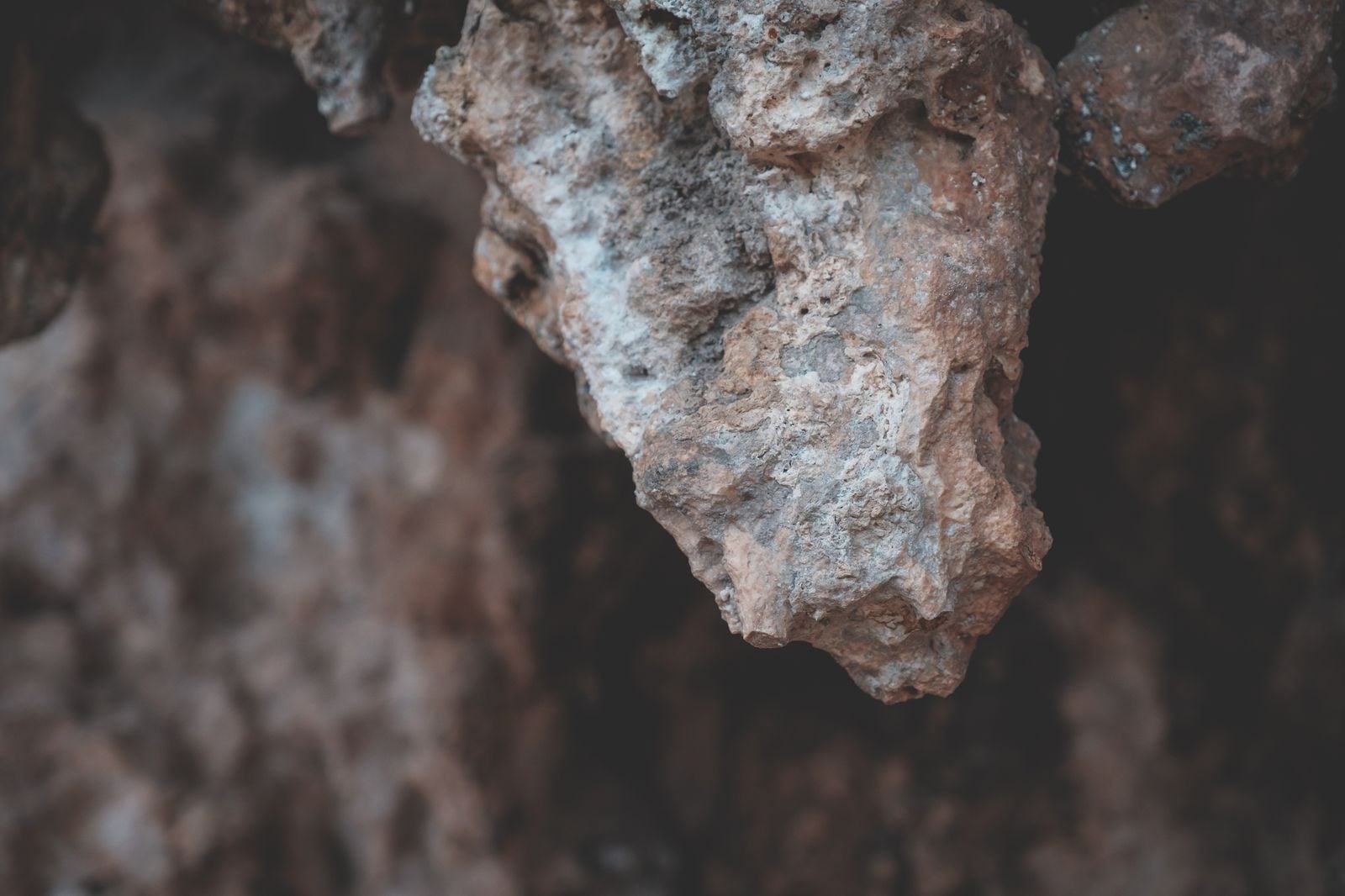
A Murchison fragment still looks like an ordinary dark stone, sometimes pitted or crumbly at its edges. Its significance lies in scale: a rock assembled with the young Solar System contains microscopic solids made around stars that had already aged and shed their material. Those grains reached a Victorian dairy district on a Sunday morning, while families prepared for church and cows crowded into the corner of a paddock.