
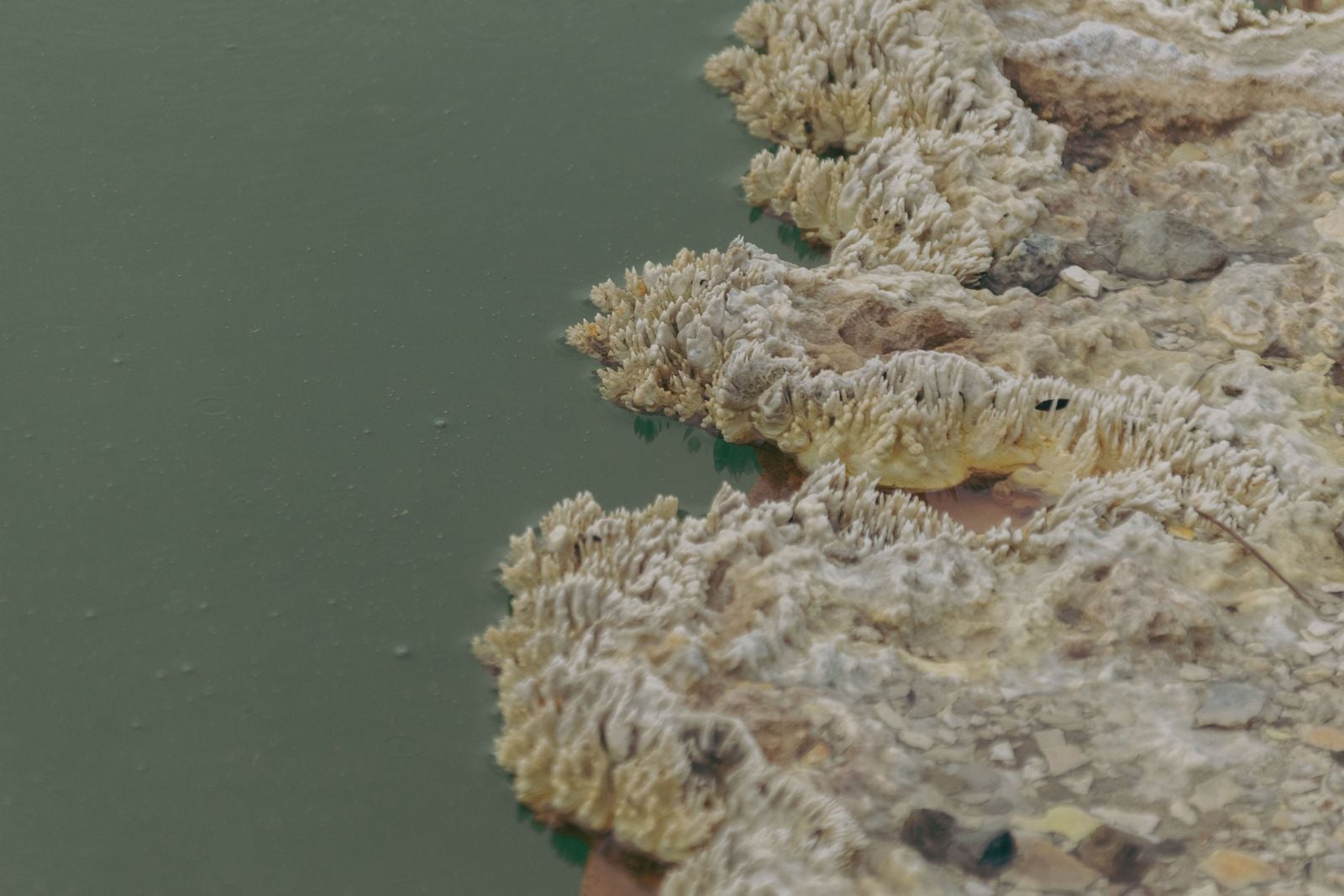
The limpets clinging to a hydrothermal vent field 1,845 metres below the Southwest Pacific started life somewhere astonishing: the sunlit surface of the open ocean, feeding on the same phytoplankton that fuels whales and anchovies. A team at the University of Tokyo has now shown, by reading chemical growth rings on shells less than a millimetre wide, that every single deep-sea limpet they analysed had made that vertical pilgrimage before settling back into the crushing dark. The work was done at the university’s Atmosphere and Ocean Research Institute and published in Science Advances.
It solves a puzzle marine biologists have circled for decades.
Hydrothermal vents are scattered across the seafloor like isolated islands, sometimes separated by thousands of kilometres of empty abyss. And yet the same species of limpet, mussel and shrimp keep turning up at vent after vent, as if someone were ferrying them between the sites. Nobody could catch the ferry in the act.
The Artful Age
A weekly letter on aging well, family across generations, and the creative life after the kids leave home.
The mystery of the identical neighbours
A hydrothermal vent is one of the most hostile addresses on the planet. Superheated fluid escapes from cracks in the seafloor at extreme temperatures, laced with iron, sulfide and heavy metals, into water that sits just above freezing. At the deepest site the team sampled, roughly 1,845 metres down, the pressure is about 185 times what you feel at sea level. The creatures that live there look like they were designed by someone who had never been told what an animal was supposed to be.
These ecosystems do not run on sunlight. They run on chemistry — bacteria that pull energy from hydrogen sulfide and methane, feeding the whole food web from the bottom up. It is a closed loop, or so it looked.
The catch: vents die. A fissure seals, a chimney collapses, the chemistry shifts, and a whole community loses its power supply. For the species to persist, its young have to reach the next vent, which may be hundreds of kilometres away across cold, food-poor abyssal plain. How?
Reading a shell like a tree ring
Assistant Professor Takuya Yahagi and Associate Professor Yasunori Kano at the University of Tokyo’s Atmosphere and Ocean Research Institute went looking for the answer inside the animals themselves. Specifically, in a tiny brown cap of shell that some adult limpets still carry, glued to the top of their grown-up shell like a baby tooth that never fell out.
That cap is the larval shell. It forms during the earliest days of the animal’s life, and its chemistry locks in a record of the water the larva was drifting through. Warmer water leaves one signature. Cold, metal-rich vent water leaves another. As Chemistry World reported, the team measured ratios of trace elements and stable isotopes to reconstruct the temperature range each larva grew up in.
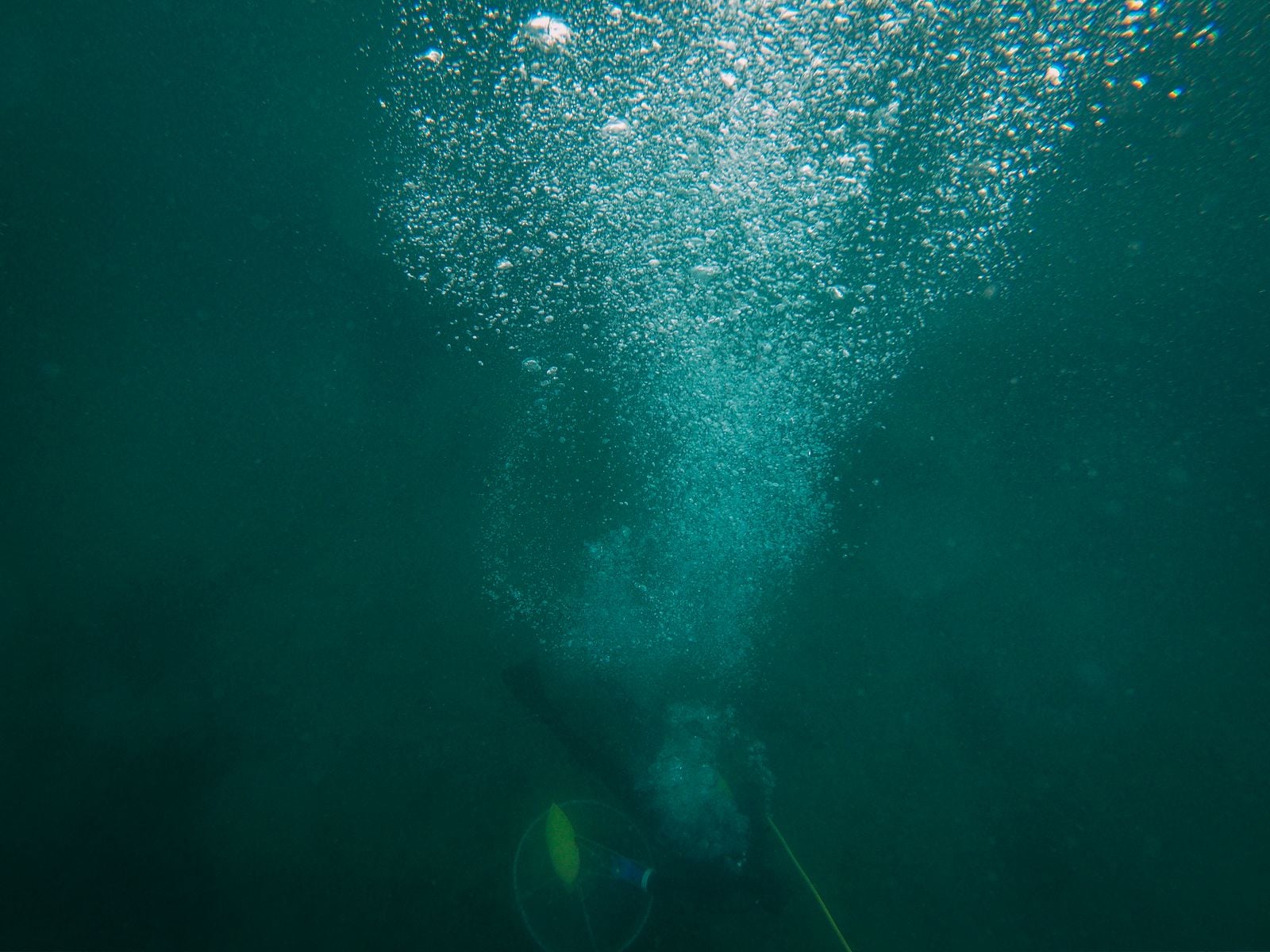
The shells they were working with were less than one millimetre across and about 10 micrometres thick — thinner than a human hair. Getting a clean chemical read without contamination from the adult shell layered over it required, in Yahagi’s words, careful analysis and recent advances in instrumentation.
Every larval shell told the same story. The chemistry matched warm, sunlit surface water. Not the near-freezing dark of the deep. And the shells lacked the manganese and barium fingerprints that hydrothermal fluid leaves behind.
These animals had grown up thousands of metres above where they now lived.
A vertical migration of miles
The team analysed 39 limpets in all: six from the 1,845-metre-deep Tu’i Malila vent field in the Southwest Pacific near Tonga, and 33 from a vent field about 440 metres down on the Kaikata Seamount in the northwestern Pacific. Those sampling details were reported by Science News. Different species, different oceans, different depths — same signature.
The picture that emerges is close to unbelievable. A limpet hatches at a vent nearly two kilometres down, in water saturated with sulfide and heavy metals. The larva, equipped with two earlike swimming lobes called a velum, kicks upward. It ascends past the twilight zone, past the point where light begins to filter down in blues and greens, and arrives in the euphotic layer where phytoplankton bloom.
There it feeds. It drifts. Surface currents — the same broad conveyors that move heat around the planet — carry it, sometimes for extended periods. Experiments suggest at least one species may spend more than a year near the surface before beginning the return journey.
Then, somehow, it drops. Back through the twilight, back into the dark, and lands — with vanishingly small odds — on a working hydrothermal vent, either the one it was born at or a new one entirely. It settles, transforms into its adult form, and starts the cycle again.
Why so many eggs
The odds of success are brutal. According to the researchers, the vast majority of larvae likely perish or are lost to predators before successfully locating a suitable hydrothermal vent habitat. A larva drifting near the surface is food for almost everything: copepods, jellyfish, small fish, filter feeders. Currents that carry it toward a new vent can just as easily carry it into open ocean where no vent exists for two thousand kilometres in any direction.
Which explains one of the more puzzling features of vent biology — the sheer reproductive extravagance. Vent limpets, mussels and shrimp release enormous numbers of eggs. If only a tiny fraction of larvae completes the round trip and finds a habitable vent, the species has to flood the ocean with young just to keep the lights on. The chemical productivity of the vents themselves, powered by those sulfide-eating bacteria, provides the raw material for this reproductive strategy.
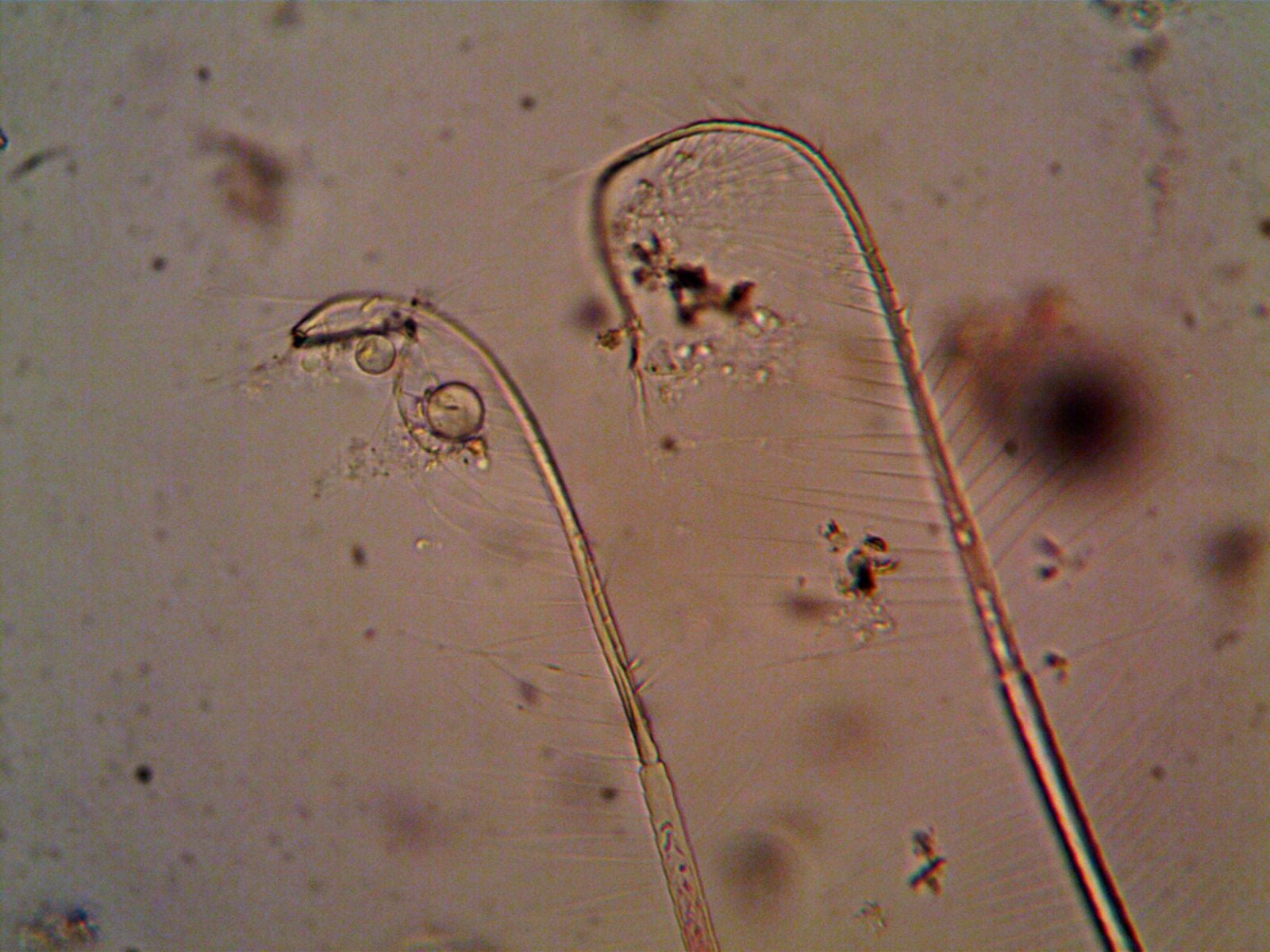
It is a strategy of massive redundancy across an impossible distance.
The deep ocean is not sealed off
The larger implication of the finding is what it says about the relationship between the surface and the deep. Vent ecosystems have been treated, for a long time, as sealed systems — closed geochemical worlds running on their own energy, disconnected from the sunlit ocean above. The Tokyo results puncture that view.
The findings suggest that deep-sea vent species are more connected to surface ocean ecosystems than previously believed, according to Kano. Kano noted that these findings represent an important advance in understanding vent animal evolution and the role of deep-sea ecosystems within the broader ocean system.
The practical stakes are significant. If the young of vent species depend on surface conditions — temperature, currents, phytoplankton availability — then anything that alters those surface conditions can ripple down to communities living a mile below. Warming surface waters. Shifting current patterns driven by climate change. Pollution. Microplastics in the plankton the larvae eat. All of it now has a plausible route into the deep-sea vent food web.
It also complicates the conversation around deep-sea mining. Protecting a vent site by drawing a boundary around the seafloor may not be enough if a crucial phase of the animal’s life is happening in the water column a kilometre or more above, exposed to a completely different set of pressures. Effective conservation may have to extend well beyond the seabed itself.
What the shells still won’t say
The Tokyo team was able to extract one temperature estimate per larval shell. That is enough to prove the surface migration happened. It is not enough to trace the whole route — the ascent, the drift, the descent, the search.
Kano wants to push the resolution finer. Higher-resolution chemical mapping across different regions of a single larval shell could, in principle, reveal the shape of the journey day by day: when the larva rose, how long it spent at the surface, when it began to sink, how it hunted for its final vent. The shells are around 10 micrometres thick. Reading them at that resolution is, Kano acknowledged, technically very challenging.
The team also wants to know how deep this behaviour goes. Their samples came from vents no deeper than about 2,000 metres. Hydrothermal vents exist down to 5,000 metres. Do larvae from those far deeper communities also ascend more than three miles to the sunlit surface and back? That is the next question.
A snail’s odyssey, in scale
To picture what the Tokyo team has documented, imagine a creature the size of a poppy seed being born in permanent darkness under pressure that would flatten a submarine. It swims upward for days or weeks. It crosses the twilight zone. It reaches sunlight for the first time in its life and begins to eat single-celled plants that photosynthesise the way plants have on this planet for billions of years.
Then it lets a current carry it across a stretch of ocean the width of a country.
Then it goes home — or somewhere close enough to home — dropping back through the layers, until it finds a plume of superheated water leaking from a crack in the seafloor and settles down to spend the rest of its life eating bacteria that have never seen the sun.
The larval shell it made during that first upward journey stays stuck to its grown-up body like a passport stamp. And a team in Kashiwa, about 30 kilometres northeast of central Tokyo, has just learned how to read it.