
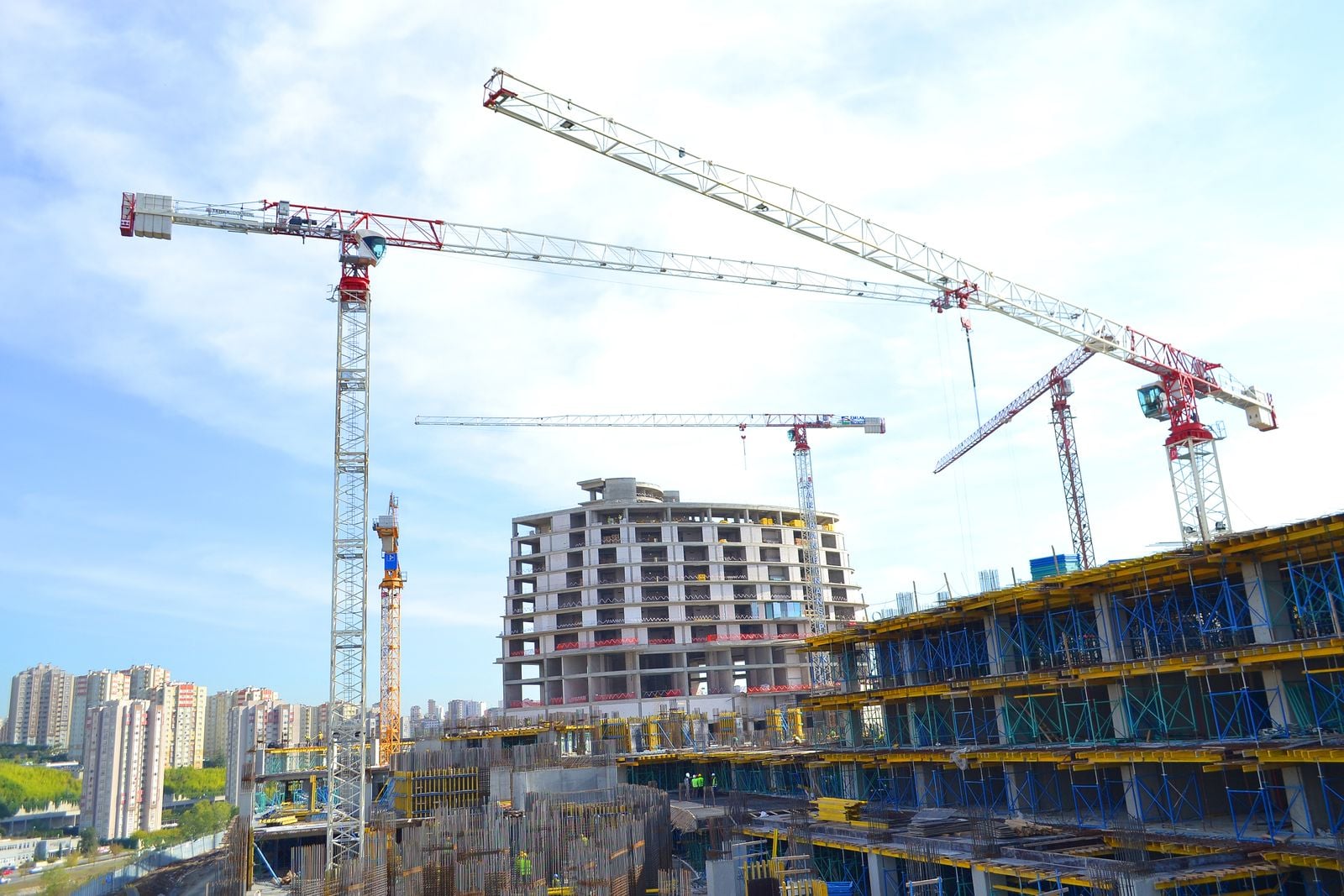
In Melbourne, a construction robotics company called Luyten has taken one of the most familiar machines on any city skyline — the tower crane — and rewired the idea of what it does. Instead of hoisting steel beams and buckets of concrete to workers on scaffolding, the crane now extrudes the building itself, laying down bead after bead of engineered concrete from a nozzle at the end of its jib. The platform is called Ascend, and Luyten announced it in June 2026 as the world’s first robotic tower crane 3D printer, rated to build structures up to 100 metres tall.
One hundred metres is roughly a 30-storey apartment block. It is more than twice the height of Nelson’s Column. It is taller than the Statue of Liberty from heel to torch.
What actually changes on the site
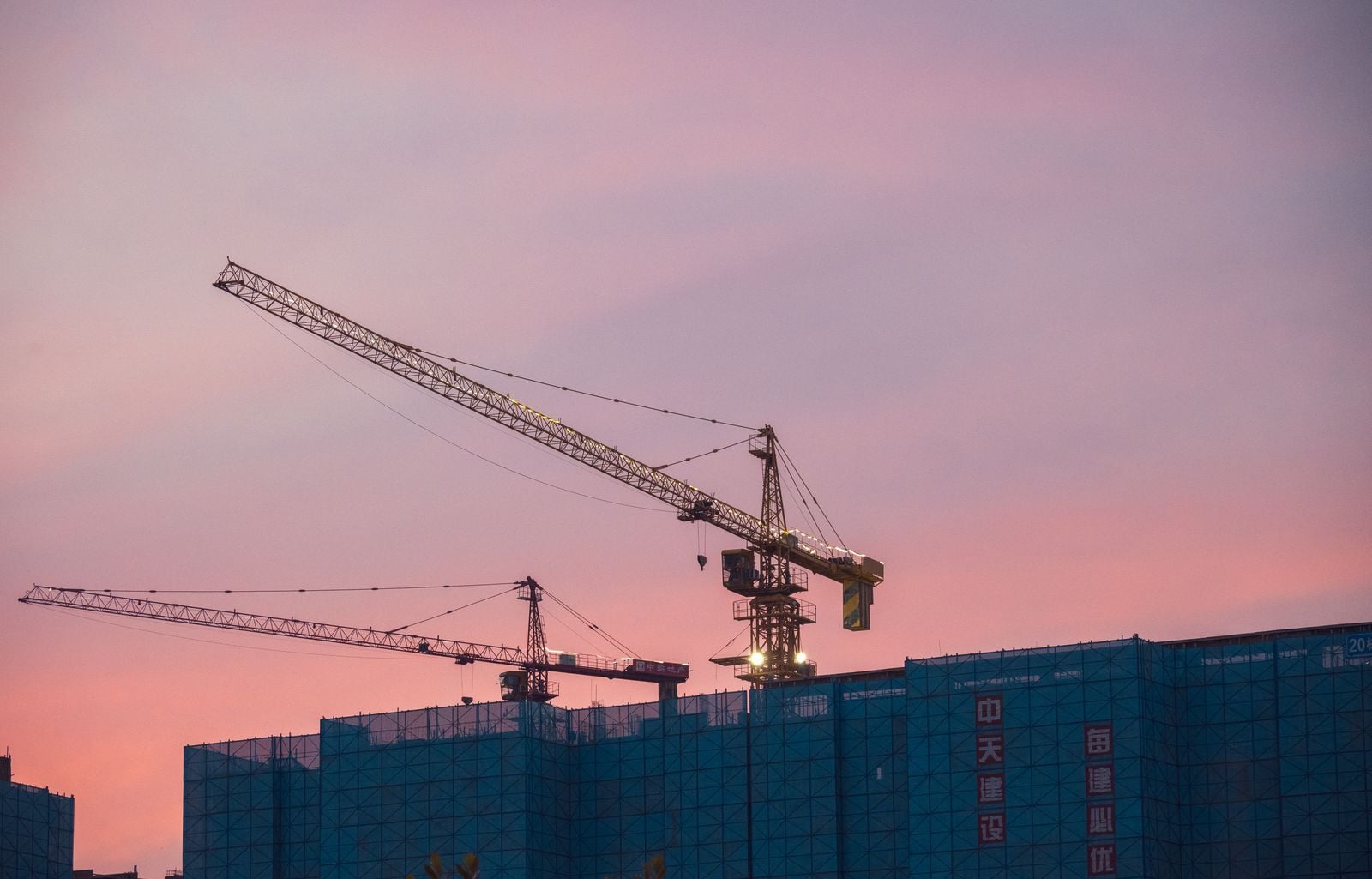
A conventional tower crane is a lifting device. It swings a hook. Workers below tie loads to that hook — rebar cages, timber formwork, buckets of wet concrete, prefabricated wall panels — and the crane lifts them into position. The building itself is assembled by human hands, using materials the crane delivers.
The Artful Age
A weekly letter on aging well, family across generations, and the creative life after the kids leave home.
Ascend keeps the crane’s tower, jib and slewing gear, then swaps the hook for a robotic print head fed by a concrete delivery line. The head moves along the jib and across the operating radius, depositing a continuous ribbon of fast-setting concrete along a path generated from a digital model of the building. Walls rise in horizontal layers, each one bonding to the one beneath.
According to Luyten’s published specifications, the platform is designed for a maximum print height of 100 metres and an operating radius of up to 45 metres. That radius — the horizontal reach from the tower — is what defines the footprint of any single building the crane can print without being repositioned. Forty-five metres is about the length of an Olympic swimming pool.
Why the tower crane, and not something new
Most construction 3D printers on the market today are gantry systems: a rectangular frame straddles the build site, and a print head moves along rails inside that frame. The design is stable and precise, and it has produced hundreds of single-storey houses over the past decade. Its ceiling, literally, is the height of the gantry. Two storeys is common. Three is ambitious. Beyond that, the frame becomes unwieldy, expensive to transport and slow to erect.
Tower cranes already solve the height problem. They climb as the building climbs, jacking themselves up floor by floor. A crane that tops out at 100 metres is standard equipment on any mid-rise site in any major city. Luyten’s argument, laid out at length in the launch coverage from Parametric Architecture, is that construction does not need to invent new vertical infrastructure to print tall buildings. It needs to make the vertical infrastructure it already uses do more work.
According to the launch statement, Luyten’s approach represents a fundamental shift in construction automation strategy – rather than working around existing tower cranes, the company has transformed the crane itself into a robotic 3D printer.
The concrete itself is the hard part
Printing a wall is not like pouring one. Poured concrete sits in a mould and cures slowly, supported on every side. Printed concrete supports itself the moment it leaves the nozzle. The bead has to be stiff enough to hold its shape and hold the weight of the beads stacked on top of it, and wet enough to bond to the layer below before that layer sets. The window is measured in minutes.
At 100 metres, the mix also has to survive being pumped up the tower. Pressure, temperature swings and pump wear all change the water content in transit. Luyten has been working on proprietary printable mixes for years, and VoxelMatters reports that Mahil has committed to living in a multi-storey 3D printed home in Melbourne — a public confidence test in the material as much as the machine.
The material science quietly catching up
Behind the machine is a decade of laboratory work on what printable concrete should even be made of. A 2024 study from the University of Virginia School of Engineering and Applied Science reported in ScienceDaily tested cellulose nanofibrils — plant-derived fibres roughly a thousand times thinner than a human hair — as an additive to printable concrete. The team found improvements in both printability and mechanical strength, pointing toward mixes that use less cement and generate less carbon per cubic metre poured.
Cement is one of the dirtiest materials on Earth by volume. Its production accounts for roughly 8 percent of global CO₂ emissions. Every gram of cement replaced with something else, without sacrificing strength, is a small climate dividend. A tower crane printer that can lay walls faster is only half the story. The other half is what those walls are made of.
Ascend A27 and the reservation list
The first commercially available machine in the Ascend line is the A27. Early reservations opened later in 2026, aimed at construction firms building residential towers, defence infrastructure and commercial developments. The A27 refers to the crane’s specifications — jib length, radius, load class — rather than the maximum 100-metre variant, which sits higher in the range.
The economics are what Luyten is really selling. A single machine on a mid-rise apartment site could, in principle, replace the labour of framing crews, formwork carpenters and bricklayers for the structural envelope. It runs from a digital model, so design changes propagate without redrawing. It works overnight, in weather that would send a human crew home, and it does not tire in the last hour of a shift.
Whether it does all of that reliably at 100 metres, in the wind and rain of a real construction site, is the question the next two years will answer. The specifications sheet says one thing. The first finished tower will say another.
A different kind of giant machine
Ascend is one of two heavy-construction machines to make headlines in 2026, and the contrast is instructive. In China, XCMG and Sinopec Heavy Lifting rolled out a 14,000-ton ring crane, the largest-capacity ring crane ever built, designed to lift entire nuclear reactor modules and complete wind turbine towers in one piece.
Two very different visions of what a crane is for. The XCMG machine is a lifting device pushed to its absolute physical limit — heavier, taller, more energy-efficient, but still fundamentally a hook on a cable. Ascend is a lifting device that has stopped lifting and started manufacturing.
Where 3D printing had stalled
Concrete 3D printing has been a promising technology waiting for its moment since the mid-2010s. The demonstrations were compelling — a house printed in 24 hours in Austin, an office block in Dubai, a footbridge in Shanghai — but the scale ceiling kept it out of the real housing pipeline. A gantry printer cannot compete with a construction crew above two storeys. And most of the housing crisis, in most cities, is measured in mid-rise apartment blocks, not detached homes on suburban lots.
Luyten’s tower crane pivot is an attempt to lift that ceiling. If Ascend works at rated height, it moves 3D printing from a novelty for single-family homes to a plausible tool for apartment developments — the buildings that actually house most urban populations. The company’s launch material framed the machine explicitly around housing demand, construction productivity and labour shortages.
What a printed tower looks like in practice
The walls of a 3D printed concrete building have a distinctive texture: horizontal ridges where each bead of concrete sat down on the last, a soft corduroy that catches shadow in raking light. Some architects hide it under render. Others leave it exposed as a signature of the method.
Openings for doors and windows are printed as gaps in the wall path, with lintels formed by short spans of reinforced concrete added during printing pauses. Rebar and services — plumbing, wiring, ducting — are placed by human workers between print passes, which means the machine does not eliminate labour on site. It reshapes it. Fewer bricklayers, more electricians and plumbers coordinating with a robotic build sequence.
The energy of the site changes too. Construction is normally loud with hammers, saws, shouted instructions. A printing site hums. The dominant sound is the pump feeding the print head, and the slow mechanical sweep of the jib.
The broader shift toward advanced manufacturing
Ascend fits inside a wider pattern across heavy industry, where processes that used to be craft — assembled piece by piece by skilled workers — are becoming manufacturing lines. Lab-grown diamonds are made in reactors in roughly two weeks for a few hundred dollars, undercutting a scarcity model that held for nearly 90 years. Solar-to-hydrogen conversion has crossed thresholds once thought decades away, with a Fraunhofer module in Freiburg turning 31.3 percent of direct sunlight into hydrogen fuel under real outdoor conditions.
Construction has been the slowest of the heavy sectors to industrialise. Productivity in building has barely moved in 50 years, while manufacturing productivity has roughly tripled. A tower crane that prints instead of lifts is one attempt to close that gap on the biggest, most stubborn material in the trade.
The view from the base of the tower
Stand at the foot of an operating Ascend crane and the machine looks familiar for a moment — the lattice tower, the counterjib, the operator’s cabin at the top. Then the jib swings and nothing is hanging from it. A hose runs the length of the arm. At the end, where the hook would be, a print head moves in a slow, deliberate arc, laying down a grey ribbon of concrete that hardens into wall as it goes. The building climbs a few centimetres an hour. In a week, a floor. In a month, a small tower.
There are, by Luyten’s own count, hundreds of thousands of tower cranes at work on sites around the world today. If even one in a hundred is retrofitted with a print head in the next decade, the skylines of the 2030s will be built by a different kind of machine than the skylines of the 2020s — a machine that used to lift, and now makes.